This pizza base burning in pizza oven guide breaks down what actually matters, based on real use.
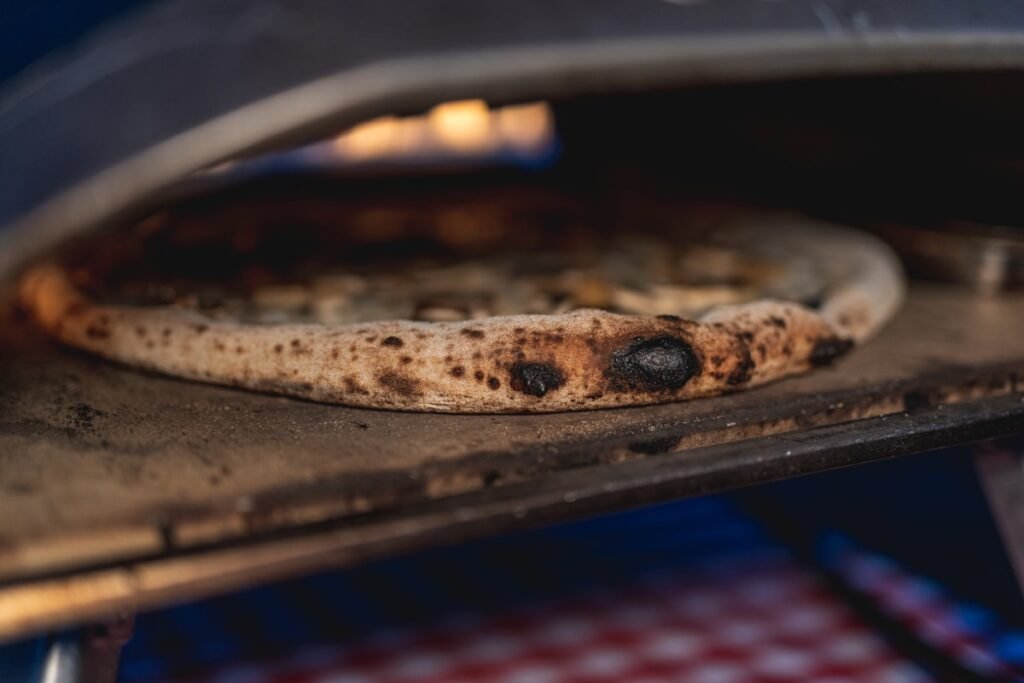
A burning base while the top of the pizza is still undercooked is a heat management problem. In a properly running pizza oven, the stone temperature and ambient air temperature work together to cook the base and top at the same rate. When they’re out of balance, the base gets too much heat before the top is done. Here’s how to diagnose and fix it.
The Stone Is Too Hot
The most common cause. If you launch a pizza onto a stone that’s above 430–450°C, the base will burn before the top has time to cook. This happens most often when the oven has been running for a long time on full heat, or when cooking multiple pizzas in a row without letting the stone temperature stabilise.
Use an infrared thermometer to check the stone temperature before each launch. For Neapolitan-style pizza, aim for 380–430°C on the stone. For a longer cook (New York style, Detroit), drop to 300–350°C. If the stone reads too high, wait 2–3 minutes before launching and check again.
You’re Not Turning the Pizza
In a wood-fired or gas pizza oven, the heat source is at the back or side. Without turning, the edge nearest the flame cooks far faster than the rest of the base — leading to burning on one side. Neapolitan pizza cooks in 60–90 seconds and needs rotating every 15–20 seconds. Use a turning peel to spin the pizza a quarter turn at a time.
The Flame Is Too Low
In a well-balanced pizza oven, the rolling flame overhead cooks the top of the pizza at the same time the stone cooks the base. If your flame is too low — because you haven’t stoked the fire enough or the gas is turned down — the top of the pizza won’t cook fast enough, and the base will sit on the hot stone for too long. Keep a lively flame rolling over the top of the pizza during the cook.
The Pizza Is Too Thin in the Middle
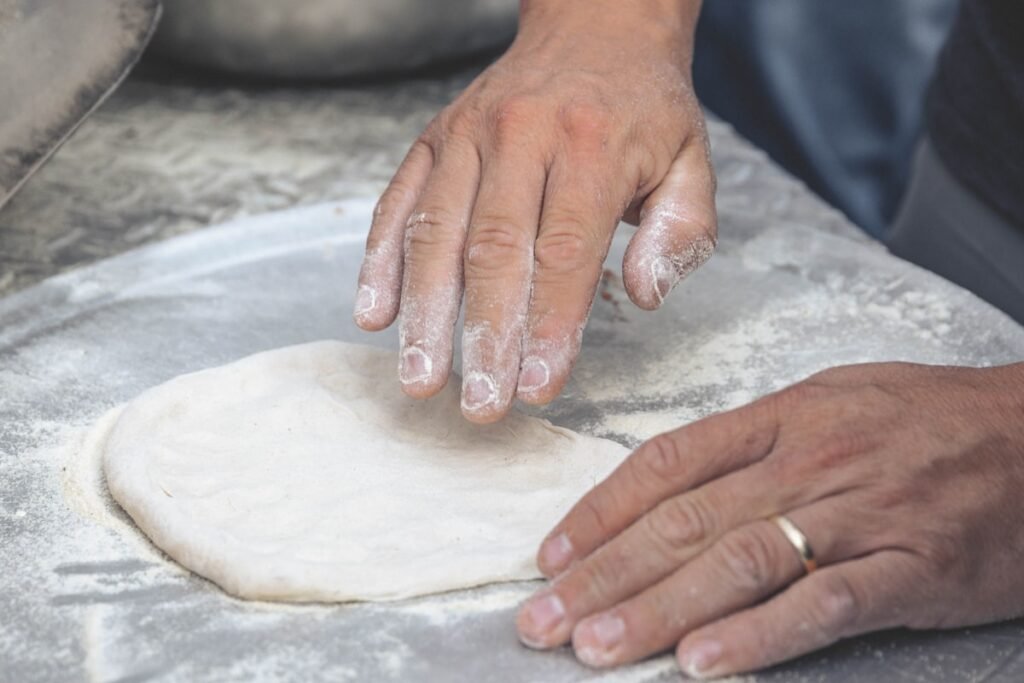
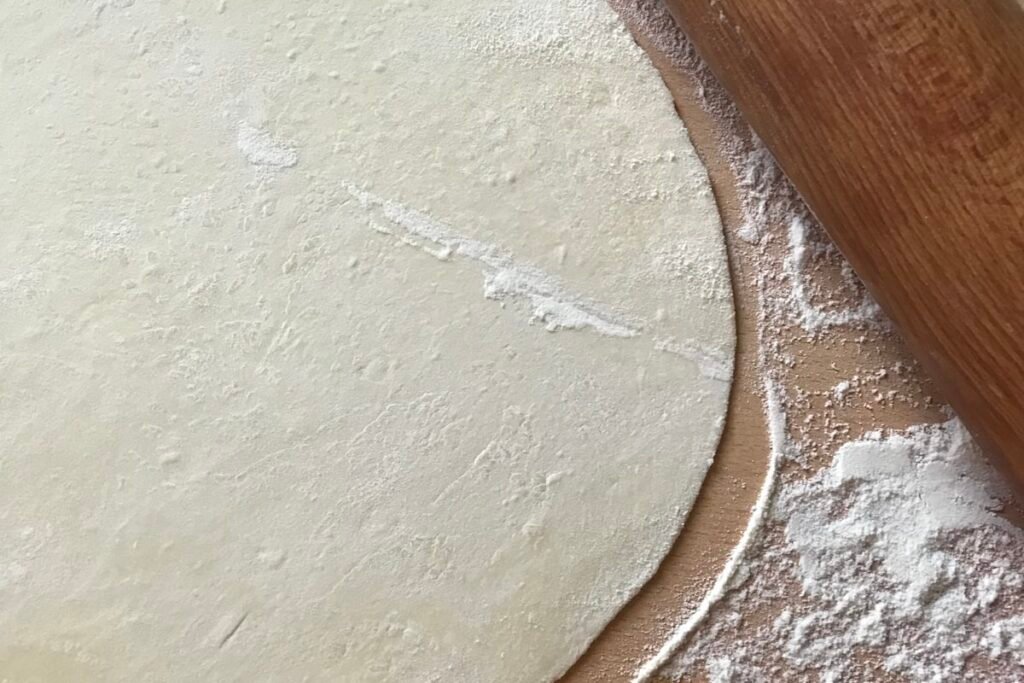
If the dough is stretched unevenly and the centre is very thin, it will burn through before the thicker edges are cooked. Practice stretching the dough evenly. The centre should be roughly the same thickness as the rest of the base — around 3–4mm for Neapolitan style.
Too Much Sugar in the Dough
Sugar caramelises and burns quickly at high temperatures. Some dough recipes include a small amount of sugar, but at 400°C+ even a teaspoon can cause premature browning. Standard Neapolitan dough uses only flour, water, salt, and yeast — no sugar, no oil. If your recipe includes sugar and you’re getting burning, try removing it.
Quick Fixes
- Check stone temp with an infrared thermometer before each pizza — aim for 380–430°C
- Turn the pizza every 15–20 seconds using a turning peel
- Keep the flame active throughout the cook
- Stretch the dough to an even thickness
- Remove sugar from your dough recipe if you’re using high heat
- If burning persists between pizzas, lift the pizza slightly off the stone using the peel for the last 10–15 seconds of the cook