Last updated: August 14, 2026
Last updated: August 2026. This post contains affiliate links — if you buy through them I earn a small commission at no extra cost to you. Full disclosure.
This semolina vs flour on a pizza peel guide breaks down what actually matters, based on real use.
What you dust your peel with has a direct effect on whether your pizza launches cleanly or sticks halfway into the oven. Flour and semolina behave differently at high temperatures, and the type you choose makes a noticeable difference in practice.
How Peel Dusting Works
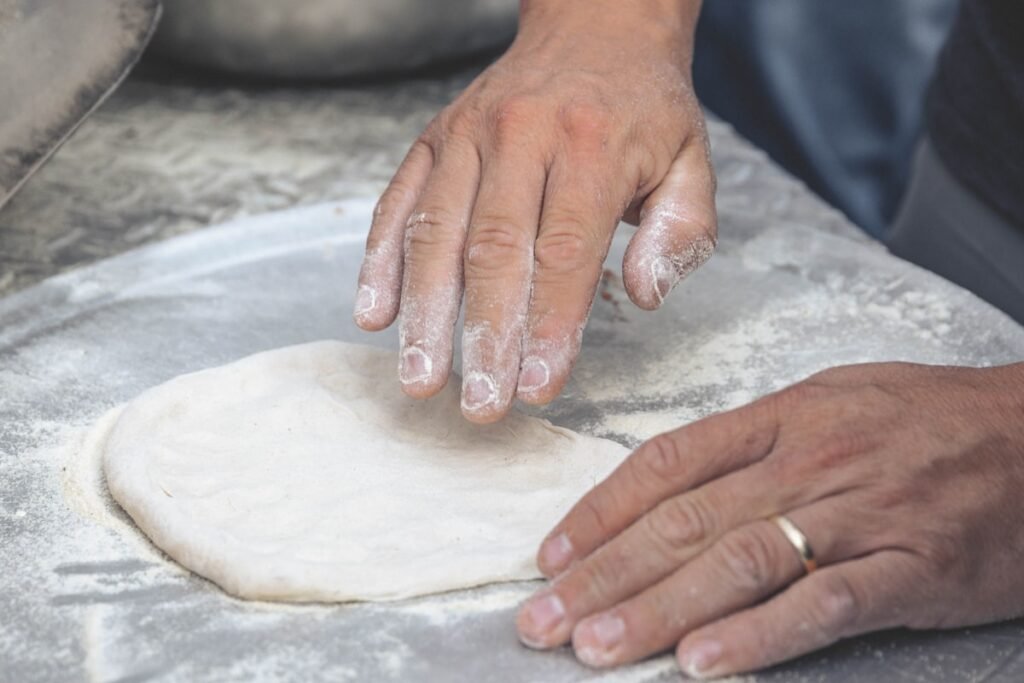
The purpose of dusting a peel is to create a low-friction layer between the dough and the peel surface, so the pizza slides off cleanly when you launch. Both flour and semolina do this, but through slightly different mechanisms – and each has different failure modes.
Flour on a Pizza Peel
All-purpose flour (including 00 flour) creates a fine, powdery layer that works well initially. The problem is that flour absorbs moisture from the dough quickly – within 30-60 seconds, it becomes damp and starts to bond with the dough surface rather than sliding under it. This is why pizza sticks when you wait too long after building it on the peel.
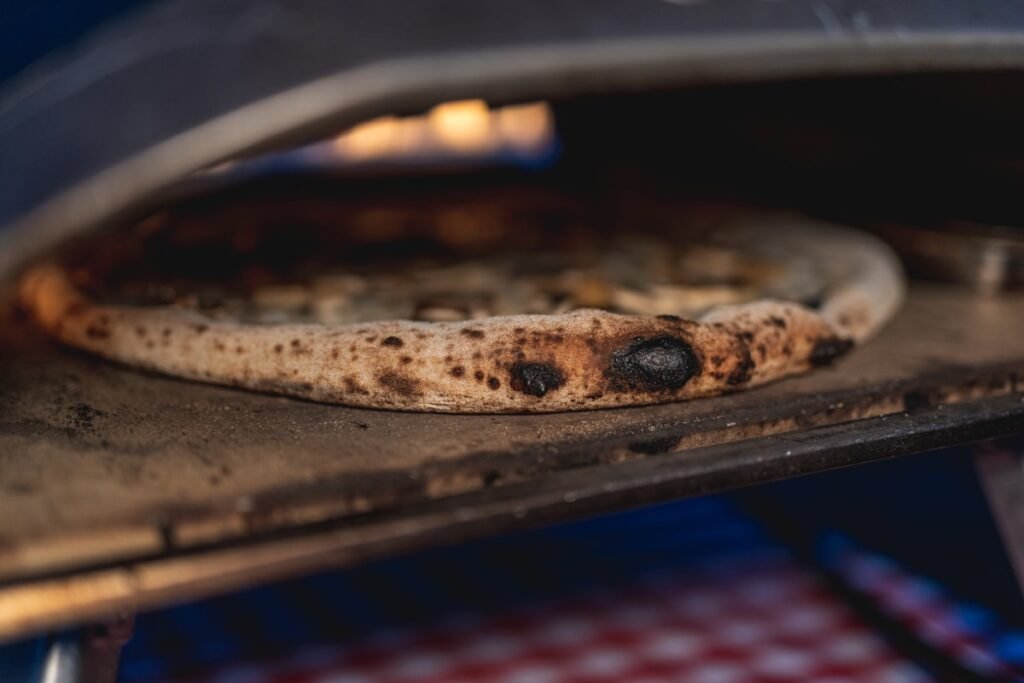
Flour also burns faster than semolina at high oven temperatures, which can cause bitter or acrid flavors on the underside of the pizza and leave black residue on your stone.
Semolina on a Pizza Peel
Fine semolina (also sold as semolina flour or durum wheat semolina) is the preferred choice for most pizza oven cooks. Its coarser grain structure means it doesn’t absorb moisture from the dough as quickly as flour, so it stays effective for longer between building the pizza and launching it. It also burns less readily than all-purpose flour, leaving less residue on the stone.
Coarse semolina works too but can leave a gritty texture on the base of the pizza. Fine semolina gives the best results – the ball-bearing effect without the gritty finish.
The Verdict
Fine semolina is the better choice for pizza oven use. It stays active longer, burns less, and leaves less residue on the stone. Most Neapolitan pizzerias use fine semolina (or a mix of semolina and 00 flour) for exactly this reason.
If you only have all-purpose flour, it will work – but you need to move quickly. Build the pizza and launch within 30-40 seconds. With fine semolina, you have more like 60-90 seconds before the risk of sticking increases significantly.
Practical Tips
- Use fine semolina rather than coarse – coarse semolina can leave a gritty base
- Spread a thin, even layer on the peel – too much causes the pizza to slide off before you’re ready
- Lift each edge of the pizza and blow gently underneath before launching to confirm it’s not stuck
- Don’t use cornmeal as a substitute – it burns at high temperatures and tastes unpleasant
- If using flour, move quickly and launch within 30-40 seconds of building
- Keep a small bowl of semolina nearby when building pizzas so you can dust the peel quickly without stopping
For a full comparison of metal vs wood peels and turning peels, see our guide to the best pizza peels for wood-fired ovens. If sticking is still an issue, see our guide on why pizza dough sticks to the peel for a full breakdown of causes.
Which Should You Use for Storage?
For storing a shaped pizza – either on the peel while you build it, or briefly resting between stretching and topping – semolina is the right choice. Its coarse grain allows air circulation under the dough and makes it easy to check whether the pizza is sticking before you attempt to launch. With regular flour, it’s harder to tell until you try to move it and it tears.
Moisture and Burn Risk
One practical consideration: both semolina and flour can burn if too much accumulates on your oven floor over multiple cooks. Semolina tends to burn slightly faster than flour at the same oven temperature – at 450-930°F it will go dark after 2-3 pizzas if you don’t brush the stone or floor between launches. A long-handled brush kept at the oven is essential either way. If you’re using a wooden peel, shake off as much excess as possible before launching. Less is more – you only need enough dusting to keep the pizza moving freely, not a visible white coat.
Mixing Both
Many pizzaiolos use a 50/50 mix of fine semolina and 00 flour as their standard peel dust. This gives the low-friction slide of semolina with slightly less burn risk than pure semolina at extreme temperatures. It’s a practical middle ground if you’re doing a long pizza session and want to minimise floor cleaning between cooks.
Whatever you use, keep a small bowl of it beside the oven and re-dust the peel between each pizza – never try to reuse the flour or semolina from the previous launch. See our full guide to best pizza peels and tips on why pizza dough sticks to the peel for more on technique.
Alternative Peel Dusting Options
Rice flour is gaining popularity with home pizza makers and is used by several high-end Neapolitan restaurants. It has the lowest moisture absorption rate of any commonly available flour and burns less readily than semolina at extreme temperatures. The main downsides are availability and cost. If you can get it, a 50/50 mix of rice flour and fine semolina is the most forgiving dusting combination for ovens running above 700°F for extended sessions.
Finely milled corn flour — not to be confused with coarse cornmeal — has better moisture resistance than all-purpose flour and is a workable substitute if semolina is unavailable. It still burns faster than semolina at high heat, so it’s better suited to lower-temperature cooks or home ovens below 500°F.
Cornmeal is too coarse and burns too readily at pizza oven temperatures, leaving a bitter residue on the stone. Avoid it for high-heat wood-fired cooking.
Metal vs Wooden Peels: Different Dusting Needs
Metal perforated peels require less dusting than solid wooden peels. The holes allow excess flour or semolina to fall through as you assemble the pizza, reducing the build-up that causes sticking and floor residue. With a solid wooden peel, dust more thoroughly and work faster — the solid surface holds moisture differently and forgives less.
For turning peels — the small round metal peels used to rotate pizza mid-cook — no dusting is needed. They slide under the pizza using heat and angle alone. Adding semolina or flour to a turning peel causes it to burn directly onto the stone floor.
Frequently Asked Questions
How much semolina should I put on a pizza peel?
Less than most people use. A thin, even coat — just enough to see a light dusting across the full peel surface. Too much creates a thick layer that makes the pizza slide around unpredictably while building it and leaves excessive residue on the oven floor between cooks.
Does semolina change the taste of the pizza base?
Not noticeably. The amount that ends up on the base of a pizza is small, and most of it burns off during the cook. Some people detect a faint wheaty note on the underside — it’s indistinguishable once the pizza is topped and sauced.
How do I know if the pizza is stuck before I launch?
Lift each edge with your fingertips and give the peel a short, sharp side-to-side shake. If the pizza moves freely as a single unit, it’s ready to launch. If it catches in one spot, slide a little extra semolina underneath that area, wait 10 seconds, and shake again. Never force a stuck pizza — pull it back and re-dust the peel rather than risk tearing it halfway into the oven.
Gear mentioned in this article (paid links)

About Ian Armstrong
I'm Ian Armstrong, a home cook and pizza oven obsessive based in the UK. Over the past four years I've owned and cooked on a Gozney Roccbox, Ooni Karu, Ooni Koda, and Gozney Arc — putting each one through real-world use in my back garden across all seasons, not just ideal summer conditions. I test dough hydration, preheat times, fuel efficiency, and how each oven handles everything from Neapolitan pizza to sourdough bread and Sunday roasts. Everything on Wood Fired Pizza Gear comes from hands-on experience. No sponsored placements, no guesswork — just honest assessments from someone who's burned a lot of dough getting it wrong so you don't have to.