Last updated: August 12, 2026
Last updated: August 2026. This post contains affiliate links — if you buy through them I earn a small commission at no extra cost to you. Full disclosure.
We’ve launched and retrieved hundreds of pizzas using different peels. The right one makes a real difference to how a session runs. Here’s what we use and recommend.
We’ve launched and retrieved hundreds of pizzas using different peels, and the right one makes a real difference to how easily a session runs. Here’s what we use and recommend.
Quick Comparison: Best Pizza Peels for Wood-Fired Ovens
| Ooni 14″ Perforated | 9″ Turning Peel | Budget Aluminum | |
|---|---|---|---|
| Best For | Best Launch Peel | Best Turning Peel | Budget Pick |
| Type | Launch Peel | Turning Peel | Launch Peel |
| Material | Aluminum (perforated) | Stainless Steel | Aluminum |
| Perforated | Yes | No | No |
| Handle | Folding long handle | Long handle | Long handle |
Peel size should match your oven. A 12-inch peel suits the Ooni Koda 2 (14-inch stone), while a 14-inch or larger peel works better with the Ooni Koda 16 or Ooni Karu 2. The Gozney Roccbox has a narrower mouth, so a smaller peel head with a longer handle is easier to work with.
A good pizza peel is one of those tools that you barely notice when it’s working well – and can’t stop thinking about when it isn’t. The wrong peel makes launches awkward, retrieval messy, and the whole process more stressful than it needs to be. Here’s what to look for and which peels are worth buying.
The Quick Answer
For most wood-fired setups, you want two peels: a thin perforated metal peel for launching and a turning peel for rotating and retrieving. The Ooni 14″ Perforated Pizza Peel is our top launch peel recommendation. For turning, a 9-inch stainless steel turning peel works perfectly for most portable ovens.
Launch Peel vs Turning Peel: Do You Need Both?
Yes, for a serious wood-fired setup. They do different jobs.
A launch peel (usually larger, with a flat blade) is what you use to build the pizza on and slide it into the oven. A turning peel (smaller, round head, long handle) is what you use to rotate the pizza mid-cook and retrieve it. Using a large launch peel to try and turn a pizza in a hot oven is awkward and slow – a small turning peel makes it much easier.
Metal vs Wood Pizza Peels
Metal Peels
Thin metal (usually aluminum) peels have a tapered edge that slides easily under the pizza for retrieval. They’re durable, easy to clean, and don’t absorb moisture. The trade-off is that metal can grip wet dough if not properly dusted – but a perforated metal peel solves this by reducing the contact area significantly.
Wood Peels
Wood peels are traditional and have a slightly more forgiving surface for dough – the porous wood doesn’t grip quite as aggressively as flat metal. They’re heavier and harder to clean, and they can warp over time with heat and moisture. Many wood-fired enthusiasts use a wood peel for building the pizza and a metal turning peel for everything in the oven.
Best Pizza Peels for Wood-Fired Ovens
Ooni 14″ Perforated Pizza Peel – Best Launch Peel
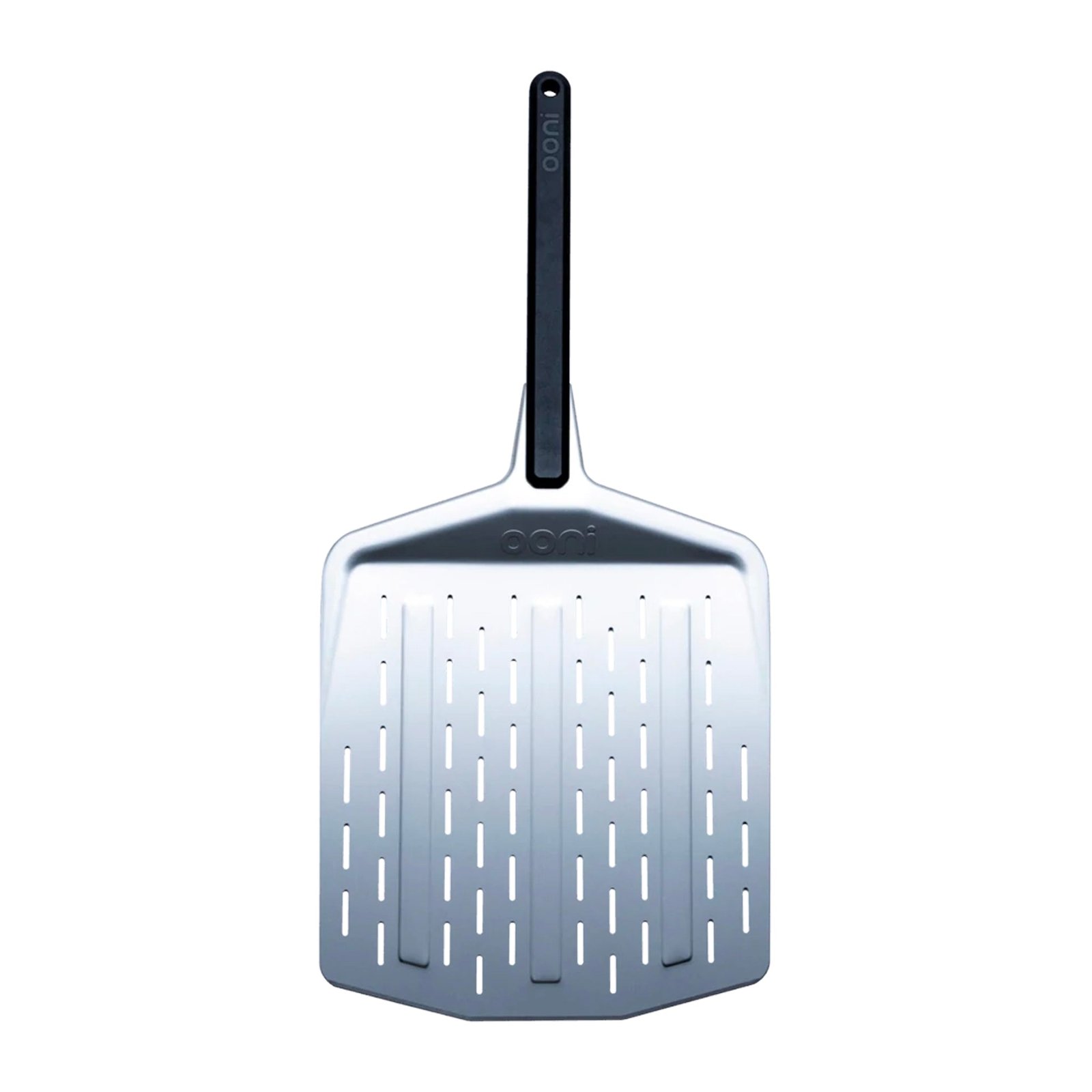
The Ooni 14″ Signature Perforated Pizza Peel has become the go-to for home wood-fired cooking. The perforations reduce the contact area between the peel and the dough, letting excess semolina fall away and making sticking much less likely. The peel is lightweight, the handle folds for storage, and the tapered edge is thin enough to slide easily under an already-cooked pizza.
9-inch Stainless Steel Turning Peel – Best Turning Peel
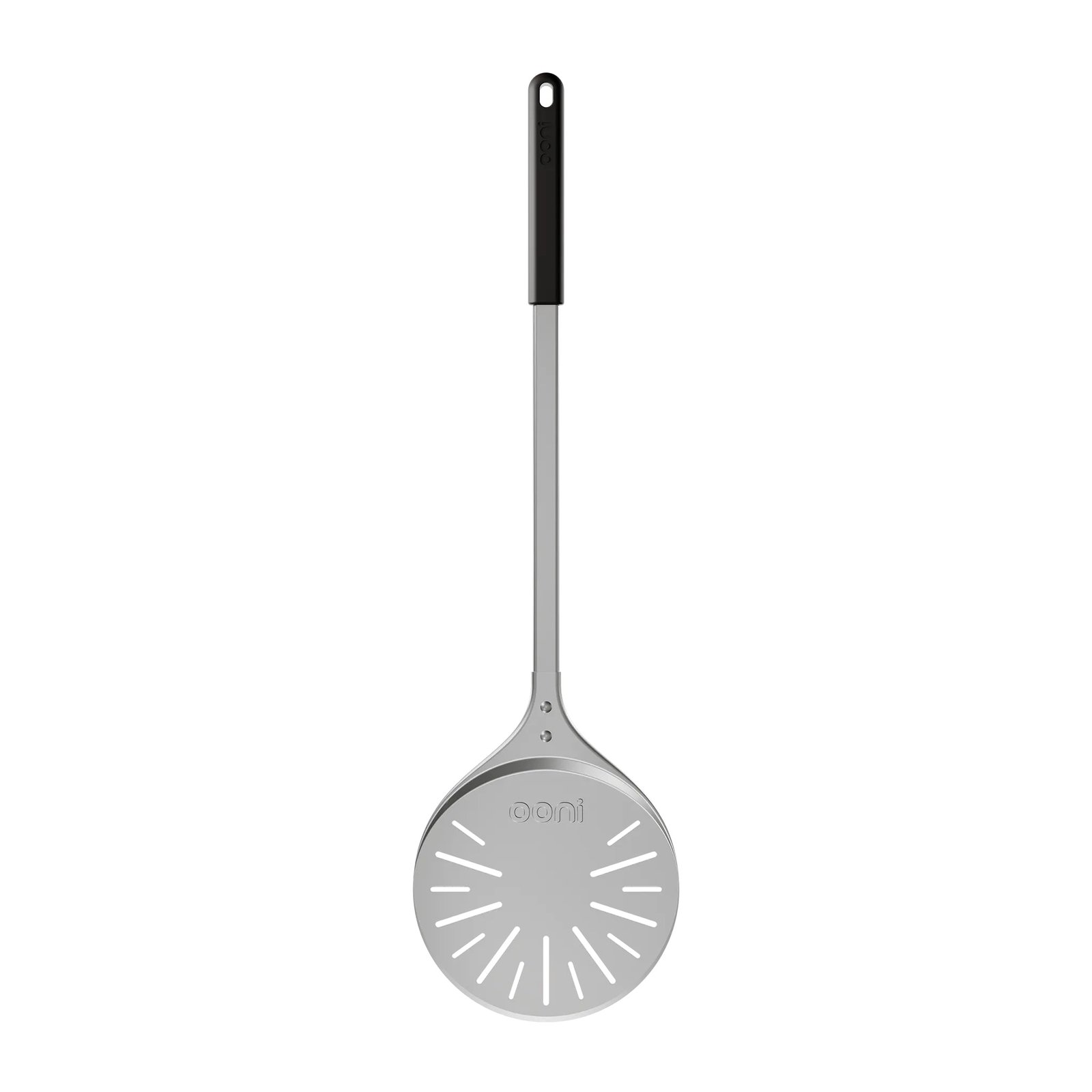
A 9-inch stainless steel turning peel is exactly what you want for rotating a pizza in a hot oven without burning yourself. The small round head manoeuvres easily inside portable ovens, and stainless steel handles the heat without warping. It also doubles well as a retrieval peel once your pizza is done.
Budget Option: A Standard Aluminum Restaurant Peel
Restaurant supply stores and Amazon sell basic aluminum pizza peels for $20-40 that work perfectly well. They’re not perforated and the handles aren’t foldable, but for beginners or occasional use they’re a reasonable starting point. Dust with semolina and work quickly, and they’ll do the job.
What Size Pizza Peel Do I Need?
Match the peel to your oven opening, not your pizza size. If your oven has a 13-inch opening, a 14-inch peel head will be awkward to manoeuvre. A 12-inch peel head is the right size for most portable ovens. For larger ovens with 16-inch+ interiors, a 14-inch peel gives you more room to work.
Frequently Asked Questions
Should I oil my pizza peel?
For wooden peels, occasional oiling (with food-safe mineral oil) helps prevent warping and cracking. For metal peels, oil isn’t necessary – keep them clean and dry. Never put a wooden peel in the dishwasher.
How do I stop pizza sticking to a metal peel?
Dust with fine semolina before placing the dough, build the pizza quickly, and launch within 60-90 seconds. Check the dough moves freely before adding toppings. See our full guide on why pizza dough sticks to the peel for a detailed walkthrough.
Do I need a long-handled peel for a portable oven?
A standard-length handle (around 10-12 inches) is fine for portable ovens. Longer handles are more useful for large brick ovens where you need to reach to the back of a deep cooking chamber. Most peels sold alongside portable ovens are already sized appropriately.
Final Thoughts
A perforated metal launch peel and a small turning peel are the combination most experienced wood-fired pizza makers land on. The Ooni 14″ Perforated Peel handles launches cleanly, and a 9-inch turning peel makes mid-cook rotation effortless. If you’re starting out and want to keep it simple, the Ooni perforated peel handles both launching and retrieval well enough on its own until you’re ready to add a turning peel.
This post contains affiliate links. If you buy through our links we may earn a small commission at no extra cost to you.
The right peel technique matters as much as the peel itself – see our guide on why pizza dough sticks to the peel and how to fix it. For the best dusting agent to use with your peel, we compare semolina vs flour.
Get wood-fired pizza tips in your inbox
Gear reviews, firing tips, and oven guides – delivered free to fellow pizza enthusiasts.
For tools to go alongside your peel — a turning peel, oven brush, and pizza cutter — see our roundup of the best pizza oven accessories.
Once you have the right peel, see our guide on how to use a pizza peel — launching, turning, and retrieving without sticking.
Gear mentioned in this article (paid links)

About Ian Armstrong
I'm Ian Armstrong, a home cook and pizza oven obsessive based in the UK. Over the past four years I've owned and cooked on a Gozney Roccbox, Ooni Karu, Ooni Koda, and Gozney Arc — putting each one through real-world use in my back garden across all seasons, not just ideal summer conditions. I test dough hydration, preheat times, fuel efficiency, and how each oven handles everything from Neapolitan pizza to sourdough bread and Sunday roasts. Everything on Wood Fired Pizza Gear comes from hands-on experience. No sponsored placements, no guesswork — just honest assessments from someone who's burned a lot of dough getting it wrong so you don't have to.