Last updated: September 16, 2026
I’ve cooked a lot of pizzas on a lot of ovens. But the first time I fired up the Gozney Roccbox, something clicked. The crust blistered exactly the way it should. The leopard spotting was there. The bottom was crisp without being burnt. I got a proper Neapolitan result on the first cook — which almost never happens with a new oven.
That’s the Roccbox in a nutshell: it’s expensive, it’s opinionated, and it genuinely delivers. Here’s everything you need to know before spending $499 on one.
Gozney Roccbox — $499
12″ propane oven · 950°F max · 5-year warranty · Gas + wood capable
Check Price on Amazon →Quick Verdict
The Roccbox is the oven I’d buy if I was serious about Neapolitan pizza and wanted something that will last a decade. It’s not cheap, and it’s not the most forgiving oven for beginners — the heat is intense and mistakes happen fast. But if you put in the time to learn it, the results are as good as anything I’ve cooked outside a wood-fired restaurant oven.
Best for: Experienced home cooks, pizza enthusiasts, anyone who wants restaurant-quality results and doesn’t mind paying for them.
Not ideal for: Beginners, anyone cooking mostly larger 14″+ pizzas, or people on a tight budget.
Gozney Roccbox Specs
| Fuel | Propane gas (wood burner accessory sold separately) |
| Max Temperature | 950°F / 500°C |
| Stone Size | 12″ cordierite |
| Preheat Time | ~30 minutes to full temp |
| Cook Time | 60–90 seconds |
| Weight | 21.4 lbs (9.7 kg) |
| Warranty | 5 years |
| Price | ~$499 |
Build Quality: Where the Price Tag Makes Sense
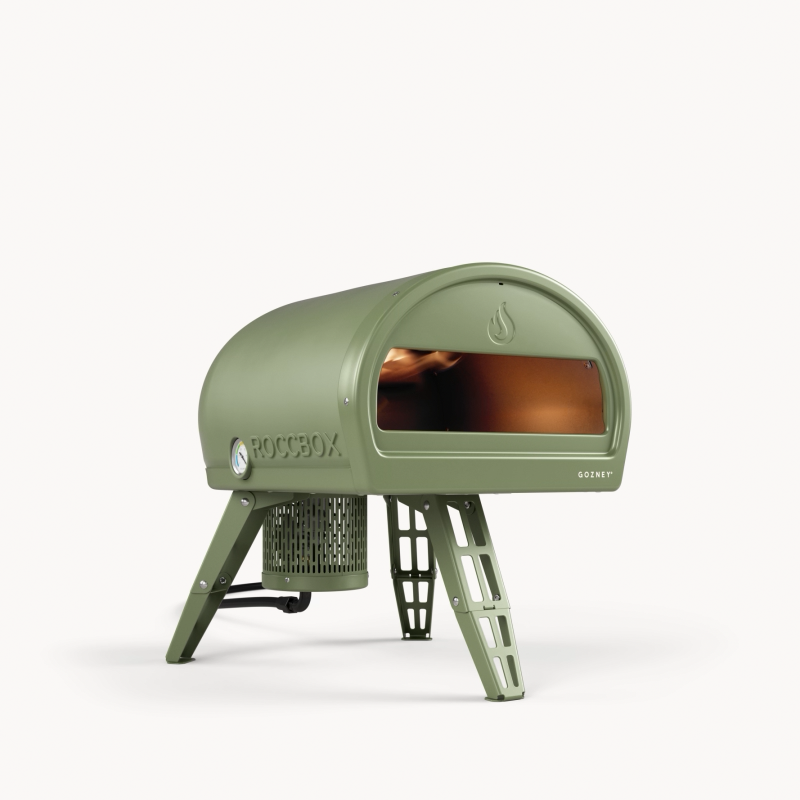
Pick up the Roccbox and you immediately understand why it costs more than a Koda 12. It feels substantial — a thick stainless steel shell, dense insulation, solid heft. Nothing rattles. Nothing feels cheap.
The exterior insulation is one of the Roccbox’s headline features. At full temperature, I can lay my hand on the outer shell without getting burned. That’s genuinely impressive at 950°F inside, and it matters practically: kids or pets nearby aren’t in danger from an accidental brush past the oven body. Competing ovens get hot on the outside. The Roccbox doesn’t.
The built-in door thermometer is a nice touch. It’s a bimetallic gauge rather than digital, so don’t rely on it for precise stone temp readings — you still want an infrared thermometer for that — but it gives you a solid ballpark of where the oven chamber is sitting.
The gas burner sits along one side of the oven and directs flame across the top of the stone in an L-shape. This lateral flame path means more even heat distribution and less scorching at the back of the stone — similar to the approach Gozney uses in the Arc and Arc Lite, just taken further.
Performance: What Cooking on the Roccbox Is Actually Like
The Roccbox runs hot — hotter than most home cooks expect. Getting to 850°F on the stone surface takes about 25–30 minutes on propane. Don’t rush it. I’ve tried cooking at 20 minutes and the underside suffers every time. Give it the full preheat and the results are transformative.
At full temperature, I’m typically launching a pizza and pulling it about 60–70 seconds later. You need to turn it — once at 20–25 seconds, again at 45. The heat is so intense that anything left in one spot for 30 seconds will char. But that active turning is part of the process, and once you get the rhythm it becomes second nature.
The stone retains heat well between cooks. I’ve done six pizzas back to back and the stone temperature barely dropped between launches. That matters if you’re cooking for a group — no waiting around for the oven to recover.
Crust leoparding — those dark blistered spots that mark a properly cooked Neapolitan — comes easily on the Roccbox. The top-down heat from the burner and the retained heat in the thick stone work together in a way that’s genuinely hard to replicate on less expensive ovens.
The Wood Burner Option
One thing that sets the Roccbox apart is the optional wood burner attachment. Swap out the gas burner for the wood version and you can run the oven entirely on small hardwood logs or chunks. I’ve used it both ways, and while gas is more convenient day-to-day, the wood adds a subtle smokiness to the crust that’s hard to replicate any other way.
The wood burner takes more skill to manage — you’re feeding small pieces every few minutes to keep the temperature steady — but it’s worth trying if you want the full wood-fired experience. The attachment costs around $99 extra, so factor that in if dual-fuel flexibility matters to you.
Roccbox vs the Competition
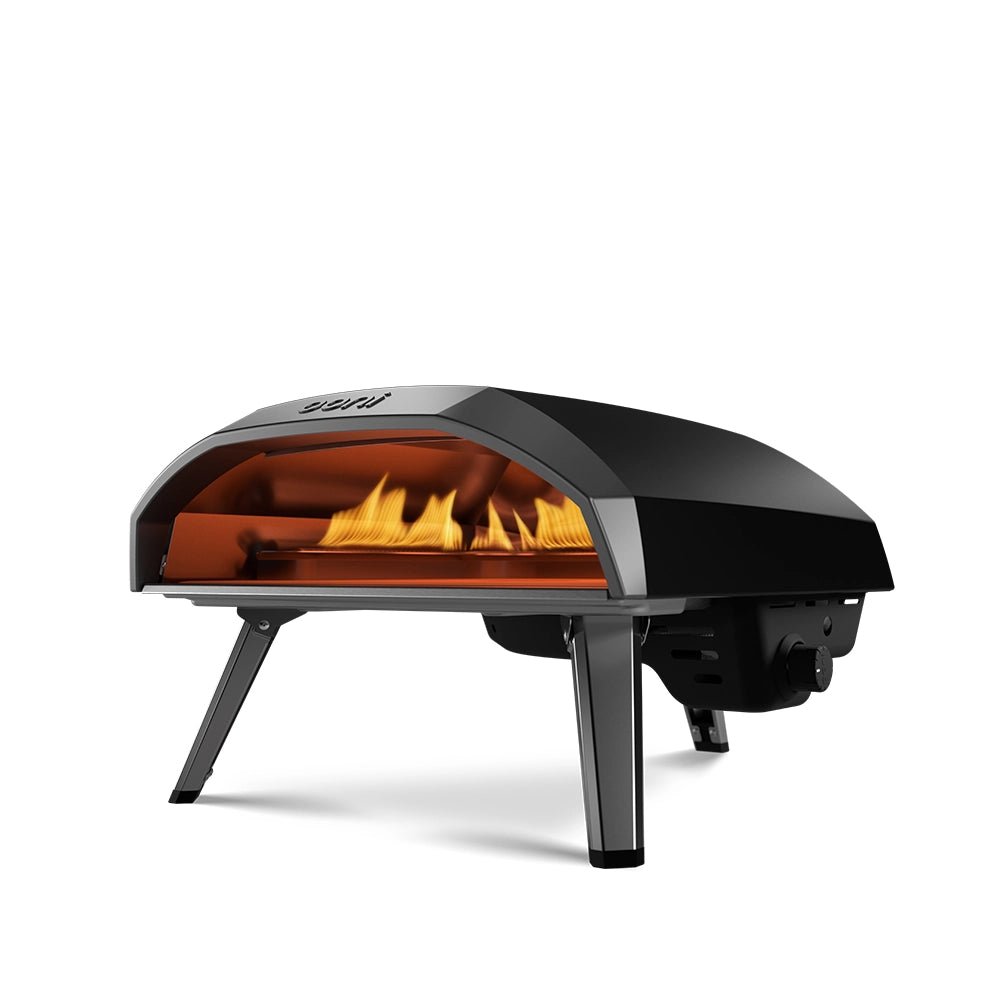
The Roccbox’s closest competitors are the Ooni Koda 16 ($499) and the Gozney Arc ($399).
The Koda 16 gives you a 16″ stone — if you want to cook larger pizzas or use the oven for steaks and flatbreads, that extra real estate matters. The Roccbox maxes out at 12″. The Koda 16 also preheats a little faster, but the Roccbox edges it on build quality and exterior insulation.
The Gozney Arc is $100 cheaper and shares the same lateral flame design. For most people cooking 12″ pizzas, the Arc delivers 90% of what the Roccbox does for less money. The Roccbox edges it on maximum temperature and insulation, but the gap is smaller than the price difference suggests. See my Gozney Arc vs Roccbox comparison for the detailed breakdown.
If you’re comparing against the more affordable Gozney Arc Lite ($349), the Roccbox’s upgrade buys you higher max temps, better insulation, and the wood burner option — all meaningful if you’re serious about pizza.
What I Liked
- The insulated exterior stays cool to the touch at full temperature
- Incredible heat retention — barely any drop-off between back-to-back cooks
- 5-year warranty (two years more than Ooni’s standard cover)
- Dual-fuel flexibility with the optional wood burner
- Build quality that genuinely feels like it will last
What I Didn’t Like
- Limited to 12″ pizzas — the stone size is a real constraint
- 30-minute preheat is longer than the Arc Lite (~18 min) or Koda 12 (~15 min)
- Beginners will burn pizzas before they find their footing — it’s not forgiving
- The wood burner sold separately feels like a miss at this price point
Is the Gozney Roccbox Worth It?
At $499, the Roccbox is not an impulse buy. But for the right person — someone past the beginner stage, who wants proper Neapolitan results, and values build quality and longevity — it’s worth it. The insulation, the max temperature, the heat retention, and the dual-fuel capability set it apart from everything cheaper.
If you’re new to pizza ovens, start with the Arc Lite or Koda 12 and get comfortable first. If you already know what you’re doing and want the best compact 12″ oven on the market, the Roccbox is it.
Frequently Asked Questions
How long does the Gozney Roccbox take to heat up?
On propane, the Roccbox takes around 25–30 minutes to reach 850–950°F at the stone surface. Give it the full preheat — launching early leads to uneven cooking.
Can you use the Gozney Roccbox with wood?
Yes — Gozney sells a wood burner attachment for around $99 that replaces the gas burner. With it fitted you can run the Roccbox entirely on small hardwood logs for a traditional wood-fired cook.
Is the Gozney Roccbox better than the Ooni Koda 16?
Depends what you want. The Koda 16 has a 16″ stone — better for larger pizzas and other dishes. The Roccbox has better insulation, higher max temps, and the wood burner option. For pure 12″ Neapolitan, the Roccbox edges it. For versatility, the Koda 16 wins.
How long is the Gozney Roccbox warranty?
The Roccbox comes with a 5-year warranty — two years more than Ooni’s standard 3-year cover, which goes a long way toward justifying the price premium.

About Ian Armstrong
I'm Ian Armstrong, a home cook and pizza oven obsessive based in the UK. Over the past four years I've owned and cooked on a Gozney Roccbox, Ooni Karu, Ooni Koda, and Gozney Arc — putting each one through real-world use in my back garden across all seasons, not just ideal summer conditions. I test dough hydration, preheat times, fuel efficiency, and how each oven handles everything from Neapolitan pizza to sourdough bread and Sunday roasts. Everything on Wood Fired Pizza Gear comes from hands-on experience. No sponsored placements, no guesswork — just honest assessments from someone who's burned a lot of dough getting it wrong so you don't have to.