Last updated: August 12, 2026
Last updated: August 2026. This post contains affiliate links — if you buy through them I earn a small commission at no extra cost to you. Full disclosure.
We go through a lot of wood and have tracked usage carefully over time. In our experience most beginners overload the fire and waste fuel.
This how much wood to use in a pizza oven guide covers exactly what you need to know, based on real use.
There’s no fixed answer to how much wood a pizza oven needs – it depends on the size of your oven, how long you want to cook, and what you’re cooking. But there are clear patterns that make managing a wood fire much easier once you understand them.
Starting the Fire
Begin with a small stack – four to six pieces of dry kindling arranged in a loose pyramid or grid pattern, with a firelighter tucked underneath. Don’t overload the firebox at this stage. A small, hot fire is much easier to build from than a large, smouldering pile.
Once the kindling is burning well (2-3 minutes), add two or three small splits of hardwood – pieces about 3-5cm diameter and 20-25cm long. Let these catch fully before adding more.
Building to Temperature
For compact ovens like the Ooni Karu 12 or Gozney Dome, you’ll typically use 5-8 small splits to bring the oven up to cooking temperature. For larger ovens (Ooni Karu 16, barrel-style brick ovens), expect to use more – 8-15 splits to reach 750°F+ on the stone, depending on starting conditions and ambient temperature.
Preheating takes 15-30 minutes for compact ovens and 45-90 minutes for larger brick ovens. Check the stone temperature with an infrared thermometer rather than guessing by time – ambient temperature, wind, and wood moisture all affect how long it takes.
Maintaining Temperature While Cooking
This is where most people underestimate wood consumption. In a small pizza oven cooking Neapolitan pizza at 400-840°F, you’ll be adding one small split every 30-90 seconds to maintain the flame. The flame needs to be active and rolling across the top of the oven throughout the cook.
A typical session cooking 6-8 pizzas might use 15-25 splits of hardwood in total. Pre-split a session’s worth of wood before you light the fire – trying to split logs while managing an active fire and a pizza in the oven is a recipe for mistakes.
How Wood Size Affects Consumption
Smaller splits catch faster and give you more precise control over temperature – adding a thin piece raises temperature quickly and predictably. Larger logs burn longer but are harder to control and don’t fit the fireboxes of most portable pizza ovens. For compact ovens, keep splits to 3-5cm diameter maximum.
Wood Quality Matters More Than Quantity
Wet or green wood doesn’t burn hot enough to maintain oven temperature regardless of how much you use. Kiln-dried hardwood with moisture below 20% burns efficiently – you’ll use significantly less of it than damp wood to achieve the same temperature. If you’re burning a lot of wood but struggling to maintain heat, moisture content is likely the problem. A moisture meter ($10-15) will confirm this.
Rough Guide by Oven Size
- Compact portable ovens (Ooni Karu 12, Gozney Dome): 15-25 small splits per session
- Medium ovens (Ooni Karu 16, Alfa Forni): 20-35 splits per session
- Large brick or barrel ovens: 30-60+ splits to preheat, then 1-2 larger pieces every 10-15 minutes to maintain
Wood Type Affects How Much You Use
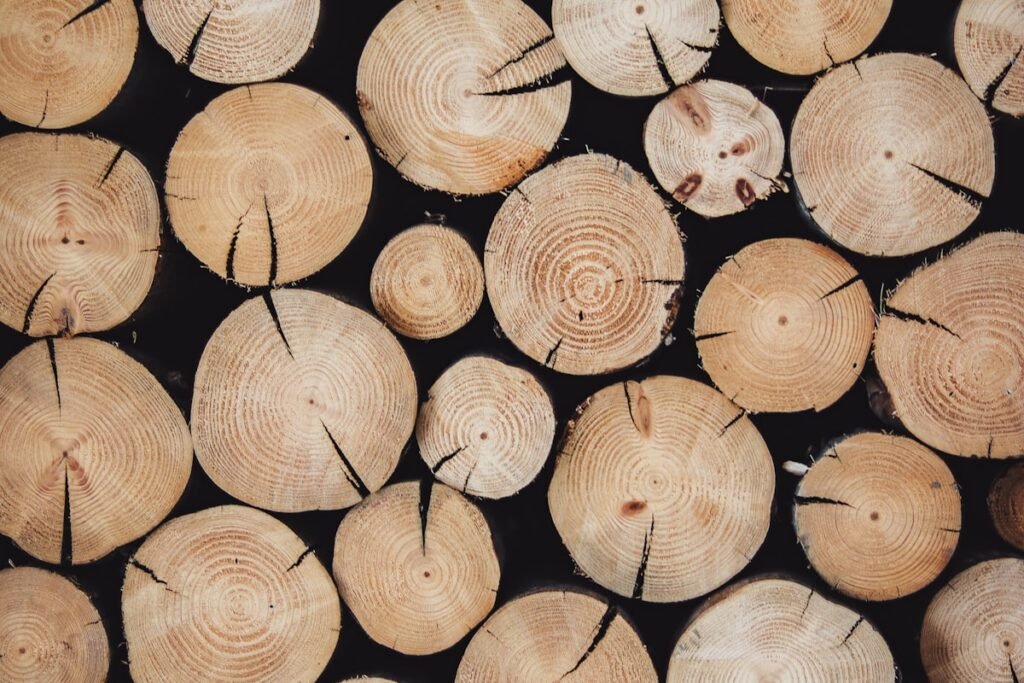
Dense hardwoods – oak, beech, hornbeam, ash – burn longer and produce more consistent heat than softwoods. A single split of dense oak produces as much energy as two splits of a softwood like pine, and it also produces less soot and fewer sparks. If you’re using a hardwood with a high energy density, you’ll need less total volume to reach and sustain the target temperature. Softwoods light faster but burn down quickly – useful for kindling, but not efficient as your main fuel. Stick to well-seasoned hardwood for the sustained heat pizza cooking requires.
Moisture Content Matters More Than Volume
Wet or poorly seasoned wood is the most common reason people struggle to get a pizza oven up to temperature quickly. Green wood (recently cut) can contain 50-60% moisture by weight; properly seasoned wood should be below 20%, ideally 15% or less. At high moisture content, a large portion of the combustion energy goes into evaporating water rather than producing heat – the wood hisses, smokes excessively, and the temperature climbs slowly or not at all. You’ll end up burning two to three times more wood than necessary. Use a cheap moisture meter (available for around $15-20 online) to check your logs before buying in bulk. Kiln-dried pizza oven wood is the most reliable option and is available pre-cut to small splits suitable for home pizza ovens.
Signs You’re Adding Too Much at Once
If the oven is producing heavy black smoke after you add wood, you’ve added too much too fast. Black smoke means incomplete combustion – the wood isn’t burning cleanly because it’s starved of oxygen or the pieces are too large. Add one or two small splits at a time, allowing each to catch before adding more. The flame should be orange-yellow and lively. A small, hot fire is more effective than a large, smouldering one. See our guide to best pizza oven accessories for fire management tools including log splitters and ash rakes.
Recommended: kiln-dried wood – available on Amazon US.
Gear mentioned in this article (paid links)

About Ian Armstrong
I'm Ian Armstrong, a home cook and pizza oven obsessive based in the UK. Over the past four years I've owned and cooked on a Gozney Roccbox, Ooni Karu, Ooni Koda, and Gozney Arc — putting each one through real-world use in my back garden across all seasons, not just ideal summer conditions. I test dough hydration, preheat times, fuel efficiency, and how each oven handles everything from Neapolitan pizza to sourdough bread and Sunday roasts. Everything on Wood Fired Pizza Gear comes from hands-on experience. No sponsored placements, no guesswork — just honest assessments from someone who's burned a lot of dough getting it wrong so you don't have to.