Last updated: August 12, 2026
Last updated: August 2026. This post contains affiliate links — if you buy through them I earn a small commission at no extra cost to you. Full disclosure.
We have burned through a wide variety of wood types in our pizza oven over the years. In our experience the species matters less than moisture content.
We’ve burned through a lot of different wood types in wood-fired ovens. Some produce great heat and flavor. Others create too much smoke or burn too fast. This is what we’ve found works.
We’ve burned through a lot of different wood types in wood-fired ovens. Some produce great heat and flavor. Others create too much smoke or burn too fast. This is what we’ve found works.
The wood you use in a pizza oven directly affects temperature, burn consistency, and the character of your cook. Use the wrong wood and you’ll struggle to reach temperature, produce excessive smoke, or introduce unwanted flavors. This guide covers exactly what to look for and what to avoid.
The Most Important Factor: Moisture Content
Moisture content matters more than species. Freshly cut (green) wood contains 50-60% water by weight. When you burn it, most of the energy goes into evaporating that moisture rather than producing heat – you get a smoky, low-temperature fire that won’t reach pizza temperature. Properly seasoned or kiln-dried wood (below 20% moisture content) burns clean, hot, and produces far less smoke.
Always buy kiln-dried or well-seasoned wood for pizza oven use. Check packaging for moisture content or use a moisture meter – below 20% is the target. The smell is also a reliable indicator: dry, seasoned wood smells lightly woody and pleasant; wet wood smells damp or sharp.
Best Wood Species for Pizza Ovens
Oak
The best all-round choice. Oak burns hot, consistently, and for a long time relative to its volume. It produces moderate smoke with a mild, pleasant flavor – not overpowering. Dense enough that a small log lasts longer than lighter hardwoods. Widely available in the US as kiln-dried logs or splits. This is what most serious home pizza cooks use.
Beech
Very similar to oak – dense, hot-burning, consistent. Slightly lighter in flavor than oak. Burns cleanly with minimal ash. A good alternative to oak and often available at similar prices.
Ash
Burns hot and clean, produces minimal smoke, and has a low moisture content even when freshly cut compared to other species. Less dense than oak but kindles more easily, making it a good choice for getting the fire started. Often mixed with oak in log bundles.
Fruitwoods (Apple, Cherry, Plum)
Burns hot with a sweet, mild smoke that adds a pleasant character to food. Less readily available and more expensive than oak or beech. Worth using occasionally for the flavor but not practical as the sole fuel for most cooks. Works particularly well when smoking meats in the pizza oven at lower temperatures.
What to Avoid
- Softwoods (pine, spruce, fir): High resin content produces excessive smoke and deposits creosote in the oven chimney. The smoke has a sharp, unpleasant flavor that taints food.
- Treated or painted wood: Burns off chemical compounds that can be toxic. Never burn any wood that has been treated, painted, stained, or laminated.
- MDF, chipboard, plywood: Contain adhesives and synthetic compounds. Never use in any food cooking application.
- Driftwood: Salt-impregnated driftwood releases corrosive compounds when burned and can damage the oven interior.
- Wet or green wood: As covered above – low temperature, high smoke, poor results.
Log Size for Pizza Ovens
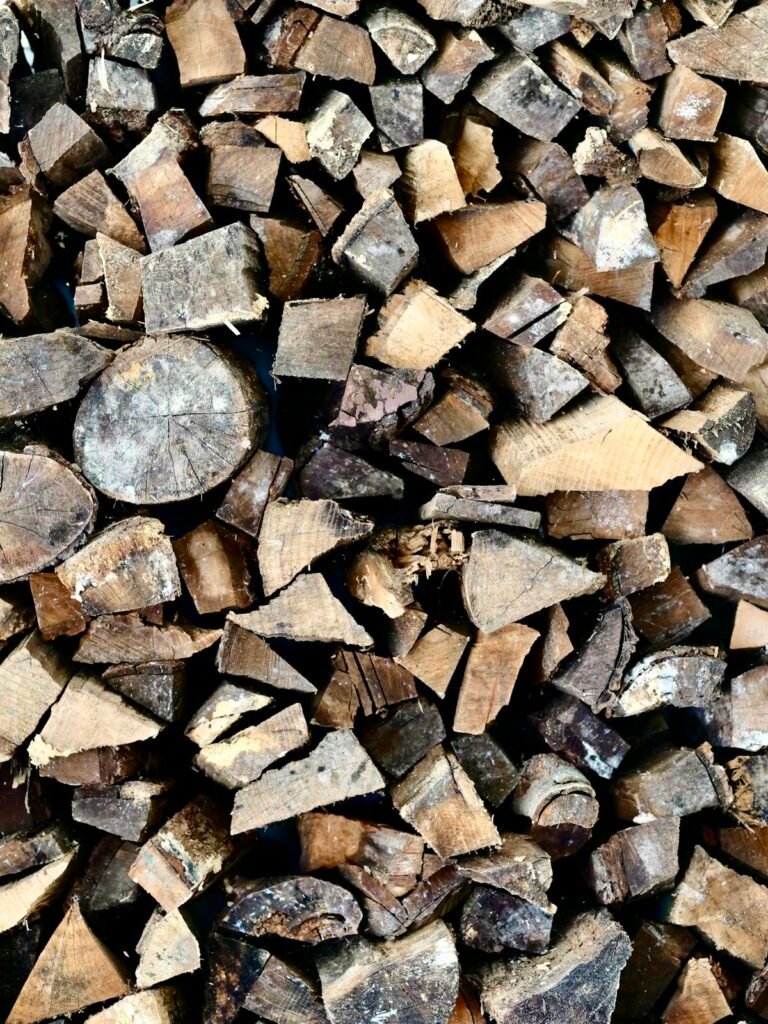
Pizza oven fireboxes are small. Standard full-size fireplace logs (25-30cm) are too long for most portable pizza ovens – you need splits or shorter logs, typically 15-20cm long and 5-8cm in diameter. Many suppliers sell pizza oven-specific log sizes. You can split larger logs yourself with a small axe if you have access to a larger supply.
Smaller pieces catch faster and allow more precise temperature control – add a small piece to boost temperature, hold back to let it settle. The amount of wood needed per cooking session varies by oven – see our guide on how much wood to use in a pizza oven.
Wood Pellets
If you have an Ooni Fyra or another pellet oven, you need food-grade hardwood pellets rather than logs. See our dedicated guide to the best wood pellets for pizza ovens for specific recommendations.
Choosing the best wood for pizza oven cooking affects heat output, smoke flavor and how efficiently your oven burns. See also: how much wood to use in a pizza oven | how to light a wood-fired pizza oven | best wood pellets for pizza ovens | Ooni Fyra 12 review
Buying and Storing Wood
The easiest way to ensure dry wood is to buy kiln-dried hardwood logs, widely available from garden centres, hardware stores, and online suppliers. Kiln-dried wood has moisture content below 20% and is ready to burn immediately. Look for bags labelled “ready to burn” – in the US this meets the Woodsure certification standard.
If you buy freshly cut or unseasoned wood, split it and store it in a dry, ventilated space for at least 12 months before burning. Stack logs off the ground with the cut ends facing out, and cover the top – not the sides – to allow airflow while keeping rain off.
For pizza ovens, small quantities go a long way. A bundle of kiln-dried hardwood logs (10-15 kg) will cover several cooking sessions. Store stock near the oven and bring logs inside for an hour before cooking if the weather is damp – even kiln-dried wood picks up surface moisture in wet conditions. A top-down fire with small kindling at the top and larger logs beneath lights faster and produces less smoke than a traditional bottom-up build.
If you are deciding between a wood-only oven and a multi-fuel model, our best portable pizza oven guide covers ovens that run on both wood and gas, and the pizza oven vs BBQ comparison sets out the broader case for each outdoor cooking option.
Gear mentioned in this article (paid links)

About Ian Armstrong
I'm Ian Armstrong, a home cook and pizza oven obsessive based in the UK. Over the past four years I've owned and cooked on a Gozney Roccbox, Ooni Karu, Ooni Koda, and Gozney Arc — putting each one through real-world use in my back garden across all seasons, not just ideal summer conditions. I test dough hydration, preheat times, fuel efficiency, and how each oven handles everything from Neapolitan pizza to sourdough bread and Sunday roasts. Everything on Wood Fired Pizza Gear comes from hands-on experience. No sponsored placements, no guesswork — just honest assessments from someone who's burned a lot of dough getting it wrong so you don't have to.