
Last updated: August 12, 2026
Last updated: August 2026.
I made pizza in a regular oven for years before switching to a dedicated pizza oven. The difference is real, but it’s not always worth it — and it depends entirely on what you’re making. Here’s an honest comparison.
You do not need a dedicated pizza oven to make good pizza at home. A regular domestic oven can produce a decent result. But if you want to understand why a pizza oven makes such a different pizza, and whether the upgrade is worth it for you, this guide lays out exactly what sets them apart.
The core difference: temperature
A typical domestic oven maxes out at 250 to 280 degrees Celsius. Most home bakers get theirs to around 220 to 240C in practice, once the preheating time is up and the thermostat has cycled. A dedicated pizza oven runs at 400 to 500 degrees Celsius. That gap is enormous, and it affects everything about how the pizza cooks.
At 220C, a pizza takes 8 to 12 minutes to cook. At 450C to 500C, it takes 60 to 90 seconds. The difference in cook time is not just a convenience issue. It is a fundamental change in what happens to the dough and toppings.
What high heat does to pizza
When dough hits a very hot stone or floor at 450C, moisture in the dough turns to steam almost instantly. This creates a rapid oven spring (the quick rise at the start of baking) that gives the crust its light, airy structure. The outside of the crust sets and chars while the inside remains soft. This is how you get the characteristic leopard spotting on a Neapolitan pizza: areas of intense char next to light, blistered dough.
In a regular oven at 220C, the cook is slow enough that the crust dries out more before the outside sets. You can get a good result but the texture is different. The crust tends to be more uniform in color, crispier all the way through, and denser. You lose the open, chewy, slightly charred quality that defines Neapolitan pizza.
Toppings tell a similar story. In a pizza oven, the mozzarella melts and bubbles in seconds without releasing much liquid. The sauce concentrates quickly. In a regular oven, the longer cook gives moisture more time to escape, which can leave toppings that are drier, or in the case of cheap mozzarella, greasy from the fat separating.
The pizza stone question
One of the best upgrades you can make to a regular oven for pizza is adding a pizza stone or baking steel. Both absorb heat and release it quickly when the dough hits the surface, which improves the base significantly. A baking steel in particular can dramatically reduce the performance gap between a domestic oven and a dedicated pizza oven for the base.
Even with a stone or steel, the ceiling of the oven remains the limiting factor. A domestic oven cannot get hot enough to replicate the top-down radiant heat of a dome-shaped pizza oven. The result is still a much better pizza than without a stone, but it will not have the char and blistering of a pizza oven pizza.
Cost comparison
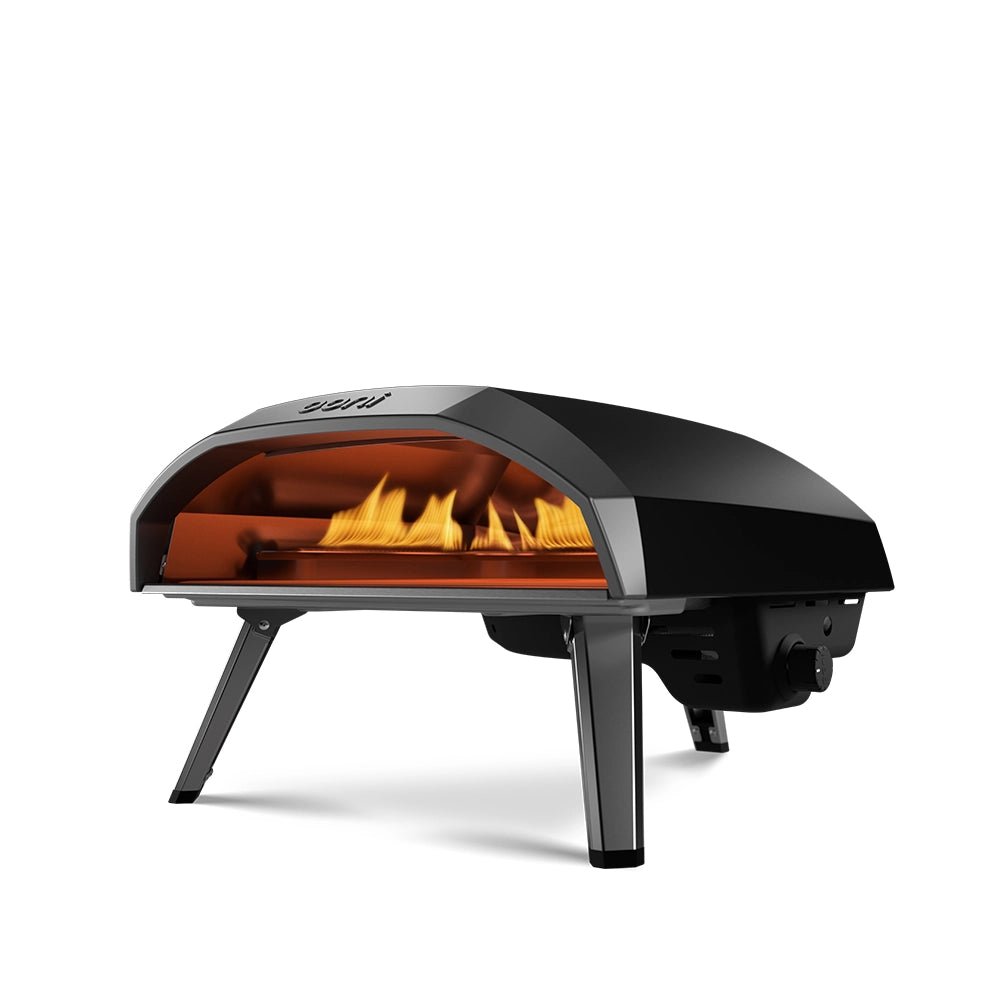
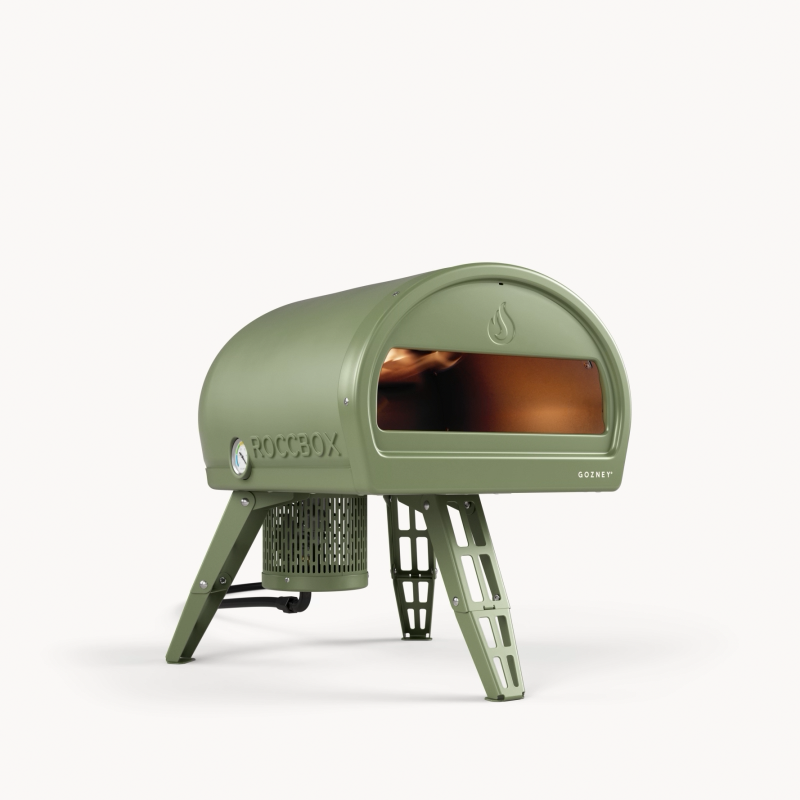
If you already own a domestic oven, cooking pizza in it costs nothing extra beyond electricity. A good pizza stone or baking steel adds $20 to $60. A dedicated entry-level pizza oven like the Ooni Koda 2 starts at around $299. A mid-range option like the Gozney Arc is around $349. High-end models like the Gozney Dome cost $1,000 or more.
Running costs differ too. A domestic oven costs a few pence per pizza in electricity. A gas pizza oven uses a small camping gas canister per session (roughly $5 to $10 depending on session length). A wood-fired oven uses kiln-dried hardwood, which costs around $5 to $15 per session depending on how long you keep it burning.
Convenience and practicality
A domestic oven is always there and always ready (within 20 to 30 minutes of preheating). A gas pizza oven takes 15 to 20 minutes to preheat. A wood-fired oven takes 45 minutes to an hour to reach temperature. You also need outdoor space for a pizza oven, somewhere safe to keep it, and a gas supply or a stock of dry wood.
In winter or bad weather, a domestic oven wins every time. You will not want to stand outside managing a fire in the rain. Pizza ovens are at their best in summer and early fall when the conditions make outdoor cooking pleasant.
Which style of pizza suits each?
A pizza oven excels at Neapolitan-style pizza: thin, soft, charred, quick-cooked. This style is almost impossible to replicate properly in a domestic oven, even with a stone, because it relies on the extreme heat differential between floor and dome.
New York style pizza (thin but foldable, cooked longer) works well in a domestic oven with a baking steel. Detroit style (thick, crispy-edged, baked in a pan) works brilliantly in a domestic oven. Roman al taglio (thick, rectangular, slower-baked) is another domestic oven style. These are all excellent pizzas that do not need 500C.
If Neapolitan pizza is what you are after, a pizza oven is not optional. The domestic oven will produce something good, but it will not produce that. If you are open to different styles, a domestic oven with a steel can get you very far.
The verdict
A dedicated pizza oven wins on temperature, cook time, crust texture, and the ability to make authentic Neapolitan pizza. A domestic oven wins on cost, convenience, and year-round usability. The right answer depends on what style of pizza you want to make and how seriously you take it.
If you are making pizza once or twice a month and are happy with New York or Detroit style, a baking steel in your domestic oven is a great investment. If you want to make Neapolitan pizza and you have outdoor space, a gas pizza oven at around $300 will change your pizza completely.
Our guide to the best pizza ovens for beginners covers the main options if you are thinking about making the switch. And if you are still using a domestic oven, the single biggest upgrade is a good pizza stone or baking steel.
See our full guide to what you can cook in a pizza oven – the range goes well beyond pizza and is one of the strongest arguments for choosing one over a regular oven.
Gear mentioned in this article (paid links)

About Ian Armstrong
I'm Ian Armstrong, a home cook and pizza oven obsessive based in the UK. Over the past four years I've owned and cooked on a Gozney Roccbox, Ooni Karu, Ooni Koda, and Gozney Arc — putting each one through real-world use in my back garden across all seasons, not just ideal summer conditions. I test dough hydration, preheat times, fuel efficiency, and how each oven handles everything from Neapolitan pizza to sourdough bread and Sunday roasts. Everything on Wood Fired Pizza Gear comes from hands-on experience. No sponsored placements, no guesswork — just honest assessments from someone who's burned a lot of dough getting it wrong so you don't have to.