Last updated: August 27, 2026
Last updated: August 2026. This post contains affiliate links — if you buy through them I earn a small commission at no extra cost to you. Full disclosure.
We use wood pellets regularly in the Ooni Fyra and have tested several brands side by side. Here is what we find makes the biggest difference to heat output and flavor.
Wood pellets have become the most popular fuel for modern pizza ovens. They’re cleaner than traditional logs, easier to store, reach temperature faster, and work in ovens designed specifically for pellet use – including the Ooni Fyra 12 and several Gozney models. But not all pellets are equal, and using the wrong type will affect both the flavor and the performance of your oven.
This guide covers everything you need to know: which pellets work in which ovens, the best wood types for pizza, how much to use, and where to buy them in the US.
Can all pizza ovens use wood pellets?
No. Only ovens designed with a pellet hopper or a pellet-compatible fuel tray can use wood pellets effectively. The key difference is airflow – pellets need a specific draft to burn consistently, and ovens built for logs don’t always provide this.
Ovens that work with wood pellets:
Ooni Fyra 12 – pellet-only oven with a gravity-fed hopper. This is the most popular pellet-specific pizza oven in the US. The hopper holds enough pellets for around 45 minutes of cooking without a top-up.
Ooni Karu 12 and Karu 16 – multi-fuel ovens that accept wood and charcoal. The Karu range can use pellets in the standard wood tray, though they work better with a small pellet basket accessory that improves airflow. Results are good but not as consistent as the Fyra 12.
Gozney Dome – the wood tray in the Dome accepts pellets alongside split logs. Works well for shorter sessions where you want convenience without the setup of a full wood fire.
If your oven is gas-only (Ooni Koda range, Gozney Arc), it cannot use pellets.
What type of wood pellets should you use?
Food-grade hardwood pellets only. Never use heating pellets or pellets that contain binders, adhesives, or softwood – these can produce toxic smoke and will taste terrible on your pizza.
The best wood types for pizza oven pellets:
Oak – the go-to for most pizza oven cooking. Burns hot and clean, produces a subtle smoky flavor that complements rather than overwhelms pizza. Reaches and holds the temperatures you need for Neapolitan-style cooking (430-900°F). Oak pellets are widely available and generally the cheapest hardwood option.
Beech – very similar to oak in burn characteristics. Slightly lighter flavor profile, burns consistently. A good everyday pellet, particularly common from US suppliers.
Cherry – burns slightly cooler than oak but produces a mild, sweet smoke that works particularly well with thinner, lightly topped pizzas. I use cherry pellets occasionally when cooking with fresh tomatoes and lighter toppings.
Apple – similar to cherry, mild and slightly sweet. Popular for cooking fish or vegetables in the oven between pizza sessions. Less common and usually more expensive than oak or beech.
Hickory – stronger smoke flavor. Works well for meat cooking but can overpower the more delicate flavors in pizza. We wouldn’t recommend hickory as your primary pizza oven pellet.
For most people: start with 100% hardwood oak or beech. You get consistent performance, good flavor, and they’re available from most stockists at reasonable prices.
How many pellets do you need?
For the Ooni Fyra 12, the hopper holds approximately 1kg of pellets and provides around 45 minutes of active cooking – enough for 5 to 7 pizzas depending on cook time and how often you top up. A 10kg bag will give you roughly 7 to 8 full cooking sessions.
For multi-fuel ovens using pellets in the wood tray, consumption is higher because the tray requires more active management. Budget roughly 1.5kg per hour of cooking.
One thing worth noting: pellets compact during storage, so weigh them rather than estimating by volume. A bag that looks half-full may contain significantly less than you expect.
Best pizza oven pellets in the US
We’ve tested a number of brands in both the Fyra 12 and the Karu 16. Here’s what we’ve found:
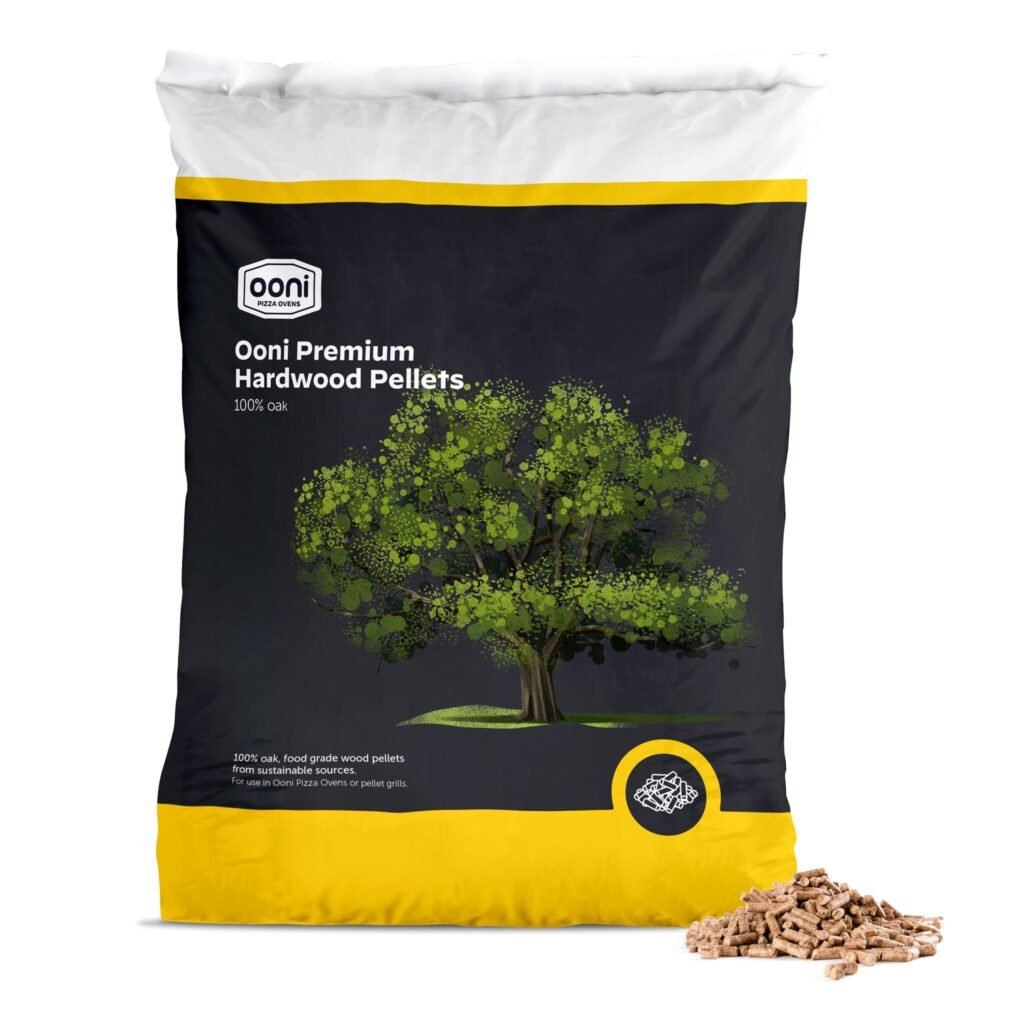
Ooni Premium Hardwood Pellets – the obvious choice for Ooni oven owners. These are 100% hardwood (oak blend), food-grade, and sized specifically for Ooni hoppers. Consistent burn, reliable heat output, no issues with bridging in the hopper. Available from Ooni direct and major retailers at around $10 for 3kg.
Big K Restaurant Grade Hardwood Pellets – a US brand with good availability via Amazon and outdoor retailers. 100% hardwood, burns cleanly, and noticeably cheaper than Ooni’s own brand at scale. We’ve used these extensively in the Fyra 12 with no performance difference. Available in 10kg bags.
Weber Firespice Wood Chunks – these are chunks rather than pellets, but worth mentioning for multi-fuel oven users who want to add smoke flavor. Not suitable for pellet hoppers.
What to avoid: any pellet labelled ‘heating pellet’, ‘biomass’, or ‘compressed sawdust’ without specifying food-grade hardwood. These often contain pine or softwood and produce an acrid smoke that ruins the food.
How to get the best results with pellets
A few things we’ve learned from extended pellet cooking:
Preheat properly. The Fyra 12 takes 15 to 20 minutes to reach cooking temperature on pellets. Don’t rush this – the stone needs to absorb heat evenly. Check the stone temperature with an infrared thermometer; aim for 420-840°F at the center before you launch the first pizza.
Tools that make this easier (paid links)
Top up before you need to. The most common mistake with pellet ovens is letting the fire die down mid-session. Top up the hopper when it’s around a third full rather than waiting until it’s empty. A consistent fuel supply means consistent temperature.
Store pellets dry. Damp pellets expand, bridge in the hopper, and don’t burn cleanly. Store in a sealed container or keep the bag folded tight. A 10kg plastic storage bin with a lid is ideal. Don’t store bags in a damp garage or shed without protection.
Clean out ash regularly. Pellets produce more ash than split wood logs relative to their size. After each session, let the oven cool completely and clear the ash tray before the next cook. Built-up ash restricts airflow and affects temperature consistency.
Wood pellets vs logs – which is better?
For convenience and consistency, pellets win. For flavor depth, logs win.
Pellets produce a lighter, cleaner smoke than properly dried hardwood logs. In side-by-side cooking tests using the same dough and toppings, the pizza cooked over split oak logs had a marginally more complex smoky character – but it was subtle enough that most people wouldn’t notice without the comparison.
Where pellets genuinely beat logs: convenience, storage, repeatability. You don’t need to source and store split hardwood, there’s no kindling phase, and the heat output is more predictable from session to session. For most home cooks, this trade-off is worth it.
For more on choosing the right fuel for your specific oven, see our guide to pizza oven accessories including fire management tools.
Frequently asked questions
Can I use BBQ pellets in a pizza oven?
Only if they’re 100% hardwood and food-grade. Many BBQ pellets are food-grade and fine to use. Check the label – if it says ‘competition blend’ or names specific hardwoods (oak, cherry, hickory), it’s suitable. Avoid blends that don’t specify the wood source.
How long does a bag of pellets last?
A 10kg bag gives roughly 7 to 8 full sessions in the Ooni Fyra 12 (45 minutes each). If you cook once a week, a 10kg bag lasts about two months.
Do pellets affect the taste of pizza?
Yes, but subtly. Hardwood pellets add a light smokiness that most people find pleasant. Oak and beech are the most neutral. Fruitwoods like cherry and apple add a slightly sweeter note. The effect is less pronounced than cooking over full split logs.
Why does my pellet oven keep going out?
Usually one of three causes: damp pellets that won’t light cleanly, insufficient airflow (built-up ash), or letting the hopper run dry. Keep pellets dry, clean out ash between sessions, and top up the hopper proactively during cooking.
Related reading
Gear mentioned in this article (paid links)

About Ian Armstrong
I'm Ian Armstrong, a home cook and pizza oven obsessive based in the UK. Over the past four years I've owned and cooked on a Gozney Roccbox, Ooni Karu, Ooni Koda, and Gozney Arc — putting each one through real-world use in my back garden across all seasons, not just ideal summer conditions. I test dough hydration, preheat times, fuel efficiency, and how each oven handles everything from Neapolitan pizza to sourdough bread and Sunday roasts. Everything on Wood Fired Pizza Gear comes from hands-on experience. No sponsored placements, no guesswork — just honest assessments from someone who's burned a lot of dough getting it wrong so you don't have to.