Last updated: August 27, 2026
Last updated: August 2026. This post contains affiliate links — if you buy through them I earn a small commission at no extra cost to you. Full disclosure.
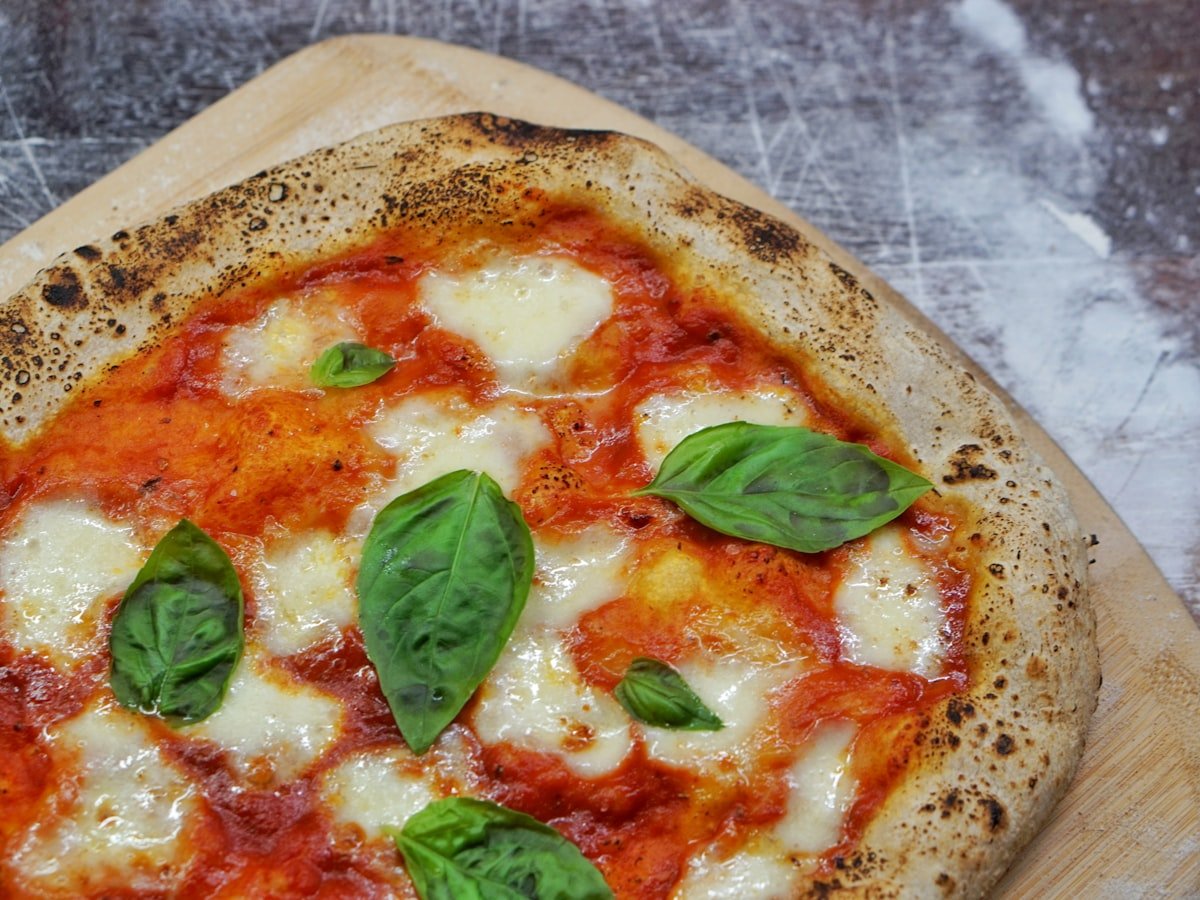
Temperature is the single most important variable in pizza oven cooking. Too cool and you get a pale, doughy base with unmelted cheese. Too hot and the crust burns before the center cooks through. Get it right and you achieve the blistered, leopard-spotted crust of a proper Neapolitan pizza in 60 to 90 seconds.
A pizza oven runs far hotter than a regular home oven — we cover the full breakdown of why in our pizza oven vs regular oven guide. Here’s what you need to know about temperatures specifically.
This guide covers exactly what temperature your pizza oven should be, how different oven types perform, how to measure it accurately, and what to do when things aren’t cooking correctly.
What temperature should a pizza oven be?
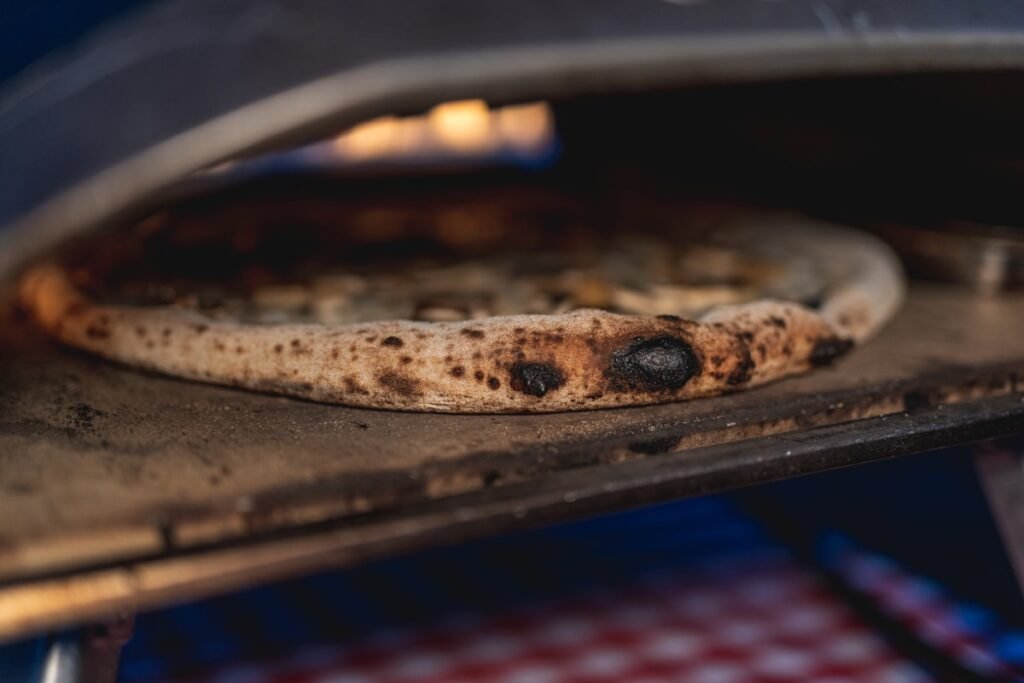
For Neapolitan-style pizza, the stone floor should be between 810°F and 900°F. At this range, a thin-based pizza cooks in 60 to 90 seconds, the base chars properly, the crust puffs with leopard spots, and the toppings blister without overcooking. This is the standard set by the Associazione Verace Pizza Napoletana, and it’s the temperature range genuine wood-fired pizzerias operate at.
For other pizza styles, the temperature range is different:
New York-style pizza: 300-660°F for 4 to 6 minutes. The lower, slower cook produces a crisp but foldable crust with more even browning. Too hot and the base burns before the cheese melts properly on a thicker pie.
Focaccia and flatbreads: 250-570°F for 3 to 5 minutes. The dough needs time to cook through without scorching the surface.
Sourdough bread: 220-500°F. Much lower than pizza – the dense dough needs sustained heat without burning the crust. Many pizza oven owners cook bread after a pizza session as the oven cools.
Meat and vegetables: 180-480°F depending on what you’re cooking. Chicken needs to reach a safe internal temperature, so a moderate oven heat is important.
What temperature do different pizza ovens reach?
Not all pizza ovens hit the same maximum temperature, and the difference matters. Here’s what we’ve measured in our testing with an infrared thermometer:
Tools that make this easier (paid links)
Ooni Koda 16 (gas): Consistently reaches 450-930°F at the stone. One of the hottest gas ovens we’ve tested. At full flame, stone temperature is ready for Neapolitan pizza in 20 to 25 minutes.
Ooni Karu 16 (gas): 430-880°F at the stone. Very slightly lower than the Koda 16 due to the chimney-forward design, but within the Neapolitan range. On wood, the same stone temperature takes 30 to 35 minutes to achieve.
Ooni Fyra 12 (pellets): Peaks at around 400-810°F. Slightly lower than the multi-fuel ovens, but adequate for Neapolitan pizza. The smaller chamber heats faster – typically 15 to 20 minutes to cooking temperature.
Gozney Dome (gas or wood): The best heat retention of any portable oven we’ve tested. Reaches 840°F on gas in around 20 minutes. Floor temperature is more consistent across the stone surface than any other oven we’ve measured.
Gozney Arc (gas): Reaches 930°F according to Gozney’s spec. In our testing we’ve seen 460-900°F at the stone, which is more than adequate.
Indoor electric ovens (Ooni Volt 12, Sage Pizzaiolo): Limited to 400-840°F due to the heating element design. The Ooni Volt 12 reaches 840°F and produces excellent Neapolitan-style pizza. The Sage Pizzaiolo tops out at 750°F – good results but the cook time is slightly longer (90 to 120 seconds rather than 60).
For more detail on how these ovens compare, see our best indoor pizza oven guide and our Ooni Karu 16 review.
How to measure pizza oven temperature
The built-in thermometer on most pizza ovens measures the air temperature inside the dome – not the stone temperature. These are not the same thing. The dome can read 840°F while the stone floor is still at 570°F, particularly early in the preheat phase.
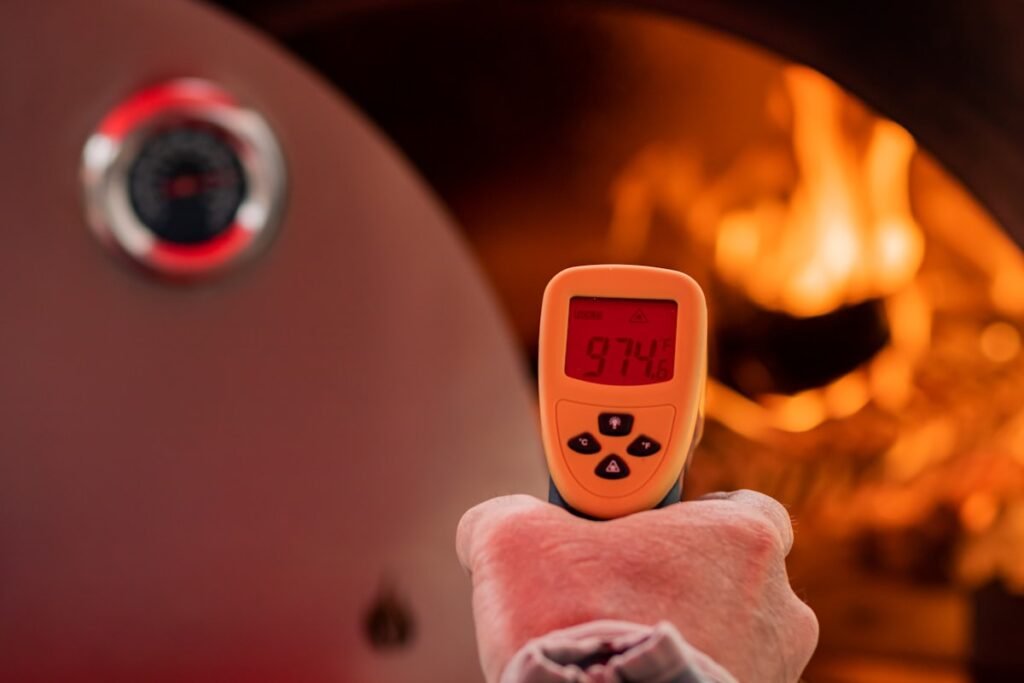
Use an infrared thermometer. This is the single most useful pizza oven accessory you can buy. Point it at the stone surface, pull the trigger, and you get an instant reading of the actual floor temperature. I use mine every session before launching the first pizza.
A decent infrared thermometer costs around $15 to $30 on Amazon. The Etekcity Lasergrip 1080 costs around $15 and reads up to 1020°F – it’s what I use and it’s more than capable. The important spec is maximum temperature range – make sure it reads to at least 930°F.
Where to point it: center of the stone, roughly where the pizza will sit. Also check the edges – they often run cooler than the center, and knowing this helps you decide how to rotate during the cook.
How long does it take to reach temperature?
Preheat times vary by oven and fuel type. Based on our testing:
Gas ovens (Koda 16, Arc): 20 to 25 minutes from cold to 840°F at the stone. The most consistent and predictable.
Multi-fuel ovens on gas (Karu 16, Dome): 20 to 30 minutes. The heavier construction takes slightly longer.
Pellet ovens (Fyra 12): 15 to 20 minutes. The smaller chamber heats faster.
Wood-fired (any oven): 30 to 45 minutes from lighting to full cooking temperature. The additional time is the fire build phase before the stone absorbs enough heat.
The common mistake is launching the first pizza too early. The dome thermometer reaches target temperature well before the stone does. Always measure the stone and wait until it’s consistently in the 790°F+ range before the first pizza.
Why is my pizza burning on top but raw underneath?
This is a stone temperature problem. The dome is hot enough, but the floor hasn’t absorbed sufficient heat. The pizza cooks from above (radiant heat from the dome and flame) faster than from below (conduction from the stone).
Fix: extend your preheat by 5 to 10 minutes, measuring stone temperature rather than going by the dome gauge. On gas ovens, try turning the flame down slightly and giving the floor more time to equilibrate. On the Karu 16 in particular, the floor takes longer to reach temperature than the dome.
Why is my pizza base burning but the top is undercooked?
The stone is too hot relative to the air temperature above it. This sometimes happens when you’ve preheated too aggressively or let the fire die down mid-session – the stone retains heat while the ambient temperature drops.
Fix: on gas, turn the flame up and launch the pizza sooner (the falling stone temp and rising dome temp will equalise). On wood, rebuild the fire before launching. You can also try moving the pizza to a cooler spot on the stone, or lifting it slightly during the cook using a perforated peel.
Temperature tips by oven type
Gas ovens
Set the flame to maximum for preheat, then dial back to around 60-70% once the stone is at temperature. Full flame during cooking tends to over-char the top before the base is done. Turning it back allows the stone heat to do more of the work.
Wood-fired ovens
Build the fire to one side of the oven and maintain an active flame during cooking. The stone temperature directly under where the fire burns will be higher than the opposite side – use this to your advantage when rotating. Launch the pizza to the cooler side and rotate toward the flame as the base sets.
Pellet ovens
Let the oven run for 5 minutes after the hopper reaches operating temperature before launching. Pellets produce a slightly lower maximum heat than split wood, so the extra preheat time matters. Rotate the pizza halfway through the cook.
Electric indoor ovens
These ovens take longer to preheat than their specs suggest – budget 25 to 30 minutes to let both the upper and lower elements stabilise. The Ooni Volt 12 has a built-in thermometer that’s reasonably accurate; the Sage Pizzaiolo’s gauge tends to read optimistically, so allow a few extra minutes beyond the ready indicator.
What about pizza stone temperature in a domestic oven?
A standard domestic oven typically reaches 250-520°F at best. Combined with a pizza stone, you can achieve a reasonable base – better than a baking tray – but you’re not going to get Neapolitan results. Cook time at this temperature will be 8 to 12 minutes, which is enough to melt the cheese and cook the dough through, but the crust won’t blister or char properly.
If you’re working with a domestic oven, place the stone on the highest rack, preheat for at least 45 minutes at maximum temperature, and use the grill/broiler for the final 60 to 90 seconds to get color on the top. It’s a workaround, not a solution – for Neapolitan pizza, you need a dedicated pizza oven.
For a full comparison of what different ovens can actually achieve, see our pizza oven accessories guide for the tools that help you get the most from any oven.
Pizza oven temperature for cooking other foods
A pizza oven at full temperature is not just for pizza – we use ours for other cooking regularly, particularly in the cooldown window after a pizza session. The high heat and radiant energy from the stone and dome produce results a domestic oven simply cannot match.
Steak and meat
For searing steak, you want the stone or a cast iron pan at 400 to 450 degrees C. At this temperature a 2cm ribeye or sirloin takes 60 to 90 seconds per side and comes out with a serious crust. The radiant heat from the dome sears the top simultaneously with the bottom, which you cannot replicate in a domestic oven or on a standard grill. Let the pan preheat in the oven for at least 5 minutes before adding the meat. In our experience the results – a hard crust and pink center – are better than anything achievable on a domestic grill. We cover this in detail in our guide to cooking steak in a pizza oven.
For larger cuts like whole chicken or lamb shoulder, you need lower, sustained heat. Let the oven cool to 180 to 220 degrees C after the pizza session and cook covered in a Dutch oven or roasting tray. The residual heat in the stone and dome holds steady for a long time and produces excellent results.
Bread and focaccia
Bread works best at 250 to 300 degrees C. After a pizza session, let the oven cool naturally for 20 to 30 minutes and you will typically land in this range – we do this almost every time we fire up the oven. A standard sourdough loaf bakes in 20 to 25 minutes and develops a thick, crackly crust that a domestic oven cannot match. Focaccia works at the same temperature and takes 10 to 15 minutes. Flatbreads and pitta can go in at full temperature – 400 degrees C plus – and cook in 60 to 90 seconds directly on the stone.
Vegetables and sides
Vegetables roast well at 300 to 380 degrees C – some of the best roasted peppers and courgette we have eaten have come out of a pizza oven. At this range, peppers, courgette, aubergine, and asparagus take 4 to 8 minutes in a cast iron pan or on a roasting tray. The high heat caramelises the surface quickly while keeping the inside tender. Whole tomatoes split and char beautifully at around 350 degrees C in about 5 minutes – excellent for pasta sauces.
Fish
Fish cooks very quickly at pizza oven temperatures. Whole sea bass or bream at 300 to 350 degrees C takes 6 to 10 minutes depending on size. Salmon fillets at 300 degrees C take around 5 to 7 minutes. Use a cast iron pan with a little oil rather than placing fish directly on the stone. Fish is forgiving – it does not need extreme heat to cook well, so the post-pizza cooldown window is ideal.
Temperature quick reference for pizza oven cooking
| Food | Stone temperature | Cook time |
|---|---|---|
| Neapolitan pizza | 430 to 900°F | 60 to 90 seconds |
| New York pizza | 300 to 660°F | 5 to 8 minutes |
| Thick crust / Sicilian | 250 to 570°F | 10 to 15 minutes |
| Flatbreads / pitta | 750°F+ | 60 to 90 seconds |
| Sourdough / bread | 250 to 570°F | 20 to 25 minutes |
| Focaccia | 250 to 570°F | 10 to 15 minutes |
| Steak (sear) | 400 to 840°F (cast iron) | 60 to 90 sec per side |
| Roast vegetables | 300 to 720°F | 4 to 8 minutes |
| Fish fillets | 280 to 610°F | 5 to 7 minutes |
| Whole fish | 300 to 660°F | 6 to 10 minutes |
| Whole chicken | 180 to 430°F | 60 to 90 minutes |
For a broader look at everything you can cook beyond pizza, see our full guide to what you can cook in a pizza oven.
Pizza oven temperature FAQ
What is the ideal pizza oven temperature for Neapolitan pizza?
The stone floor should be between 430 and 480 degrees C. At this temperature range, a properly stretched thin-base pizza cooks in 60 to 90 seconds, developing the blistered, leopard-spotted crust that defines Neapolitan style. This is the standard set by the Associazione Verace Pizza Napoletana for certified Neapolitan pizza.
How do I know when my pizza oven is hot enough?
The most reliable method is an infrared thermometer pointed at the center of the stone. The dome temperature gauge that comes with most ovens reads the air temperature, which climbs faster than the stone. For Neapolitan pizza, wait until the stone reads at least 430 degrees C on the infrared gun – not just until the dome gauge hits its target. A secondary check: scatter a small amount of flour on the stone. If it turns brown and smells nutty within 3 to 4 seconds, the stone is ready. If it burns black instantly, it may be too hot.
Can a pizza oven be too hot?
Yes. Above 500 degrees C, a thin-base pizza can char on the bottom before the top has cooked through. The very brief window between perfect and burnt becomes extremely difficult to manage. Some high-end wood-fired ovens can reach 550 to 600 degrees C, and at these temperatures you need a very fast hand and excellent dough to avoid burning. For home use, 450 to 480 degrees C is more than adequate and much more forgiving.
Why won’t my pizza oven get hot enough?
The most common cause is insufficient preheat time. The stone absorbs heat slowly and needs sustained heat from the dome above to reach temperature – the dome hitting target does not mean the stone is ready. Other causes include a gas regulator limiting flow (check for a low-flow safety setting on propane regulators), damp pellets or wood reducing flame temperature, or cooking in cold or very windy conditions which pulls heat out of the oven. On older ovens, a cracked or contaminated stone can also reduce heat absorption.
What temperature should the stone be vs the dome?
For Neapolitan pizza, the stone needs to be 430 to 480 degrees C and the dome temperature (air) is typically 100 to 150 degrees higher than the stone during preheat. By the time the stone reaches cooking temperature, the dome thermometer often reads 550 to 650 degrees C. This gap narrows once you start cooking and the stone gives up heat to the pizza base. The stone temperature matters most – it directly determines the speed and quality of the base cook.
Does outdoor temperature affect pizza oven performance?
Yes, especially on cold or windy days. Wind accelerates heat loss through the opening and can make it difficult to sustain stone temperature between pizzas. In winter, preheat times may need to increase by 5 to 10 minutes, and you may need to keep gas at full during cooking rather than dialling back. Some ovens include a door for between-pizza heat retention – more valuable in cold conditions. Pellet ovens are generally less affected since the hopper feeds fuel continuously.
What temperature for frozen pizza in a pizza oven?
Frozen pizza needs a lower stone temperature than fresh Neapolitan — aim for 300 to 340°C (570 to 645°F). At full Neapolitan heat, the bottom chars before the centre heats through. Dial the flame back or let the oven cool slightly after a pizza session before loading frozen. For cook times, turning technique, and which ovens handle it best, see our full guide to cooking frozen pizza in a pizza oven.
Related reading
Gear mentioned in this article (paid links)

About Ian Armstrong
I'm Ian Armstrong, a home cook and pizza oven obsessive based in the UK. Over the past four years I've owned and cooked on a Gozney Roccbox, Ooni Karu, Ooni Koda, and Gozney Arc — putting each one through real-world use in my back garden across all seasons, not just ideal summer conditions. I test dough hydration, preheat times, fuel efficiency, and how each oven handles everything from Neapolitan pizza to sourdough bread and Sunday roasts. Everything on Wood Fired Pizza Gear comes from hands-on experience. No sponsored placements, no guesswork — just honest assessments from someone who's burned a lot of dough getting it wrong so you don't have to.