
Last updated: August 12, 2026
Last updated: August 2026.
This Gozney Arc review is based on extended hands-on use. The Gozney Arc is the oven I recommend most often when someone asks me what to buy as a step up from entry-level. It sits in a sweet spot between the portable Ooni options and the much more expensive Gozney Dome – and in practice it punches well above its price point. I’ve run it through a full season of weekend cooking and it’s become the oven I reach for most.
Here’s what I’ve actually found after extended use.
What Is the Gozney Arc?
The Arc is Gozney’s mid-range outdoor pizza oven, sitting between the Roccbox and the Dome in their lineup. It runs on gas, has a 13-inch stone, and reaches temperatures up to 930°F. The design is unmistakably Gozney – rounded exterior, clean lines, and a semi-open front that gives you good visibility of the pizza without a door to manage.
There’s also an Arc XL with a larger cooking area for families or anyone wanting to cook bigger pizzas. The standard Arc is the one most home cooks will want.
Key Specs
- Cooking area: 13-inch stone
- Fuel: gas (propane)
- Max temperature: 930°F / 932°F
- Preheat time: approximately 20 to 25 minutes
- Weight: approximately 18 kg
- Price: approximately $499 to $549
How It Performs in Practice
The first thing that surprised me about the Arc was how quickly and evenly it gets to temperature. The flame wraps around the inside of the dome in a way that heats the whole cooking surface rather than just the back half. After 20 minutes it’s reading 450 to 900°F across most of the stone, with the hottest zone being the back-center area where the flame originates.
My first cook was a classic Margherita. It was done in under 90 seconds and the leoparding on the crust was the best I’d seen from any gas oven I’d used at a similar price point. The base had a proper crunch without being burnt, and the cornicione had real puff to it. I ran four more pizzas back to back that session and they all came out consistently.
The open-front design is something you either love or find takes getting used to. There’s no door to retain heat between cooks, which means more of the ambient heat escapes when you’re loading a new pizza. In practice it recovers quickly – usually 60 to 90 seconds between pizzas – and the visibility it gives you during the cook is worth the trade-off. I can see exactly what’s happening to the crust without opening anything.
What the Arc Does Well
Heat distribution is the Arc’s biggest strength. The wraparound flame design means there’s less of a dead zone at the front of the stone compared to rear-burner designs. You still need to rotate the pizza once or twice during the cook, but you’re correcting for the back-to-front gradient rather than rescuing an uncooked front edge.
The build quality feels genuinely premium. The exterior is solid, the gas connections are well-made, and the whole thing sits stably on the stand. Compared to some of the lighter Ooni builds, the Arc feels like it’s going to last. It’s heavier (around 18 kg), which means it’s less portable, but for a garden oven that mostly lives in one place that’s a fair trade.
Consistency across multiple cooks is something I noticed early on. Once I’d dialled in my gas setting and understood the hot zones, every pizza came out predictably. That repeatability matters more than people realise when you’re cooking for guests and can’t afford to burn one.
What to Watch Out For
The 13-inch stone is the constraint most people bump into. A 33 cm pizza fits, but you don’t have a lot of margin when launching – especially with a slightly irregular pizza shape. I’ve caught the edge of the stone a few times and had to reshape. If you’re regularly cooking for four or more people, the Arc XL might be worth the extra spend.
The open front also means you’ll want to cook in a sheltered spot on windy days. The flame can be disrupted by strong crosswinds, which affects temperature consistency. It’s not a dealbreaker, but it’s something to factor in if you don’t have a sheltered outdoor space.
There’s no door included in the standard package, though Gozney does sell one as an accessory. I don’t use a door for pizza, but if you want to use the oven for other things – bread, vegetables, meat – it would be worth getting.
Arc vs Roccbox
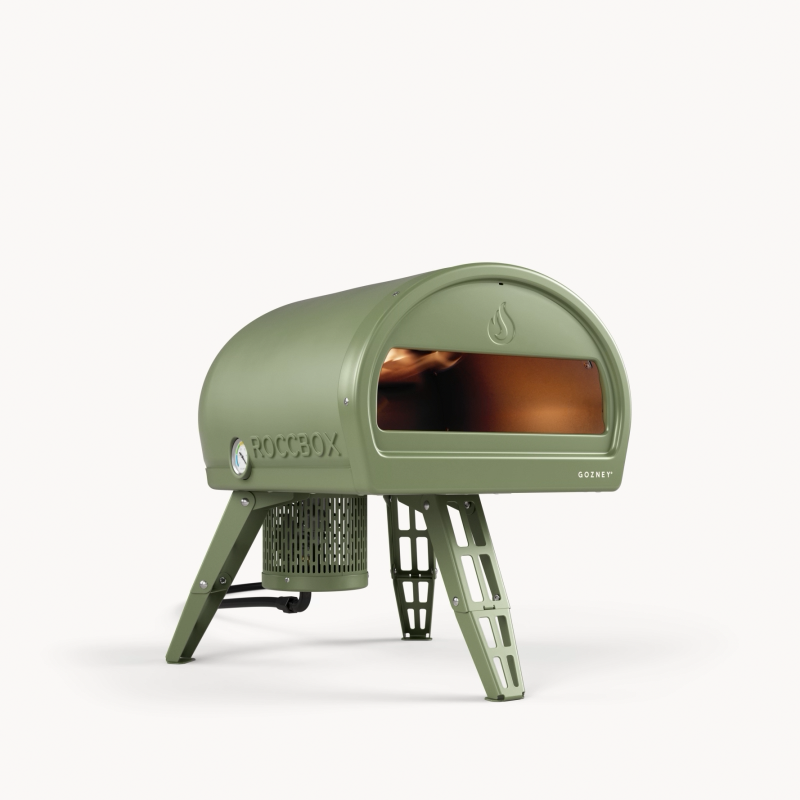
The Roccbox is Gozney’s portable offering and the Arc’s closest stablemate. The Arc has a larger stone and better open visibility; the Roccbox is more portable and has a slightly better insulated door design. For a garden oven that stays in one place, I’d choose the Arc. If you need something genuinely portable, the Roccbox makes more sense.
Verdict
The Gozney Arc is a seriously capable pizza oven at a price that doesn’t feel like a compromise. The heat distribution is better than most competitors at this price, the build quality is reassuringly solid, and the results from the first cook justify the purchase. If you’re stepping up from an entry-level oven or buying your first serious pizza oven for home, this is where I’d start looking.
Related reading
Gear mentioned in this article (paid links)

About Ian Armstrong
I'm Ian Armstrong, a home cook and pizza oven obsessive based in the UK. Over the past four years I've owned and cooked on a Gozney Roccbox, Ooni Karu, Ooni Koda, and Gozney Arc — putting each one through real-world use in my back garden across all seasons, not just ideal summer conditions. I test dough hydration, preheat times, fuel efficiency, and how each oven handles everything from Neapolitan pizza to sourdough bread and Sunday roasts. Everything on Wood Fired Pizza Gear comes from hands-on experience. No sponsored placements, no guesswork — just honest assessments from someone who's burned a lot of dough getting it wrong so you don't have to.