Last updated: August 12, 2026
Last updated: August 2026. This post contains affiliate links — if you buy through them I earn a small commission at no extra cost to you. Full disclosure.
We’ve cleaned our ovens after heavy use and after periods of neglect. This guide covers the approach we use and, just as importantly, what we’ve learned not to do.
We’ve cleaned our ovens after heavy use and after neglect. This guide covers the approach we use and what we’ve learned about what not to do.
Knowing how to clean a pizza oven properly after every session keeps it performing well and extends its lifespan significantly. Cleaning a pizza oven properly is one of those things most people skip until they notice their pizzas tasting slightly off or the stone developing dark build-up that won’t burn away naturally. I’ve been running pizza ovens year-round for a couple of years now and my cleaning routine has settled into something simple that keeps the oven performing well without much effort.
How Often Should You Clean a Pizza Oven?
The honest answer is: less often than you’d think. Pizza ovens self-clean to a significant degree through high heat. The 400 to 930°F temperatures carbonise most food residue and burn off most grease during every cook. What you’re left with is ash and carbon deposits, not the kind of sticky buildup you’d deal with in a kitchen oven.
A quick brush-down of the stone after every session and a more thorough clean every 10 to 15 cooks is the routine I’ve settled on. If you’re cooking once a week, that’s roughly a proper clean once a month or so.
How to Clean the Pizza Stone Floor
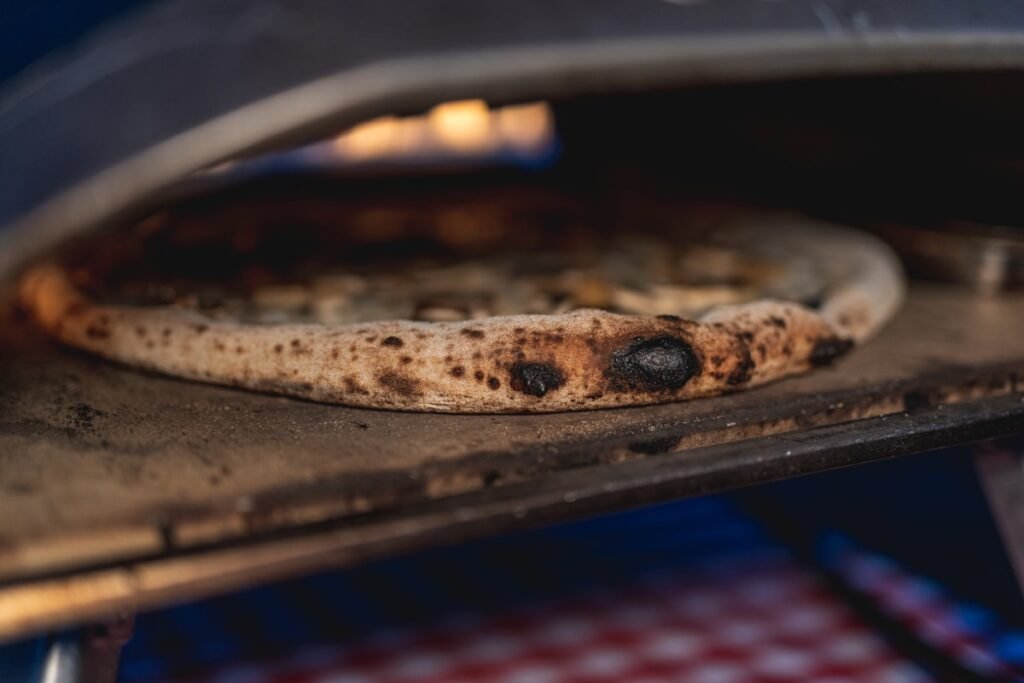
The stone is the part that needs the most attention. It absorbs fat and catches debris from every cook, and if you let it build up it will start to affect the taste of your pizzas – you’ll notice a slightly bitter, burnt quality on the base that isn’t from the dough.
Wait until the oven has cooled completely – this usually means leaving it overnight after a session. Never use water or cleaning products on a hot stone; the thermal shock can crack it, and soap residue in the porous stone will transfer to your food. Once cool, use a stiff-bristled brush or a dedicated pizza oven brush to sweep away ash and loose debris. For stuck-on carbon deposits, a metal bench scraper works well – scrape firmly in one direction rather than scrubbing back and forth.
For heavier staining, flip the stone and run a high-heat burn-off: fire the oven to maximum temperature for 30 minutes with the stained side facing the flame. Most organic residue will carbonise and flake off. Once cooled, brush away the residue. I’ve used this method on a badly stained stone and got it back to a reasonable condition without any scrubbing products.
Never use soap, detergent, or any chemical cleaner on a cordierite stone. The stone is porous and will absorb whatever you put on it, which then off-gasses into your food during the next cook.
Cleaning the Interior
The interior walls and dome of a pizza oven develop a layer of carbonised residue over time – this is normal and actually helps with heat reflection and flavor. You don’t want to scrub this off. For most portable ovens, a quick brush of the interior floor after each session and an occasional wipe of the door glass (if your oven has one) is all that’s needed.
For the door glass, wait until fully cool and wipe with a damp cloth. If there’s significant build-up, a paste of bicarbonate of soda and water applied with a cloth and rinsed off works well. Avoid abrasive scourers that can scratch the glass.
Cleaning the Exterior
Stainless steel exteriors can be wiped down with a damp cloth and a mild detergent once fully cooled. For stubborn grease marks, a stainless steel cleaner gives a better result without scratching. Dry thoroughly after cleaning – standing water against stainless steel leads to water marks and eventually surface rust if left repeatedly.
Powder-coated exteriors (common on ovens like the Gozney Arc) are more forgiving – a wipe with a damp cloth is usually enough. Avoid abrasive cleaners that can damage the coating.
Cleaning the Gas Burner
Gas burners rarely need cleaning, but if you notice an uneven flame or reduced performance, a blocked burner port is the likely cause. With the oven off and completely cool, remove the burner and use a thin wire or a toothpick to clear any debris from the ports. Don’t use water – dry clearing only. Compressed air works well if you have it.
Storage and Winterising
If you’re putting the oven away for winter, do a thorough clean first and make sure everything is completely dry before covering or storing. A fitted cover prevents dust and moisture buildup. For ovens stored outdoors through winter, remove the stone and store it indoors – repeated freeze-thaw cycles in a damp stone can cause cracking over time.
I leave my Koda 16 outdoors year-round under a fitted cover with the stone stored in the garage through the coldest months. Three winters in and it’s shown no signs of degradation from the storage approach.
Quick Cleaning Checklist
- After every cook: brush the stone and interior floor once cool
- Every 10 to 15 cooks: scrape stone, wipe exterior, check burner
- Seasonally: full clean, stone flip and burn-off, door glass clean, check for wear
- Never: soap on the stone, water on a hot surface, abrasive cleaners on glass
Recommended: wire brush – available on Amazon US.
Related reading
Gear mentioned in this article (paid links)

About Ian Armstrong
I'm Ian Armstrong, a home cook and pizza oven obsessive based in the UK. Over the past four years I've owned and cooked on a Gozney Roccbox, Ooni Karu, Ooni Koda, and Gozney Arc — putting each one through real-world use in my back garden across all seasons, not just ideal summer conditions. I test dough hydration, preheat times, fuel efficiency, and how each oven handles everything from Neapolitan pizza to sourdough bread and Sunday roasts. Everything on Wood Fired Pizza Gear comes from hands-on experience. No sponsored placements, no guesswork — just honest assessments from someone who's burned a lot of dough getting it wrong so you don't have to.