Last updated: August 18, 2026
Last updated: August 2026. This post contains affiliate links — if you buy through them I earn a small commission at no extra cost to you. Full disclosure.
We use our pizza ovens for a lot more than pizza. This is an honest account of what we’ve actually cooked and how the results compare to cooking the same things conventionally.
We use our pizza ovens for a lot more than pizza. This is an honest account of what we’ve actually cooked and how the results compare.
The question of what can you cook in a pizza oven beyond pizza has a better answer than most people expect. A pizza oven is genuinely one of the most versatile things you can have in your backyard. Yes, it makes excellent pizza – but it also does things a domestic oven simply can’t: roasted chicken with crackling skin, sourdough with a proper crust, charred vegetables with depth of flavor, even desserts. Most pizza oven owners discover this after their first few sessions and start cooking in it two or three times a week rather than just on pizza nights.
This guide covers everything we’ve cooked in our Gozney Dome and Ooni Karu 16 over the past couple of years, with temperatures, cook times, and notes on what works well.
Bread
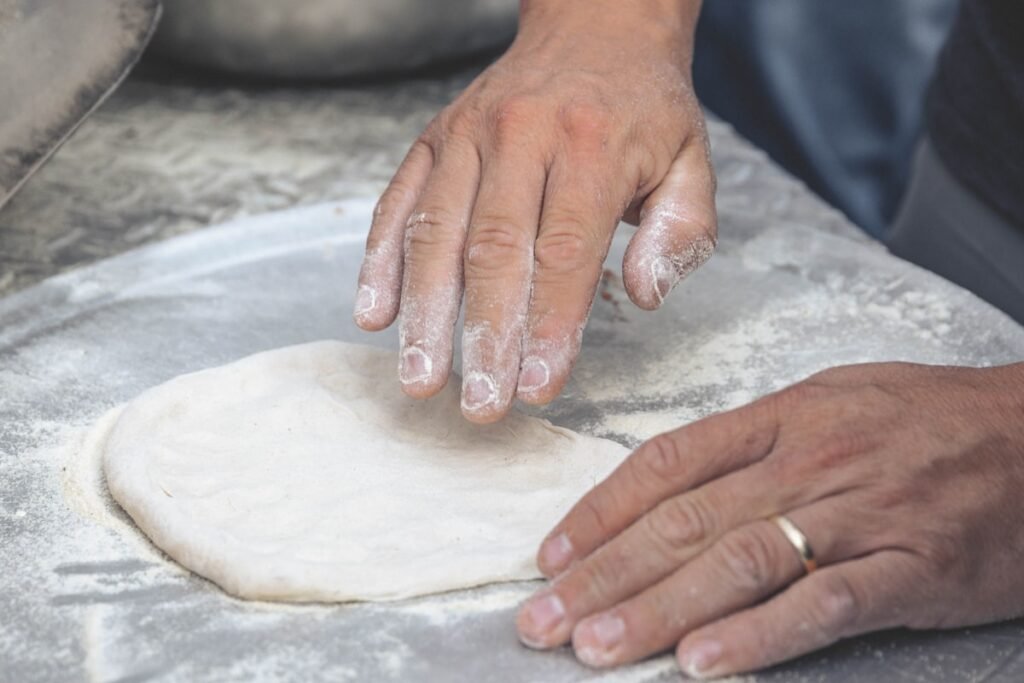
Bread might be the best thing you cook in a pizza oven that isn’t pizza. The combination of high ambient temperature, stone floor, and radiant heat produces a crust you simply cannot replicate in a domestic oven.
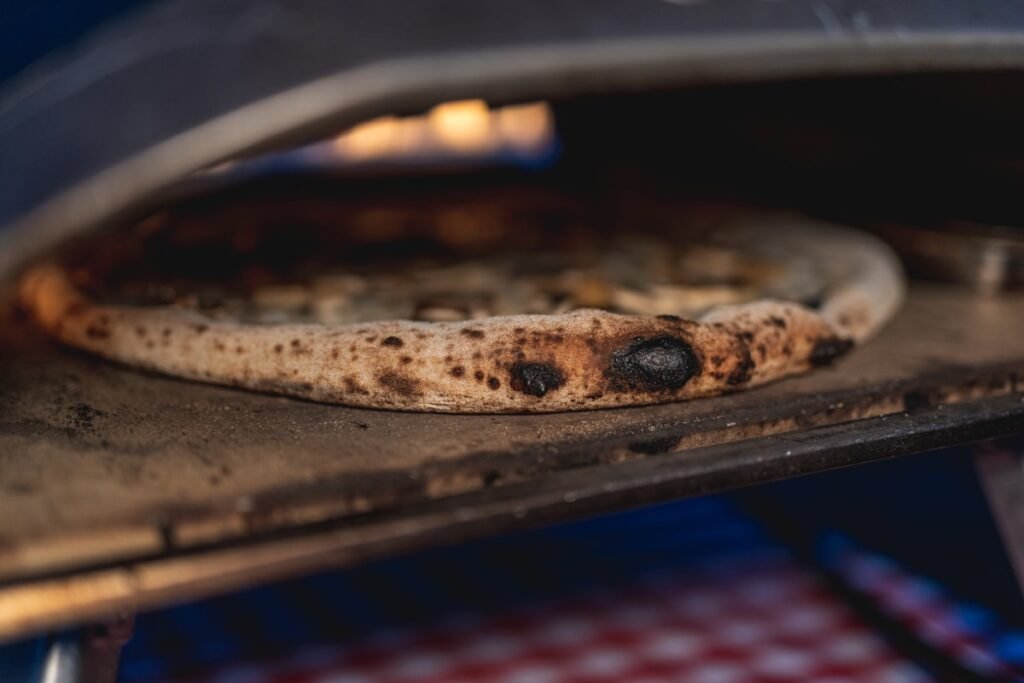
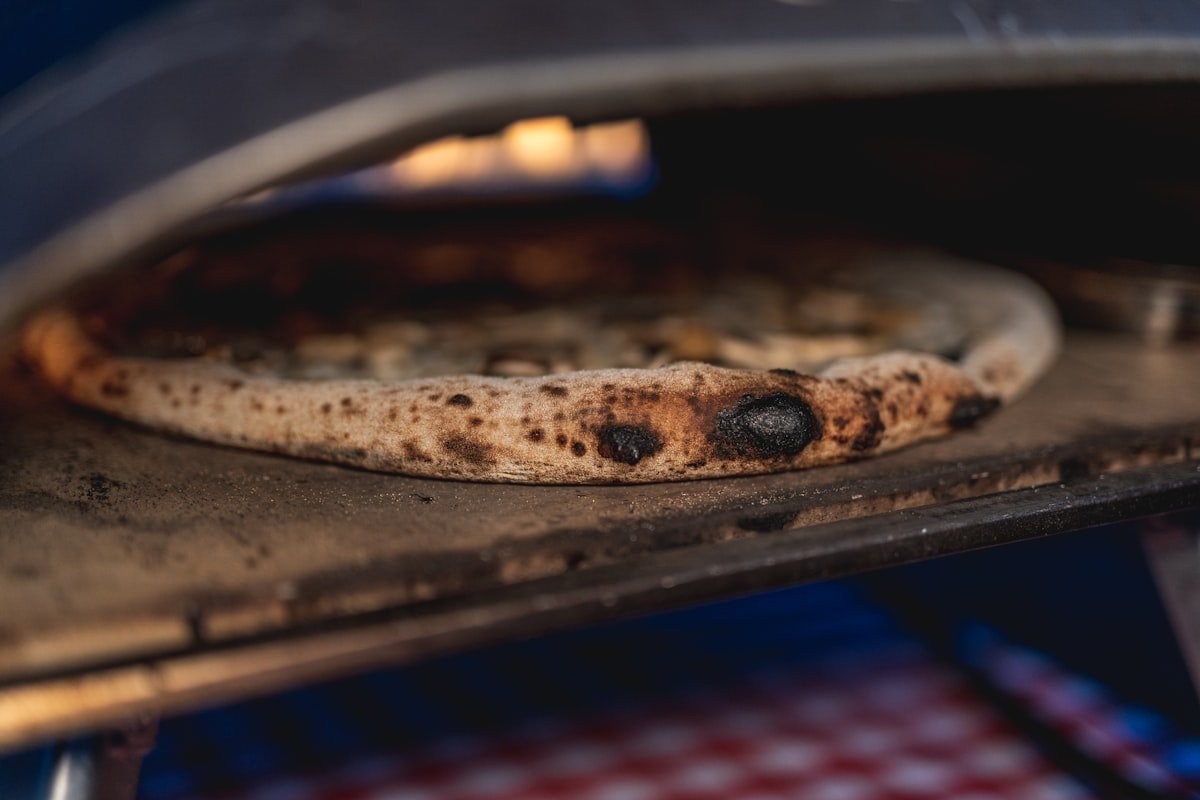
Sourdough: Let the oven cool from pizza temperature to around 230-500°F. Place the loaf directly on the stone (or in a cast iron Dutch oven for the first 20 minutes if you have one – this traps steam and helps the crust form). A 900g sourdough boule takes around 25 to 35 minutes at this temperature. The result: deep mahogany crust, open crumb, excellent spring. We’ve baked bread in the Dome weekly and it’s noticeably better than anything we’ve produced in a standard oven.
Focaccia: 270-570°F, around 8 to 12 minutes in a cast iron or heavy steel pan. The high bottom heat from the stone combined with the pan gives you a crisp, oiled underside and a soft top. Top with sea salt and rosemary, or use it as a base for a lighter pizza-adjacent dish.
Flatbreads and pitta: 380-790°F, 60 to 90 seconds – almost the same as pizza. These puff up dramatically in a hot oven. Works well as a quick cook between pizza batches.
Chicken
Whole roast chicken in a pizza oven is genuinely spectacular. The key is temperature control – you want the oven hot enough to crisp the skin but not so hot that the outside burns before the inside reaches a safe temperature.
Spatchcocked chicken: Our preferred method. Split the bird down the backbone, flatten it, rub with olive oil, salt, and whatever herbs you like. Cook at 250-540°F for 25 to 35 minutes depending on the size of the bird. The flattened shape means even cooking throughout – no undercooked thighs while the breast dries out. Check the thickest part of the thigh reaches 170°F with a probe thermometer.
Chicken thighs: Easier and more forgiving than a whole bird. 240-500°F, 20 to 25 minutes bone-in. The skin crisps in a way you can’t achieve in a domestic oven – the combination of radiant heat and the stone floor produces a texture closer to rotisserie chicken.
One thing to watch: the first few minutes at high heat can cause the skin to char if you’re not careful. We usually start chicken with the oven at 480°F and let it come down slightly during the cook rather than maintaining maximum heat throughout.
Steak
A pizza oven is effectively a very intense broiler/grill. For steak, the technique is different from the stone – you need a cast iron pan or a heavy steel pan that can handle the heat.
Preheat the pan in the oven for at least 10 minutes until it’s smoking. Season the steak generously. Drop the steak into the pan, return to the oven, and cook for 1 to 2 minutes per side at 350-750°F. The result is a hard sear on the outside with a warm center – Maillard reaction at its most aggressive.
For a reverse sear: cook the steak in the oven at low temperature (120-280°F as it cools from pizza cooking) until the internal temperature reaches 50-130°F, then blast it in the screaming hot cast iron for 60 seconds per side. This gives precise doneness throughout with a proper crust. We wrote a full guide to cooking steak in a pizza oven if you want the detail.
Fish
High-heat, quick-cooking fish thrives in a pizza oven. The key is matching the fish thickness to the oven temperature – thin fillets at high heat, thicker cuts or whole fish at slightly lower temperature with more time.
Whole sea bass or sea bream: Score the skin, stuff with lemon and herbs, cook at 280-570°F for 10 to 15 minutes depending on size (roughly 3 to 4 minutes per 100g of fish). The skin crisps while the flesh stays moist. This is one of the dishes that impresses people most when cooked in a pizza oven.
Salmon fillet: 250-520°F, 6 to 8 minutes. The high heat caramelises the outside while keeping the center barely cooked – similar to the Japanese binchotan charcoal technique. Rest for 2 minutes before serving.
Prawns: 350-720°F, 2 to 3 minutes. Cook them in a cast iron pan with butter, garlic, and chilli. The intense heat means they cook faster than anything else – watch closely and pull them out as soon as they turn pink and curl.
Vegetables
Roasted vegetables from a pizza oven are dramatically better than anything from a domestic oven. The high heat caramelises the outside quickly while keeping the interior tender rather than dried out.
Peppers: Quarter them and lay skin-side up at 350-750°F. They char and blister in 5 to 8 minutes. Peel off the skin and dress with olive oil, salt, and a little vinegar – one of the best simple side dishes you can produce.
Courgette and aubergine: Slice to 1cm, brush with oil, cook at 300-660°F for 4 to 6 minutes. The high heat produces char marks and slightly jammy interiors that slow roasting never achieves.
Tomatoes: Halve them, season, cook at 280-570°F for 6 to 8 minutes. Concentrate into a deeply flavored sauce or use as a pizza topping made directly in the oven while preheating.
Corn on the cob: Cook at 300-660°F in the husk for 15 to 20 minutes. The husk protects the kernels while the steam inside cooks them evenly. Remove the husk and char the kernels directly for a further 2 to 3 minutes.
Lamb
Lamb chops: The most straightforward meat cook in a pizza oven. French-trimmed cutlets at 380-750°F for 3 to 4 minutes total. Season well, cook in a hot cast iron pan. The fat renders and chars around the edges in a way that takes 15 minutes under a domestic grill.
Leg of lamb (slow): As the oven cools from pizza temperature to around 160-360°F, a butterflied leg of lamb goes in for 40 to 50 minutes. The residual wood heat produces an aromatic cook that gas ovens can’t replicate. Internal temperature target: 140°F for medium-rare, 160°F for medium.
Desserts
Pizza oven desserts are underrated. The most obvious is a sweet pizza – Nutella with banana, or figs and ricotta – but there’s more to it than that.
Roasted peaches or nectarines: Halve the fruit, stone side up, drizzle with honey. Cook at 250-540°F for 8 to 10 minutes. The sugar caramelises and the fruit softens without collapsing. Serve with vanilla ice cream.
S’mores: Obviously. But also: charred marshmallows over any open fire residual heat work perfectly in a cooling oven.
Chocolate fondant in cast iron: Individual cast iron ramekins at 200-430°F for 8 to 10 minutes. The exterior sets while the inside stays liquid. Better if you’ve cooked savoury first and are using the residual oven heat.
Tips for cooking beyond pizza
A few things that make a significant difference when cooking non-pizza food in a pizza oven:
Invest in cast iron. A 26cm cast iron frying pan and a Dutch oven are the two most useful accessories beyond the peel and stone scraper. They handle the heat, distribute it evenly, and allow you to cook things that would char directly on the stone.
Use a probe thermometer for meat. At high heat, the difference between 3 and 5 minutes can be the difference between perfectly cooked and overdone. Don’t guess – probe it.
Cook in sequence. Start with pizza at maximum heat, then cook flatbreads or prawns while the fire is still hot, then move to chicken or fish as the temperature comes down through 280-570°F, then bread as it drops further to 240-500°F. You get a full meal from a single fire without wasting heat.
The wood smoke matters. On gas, you don’t get smoke flavor. On wood or pellets, everything you cook picks up a light smokiness that enhances most food. Fish and bread particularly benefit. If your oven is gas-only but you want smoke character, a small wood chip addition to the burner area can help – check your oven manufacturer’s guidance first.
For accessories that make wood-fired cooking easier – cast iron pans, probe thermometers, peels and brushes – see our best pizza oven accessories guide.
Recommended: Ooni Koda – available on Amazon US.
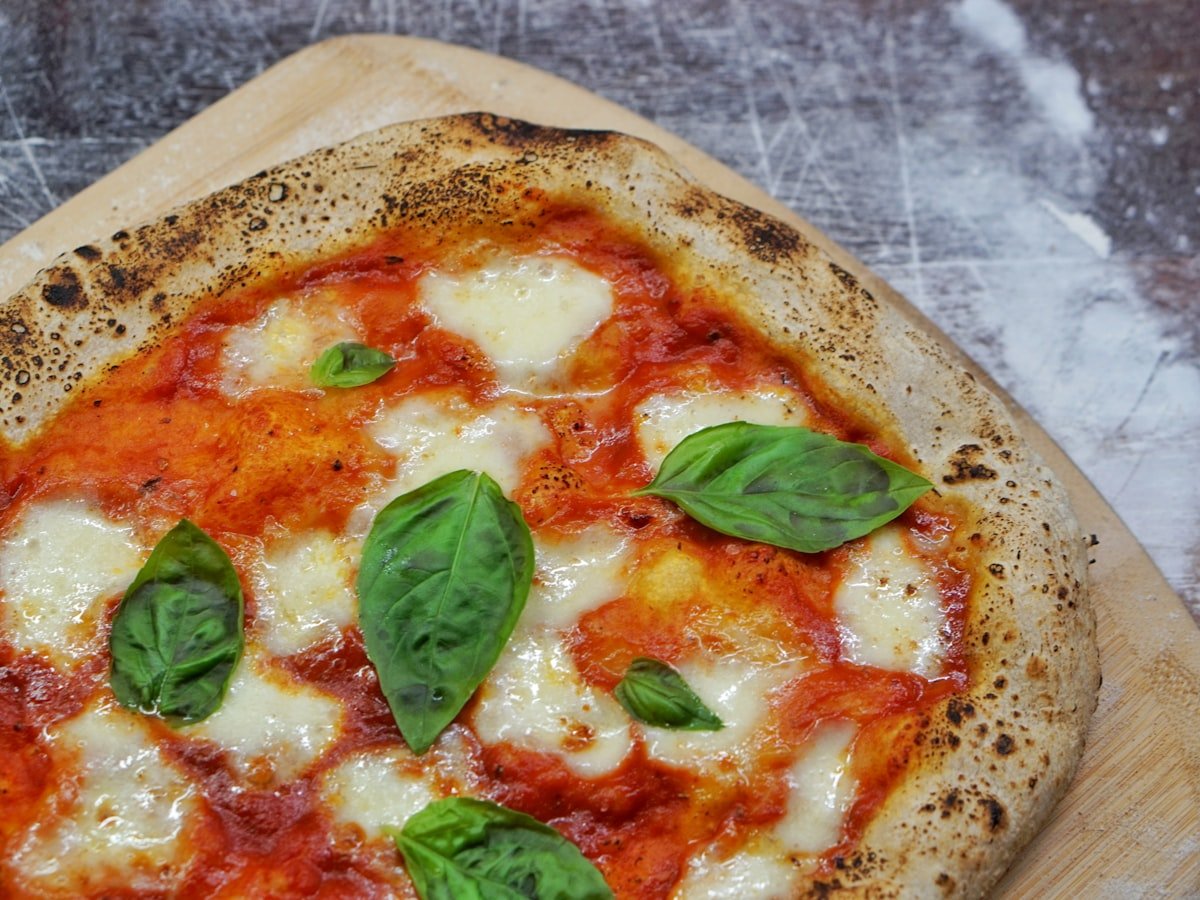
One thing worth mentioning separately: frozen pizza. A pizza oven handles it surprisingly well — you get a far crispier base than any conventional oven produces. The key is dropping the stone temperature from Neapolitan range down to around 300 to 340°C (570 to 645°F) before loading it. See our full guide to how to cook frozen pizza in a pizza oven for exact temperatures, cook times, and which ovens do it best.
Related reading
Gear mentioned in this article (paid links)

About Ian Armstrong
I'm Ian Armstrong, a home cook and pizza oven obsessive based in the UK. Over the past four years I've owned and cooked on a Gozney Roccbox, Ooni Karu, Ooni Koda, and Gozney Arc — putting each one through real-world use in my back garden across all seasons, not just ideal summer conditions. I test dough hydration, preheat times, fuel efficiency, and how each oven handles everything from Neapolitan pizza to sourdough bread and Sunday roasts. Everything on Wood Fired Pizza Gear comes from hands-on experience. No sponsored placements, no guesswork — just honest assessments from someone who's burned a lot of dough getting it wrong so you don't have to.