
Last updated: August 12, 2026
Last updated: August 2026. This post contains affiliate links — if you buy through them I earn a small commission at no extra cost to you. Full disclosure.
We have encountered tight, resistant dough dozens of times. In our experience the fix is almost always patience rather than technique.
This why is my pizza dough not stretching covers exactly what you need to know, based on real use.
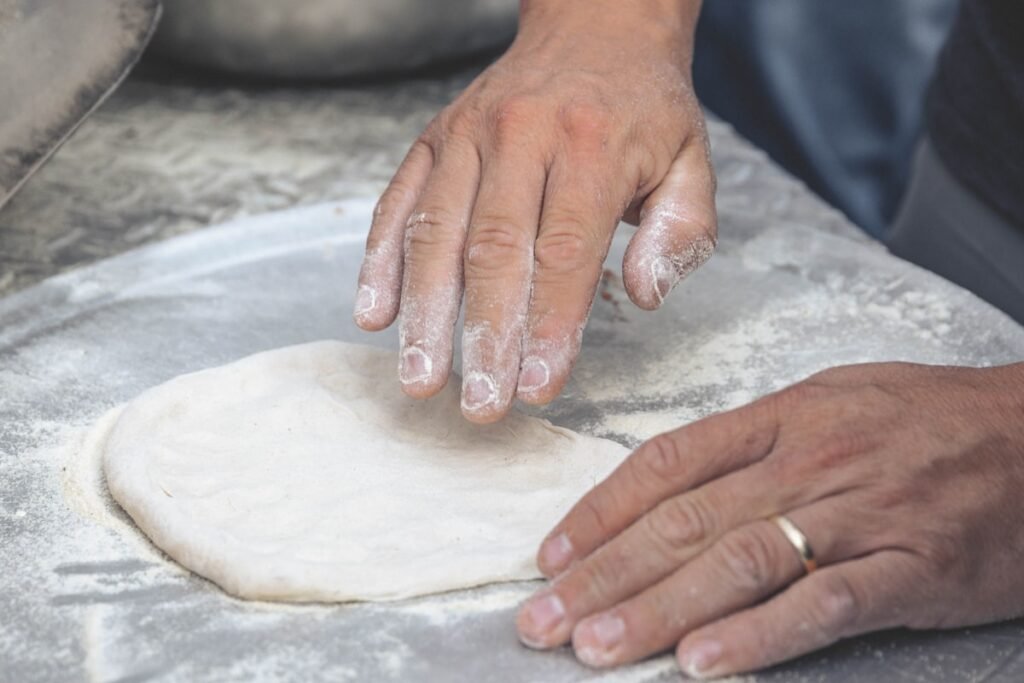
If your pizza dough keeps snapping back when you try to stretch it, you are not alone. This is one of the most common problems home pizza makers run into, and the fix is almost always the same. This guide explains why it happens and exactly what to do about it.
Why pizza dough springs back when you stretch it
Dough springs back because the gluten strands are tight and under tension. Gluten is the protein network that forms when flour is hydrated and kneaded. It gives dough its structure and elasticity. When the gluten is tight, it resists being stretched and returns to its original shape. This is called elasticity, and while it is useful for giving the crust structure during baking, it is the enemy when you are trying to open out a pizza base.
Gluten relaxes over time, particularly at warmer temperatures. A dough ball that has come straight from the fridge will have very tight, resistant gluten. The same dough ball after 3 hours at room temperature will be soft, extensible, and easy to stretch.
The most common cause: dough that is too cold
If your dough balls have been in the fridge, they need time to come up to room temperature before you can stretch them. This is the cause of nearly every case of dough that will not stretch.
Take the dough balls out of the fridge at least 2 hours before you plan to cook, ideally 3 to 4 hours. Leave them covered at room temperature. As they warm up, the gluten will relax and the dough will become noticeably softer and more pliable. If you try to stretch cold dough, it will fight you every step of the way.
You can test readiness by pressing a finger into the dough ball. It should feel soft and yielding, and the indentation should slowly spring back halfway. If it springs back immediately, it needs more time. If it does not spring back at all, it may be over-proved but will still usually stretch well.
Not enough fermentation time
Dough that has not had enough time to ferment will also be tight and resistant. During fermentation, the yeast produces carbon dioxide and enzymes that break down the gluten slightly, making it more extensible. Same-day dough (mixed and used within a few hours) can be stretched but it is harder work than dough that has had 24 to 72 hours of cold fermentation.
If you are using same-day dough and it will not stretch, leave it to rest for another 30 minutes and try again. If you are planning ahead, give the dough a longer ferment. The difference in extensibility between a 4-hour dough and a 48-hour cold-fermented dough is significant.
Overworked dough
Dough that has been kneaded very aggressively for a long time can have very highly developed gluten that is slow to relax. This is more common with machine mixing at high speeds than with hand kneading. If you have kneaded the dough extensively, give it a longer rest before trying to stretch it.
The classic fix for any case of tight, resistant dough is rest. Cover the dough and leave it for 20 to 30 minutes. Then try again. In most cases, the gluten will have relaxed enough to stretch without fighting back.
Using the wrong flour
High-protein flour (strong bread flour or Italian 00 pizza flour) forms a stronger gluten network than plain all-purpose flour. This is generally desirable for pizza as it gives the crust more chew and structure. But strong flour dough needs more fermentation time and a longer room temperature rest to become extensible. If you have switched to a stronger flour and find your dough is harder to stretch, give it more time.
What to do when dough keeps springing back
If you are in the middle of stretching and the dough keeps pulling back, stop. Do not force it. Forcing tight dough tears holes in it and is frustrating. Instead, cover the dough and leave it for 15 to 20 minutes. The act of resting allows the gluten to relax even during a session. When you come back, it will stretch much more easily.
This technique, sometimes called bench rest or intermediate rest, is something professional pizza makers use routinely. If the dough has sprung back to a small disc, just leave it covered for a while. It is not ruined. It just needs time.
Technique tips for stretching
Once the dough is relaxed enough, use gravity and gentle pressure rather than force. Press the dough flat with your fingers, leaving a thicker rim around the edge. Then drape it over your knuckles and let gravity stretch it as you slowly rotate it. Do not use a rolling pin. Rolling pins compress the gas bubbles in the dough and produce a dense, flat crust without the open structure you are after.
For the complete technique, see our full guide to how to stretch pizza dough. And if you want to improve your dough recipe at the same time, our Neapolitan pizza dough recipe covers hydration, flour choice, and fermentation in detail.
Recommended: 00 flour – available on Amazon US.
Gear mentioned in this article (paid links)

About Ian Armstrong
I'm Ian Armstrong, a home cook and pizza oven obsessive based in the UK. Over the past four years I've owned and cooked on a Gozney Roccbox, Ooni Karu, Ooni Koda, and Gozney Arc — putting each one through real-world use in my back garden across all seasons, not just ideal summer conditions. I test dough hydration, preheat times, fuel efficiency, and how each oven handles everything from Neapolitan pizza to sourdough bread and Sunday roasts. Everything on Wood Fired Pizza Gear comes from hands-on experience. No sponsored placements, no guesswork — just honest assessments from someone who's burned a lot of dough getting it wrong so you don't have to.