
Last updated: August 12, 2026
Last updated: August 2026. This post contains affiliate links — if you buy through them I earn a small commission at no extra cost to you. Full disclosure.
We have diagnosed soggy pizza more times than we like to admit. In our experience moisture management is the root cause in almost every case.
This why is my pizza soggy covers exactly what you need to know, based on real use.
A soggy pizza base is one of the most disappointing results you can get, especially after all the effort of making dough from scratch. The good news is that it is almost always fixable, and the fix usually involves changing one or two specific things. This guide covers every cause of a soggy pizza and what to do about each one.
The oven is not hot enough
This is the most common cause of a soggy pizza base. If the oven temperature is too low, the pizza cooks slowly and the moisture in the dough and toppings has time to saturate the base rather than evaporate. The base never gets the quick blast of heat that gives it structure and crispness.
In a domestic oven, crank it to the absolute maximum and preheat for at least 30 minutes. Use a pizza stone or baking steel and heat that too. The stone absorbs heat and gives the base a direct shot of it from below, which is what crisps it up.
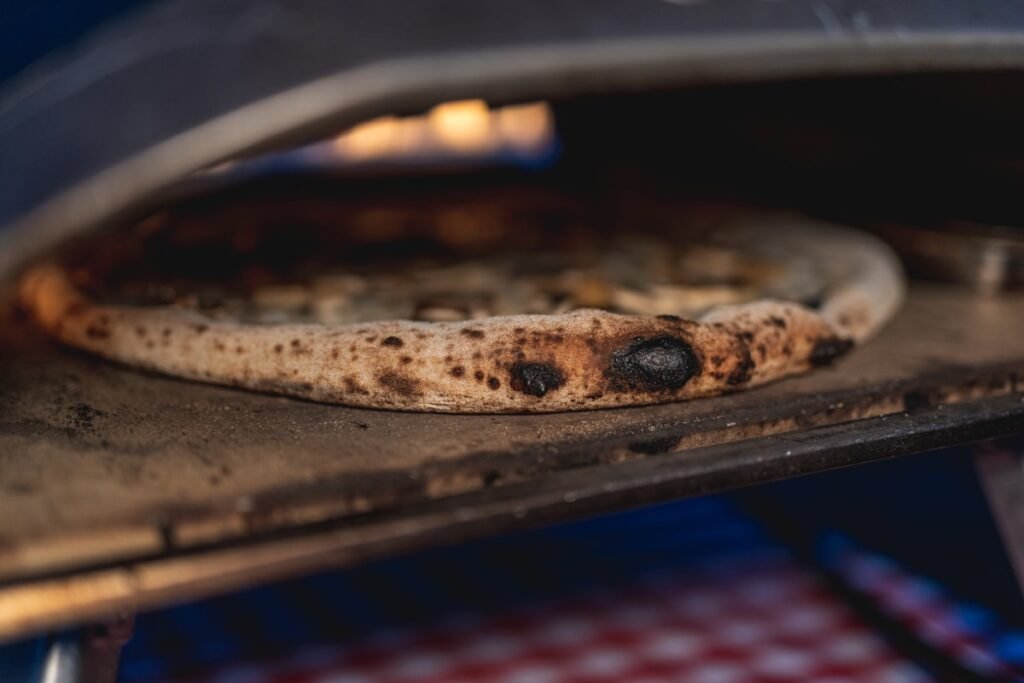
In a pizza oven, check the floor temperature with an infrared thermometer. It should be at least 380C before you launch the first pizza. If it is lower than that, wait. See our guide on how hot a pizza oven should be for the full breakdown.
Too much sauce
A heavy layer of sauce is one of the most reliable ways to get a soggy pizza. Sauce contains a lot of water, and too much of it will leach into the dough during baking. Use a ladle or spoon to apply a thin, even layer and stop before you think you are done. On a 30cm pizza, you want roughly 60 to 80ml of sauce, spread thinly.
Avoid using sauce from a jar without reducing it first. Jarred pizza sauces tend to be quite watery. If you are using a shop-bought sauce, simmer it in a pan for 10 minutes to reduce and thicken it before using. Our pizza sauce recipe uses raw San Marzano tomatoes that are thick enough to use straight from the can without reducing.
Too many wet toppings
Vegetables like mushrooms, courgette, peppers, and spinach contain a lot of water. When they heat up in the oven, they release that water onto the pizza base. If you are using vegetables that contain a lot of moisture, pre-cook them first. Roast mushrooms in the oven until they have given up most of their liquid before adding them to the pizza. Wilt spinach and squeeze out the excess water. This one step makes a significant difference.
Wet mozzarella
Fresh mozzarella is packed in water or whey and contains a lot of moisture. If you use it straight from the packet, all that water ends up on your pizza. Drain fresh mozzarella well before use: remove it from its liquid and leave it on a clean cloth or kitchen paper for at least 30 minutes. Slice it and let the slices drain too if you have time.
Better still, use a good-quality cooking mozzarella or low-moisture mozzarella, which releases much less water in the oven. For more on this, see our guide to the best mozzarella for pizza.
The base is too thick
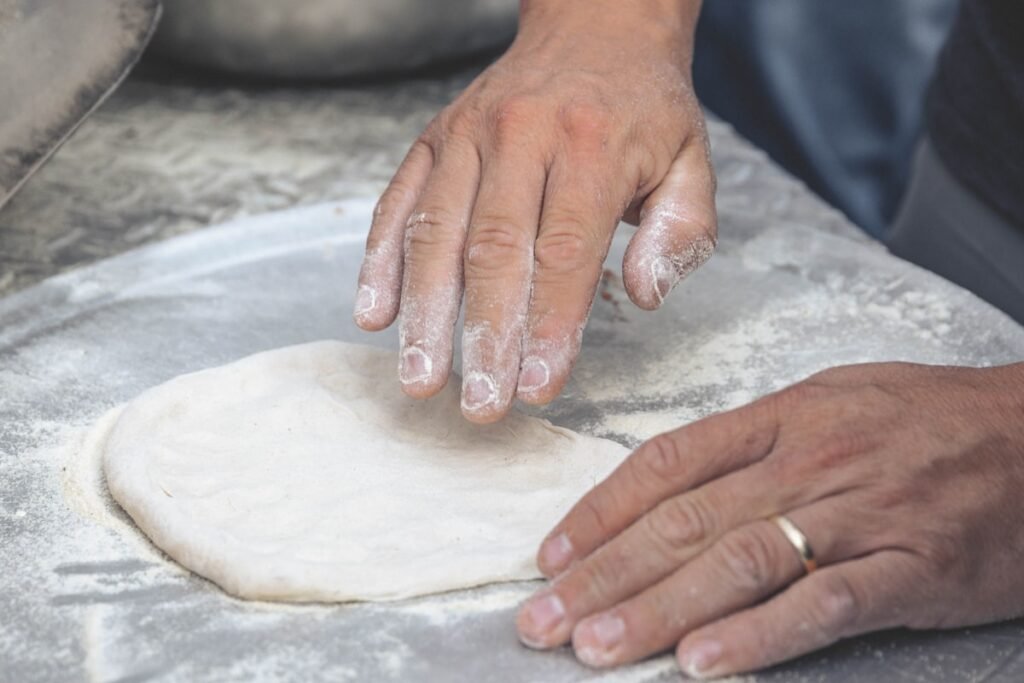
A thick base takes longer to cook through than a thin one. By the time the interior is cooked, the toppings may have been sitting on it for long enough to make it wet. For a pizza oven, aim for a thin base: 3 to 4mm at the center and a thicker rim. This cooks through in 60 to 90 seconds at high temperature.
If you prefer a thicker base, use a lower temperature for longer (this is the approach for Detroit and pan-style pizzas). Do not try to cook a thick base at pizza oven temperatures. The outside will char before the inside cooks.
Not preheating the stone or steel
A cold stone or steel will absorb heat from the pizza rather than transferring heat into it. The pizza then steams from below rather than crisping. Preheat your stone or steel in the oven at maximum temperature for at least 30 to 45 minutes before cooking. In a dedicated pizza oven, the cooking floor should be hot before you launch the first pizza.
Topping the pizza too far in advance
If you top a pizza base and then leave it sitting for 10 or 15 minutes before baking, the sauce and toppings start to soak into the dough. Top the pizza immediately before it goes into the oven. Have everything ready and lined up before you start stretching the base.
Summary
Most soggy pizza problems come down to too much moisture (wet toppings, too much sauce, undrained mozzarella) or not enough heat (oven too cold, stone not preheated, base too thick). Fix both sides of the equation and the base will be crisp. Use an infrared thermometer to check the floor temperature, drain your mozzarella, go easy on the sauce, and pre-cook wet vegetables.
Gear mentioned in this article (paid links)

About Ian Armstrong
I'm Ian Armstrong, a home cook and pizza oven obsessive based in the UK. Over the past four years I've owned and cooked on a Gozney Roccbox, Ooni Karu, Ooni Koda, and Gozney Arc — putting each one through real-world use in my back garden across all seasons, not just ideal summer conditions. I test dough hydration, preheat times, fuel efficiency, and how each oven handles everything from Neapolitan pizza to sourdough bread and Sunday roasts. Everything on Wood Fired Pizza Gear comes from hands-on experience. No sponsored placements, no guesswork — just honest assessments from someone who's burned a lot of dough getting it wrong so you don't have to.