Last updated: August 12, 2026
Last updated: August 2026. This post contains affiliate links — if you buy through them I earn a small commission at no extra cost to you. Full disclosure.
We have made pizza dough without yeast more times than we can count, usually when we run out of yeast mid-session. Here is what we find produces the best result.
This pizza dough without yeast guide breaks down what actually matters, based on real use.
No yeast? You can still make a pizza base. A baking powder dough takes 20 minutes from start to cooking and works well in a pizza oven at lower temperatures. It won’t taste like a proper Neapolitan pizza – the fermented flavor and open crumb require yeast – but it produces a perfectly good quick base when you don’t have time or supplies for the real thing.
Ingredients (Makes 2 Bases)
- 300g all-purpose flour (or 00 flour)
- 2 tsp baking powder
- 1 tsp salt
- 1 tsp sugar
- 2 tbsp olive oil
- 175ml warm water
Method
Step 1: Mix
Combine flour, baking powder, salt, and sugar in a bowl. Add the olive oil and warm water. Mix until a soft dough forms. Tip onto a floured surface and knead briefly for 2-3 minutes until smooth. Don’t overwork it – unlike yeast dough, which benefits from extended kneading, baking powder dough toughens with excessive handling.
Step 2: Rest
Cover and rest for 10-15 minutes. This relaxes the gluten and makes the dough easier to shape. No proving is needed – there is no yeast to activate. You can use the dough immediately after resting if you’re in a real hurry, but the 10-15 minute rest makes a noticeable difference to how it handles.
Step 3: Shape
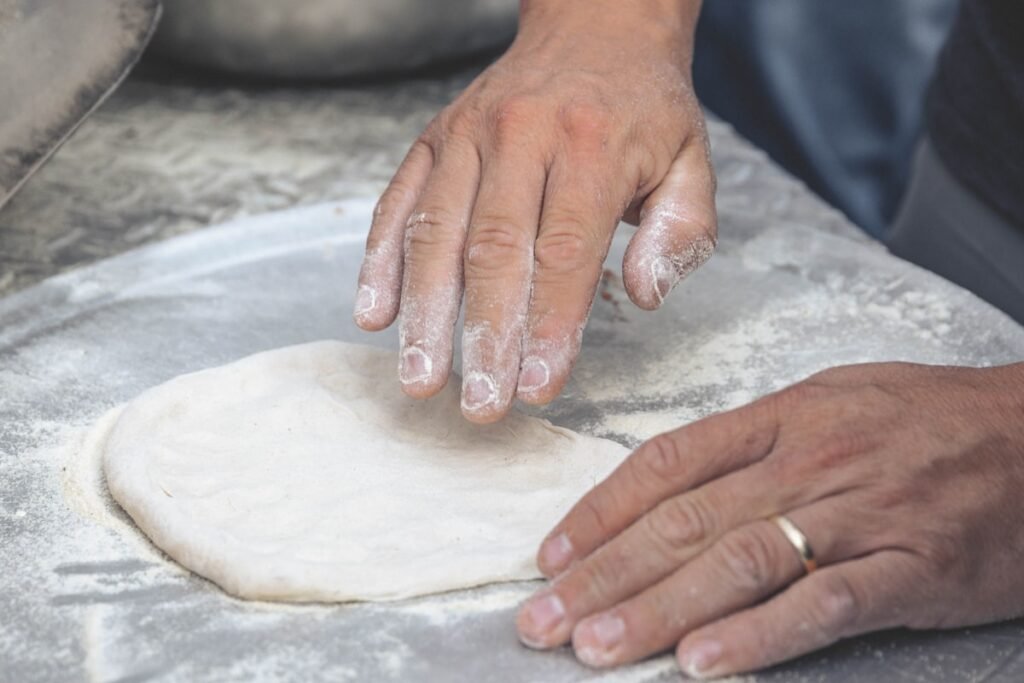
Divide into two equal pieces. Roll each out on a floured surface to your desired thickness. This dough doesn’t stretch by hand as easily as yeast dough – use a rolling pin for a thin base, or press out by hand for a slightly thicker result. It won’t have the same elasticity as a fermented dough, so don’t expect it to behave identically.
Cooking in a Pizza Oven
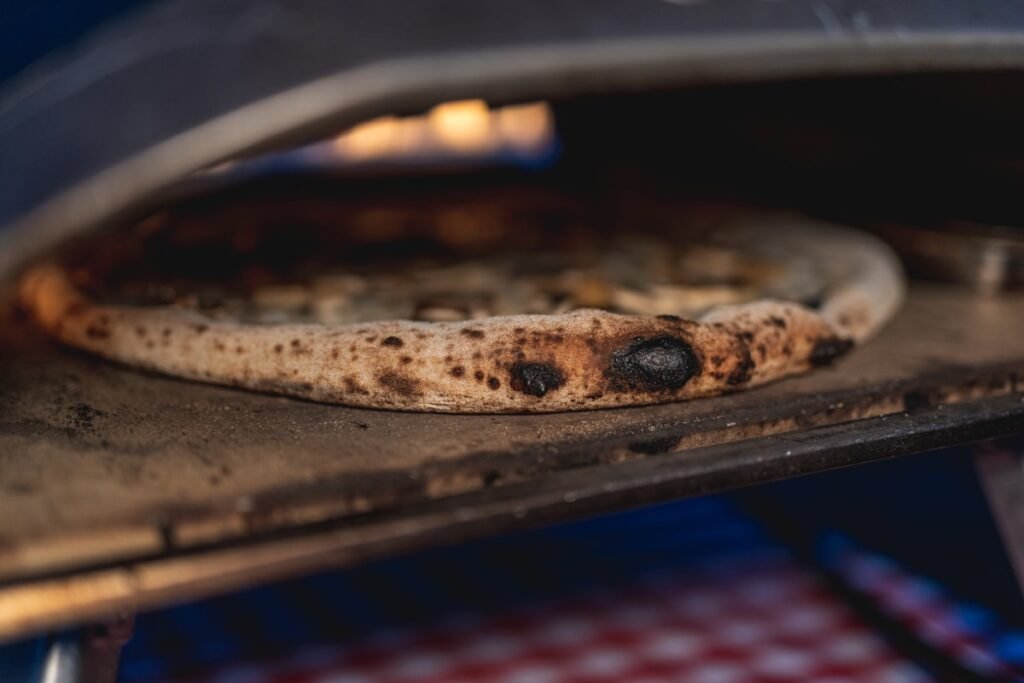
No-yeast dough cooks best at 300-720°F rather than full pizza oven temperature. At 930°F it can burn on the base before the interior cooks through, as it lacks the air bubbles that conduct heat through a yeast dough. Let your oven cool slightly or reduce the gas to medium-low. At 660°F, a rolled-out no-yeast base takes 4-6 minutes. Turn it regularly to avoid burning one side.
Using Sourdough Discard Instead
If you keep a sourdough starter, sourdough discard is a better alternative to baking powder for a quick pizza base. Mix 200g discard with 100g flour, a pinch of salt, and a tablespoon of olive oil. Knead briefly, rest for 20 minutes, then roll out. The discard adds genuine flavor that baking powder can’t replicate. It still doesn’t need proving – use it immediately after resting.
Self-Raising Flour Shortcut
If you have self-raising flour but no yeast or baking powder, you can use it directly in place of the all-purpose flour and baking powder in this recipe – self-raising flour already contains a raising agent. The result is essentially the same. Mix 300g self-raising flour with 1 tsp salt, 2 tbsp olive oil, and 175ml warm water.
What It’s Good For
No-yeast pizza dough works particularly well for flatbreads, calzone, and thick-base pizza where the texture matters less than in a Neapolitan-style thin crust. For calzone, the denser texture actually holds up better to filling without becoming soggy. It also works well for children who prefer a thicker, softer base.
Limitations
No-yeast pizza dough is a shortcut, not a substitute. It lacks the fermented flavor, open crumb, and blistered character of a proper yeast pizza dough. The texture is more biscuit-like and less chewy. Use it when you have no time or no yeast, but plan to make proper dough next time – the difference is significant and worth experiencing.
When you have more time, see our full Neapolitan pizza dough recipe for how to make proper fermented dough. For 48-hour cold-fermented sourdough dough, see our sourdough pizza dough recipe.Tips for Best Results
Do not overwork the dough. Baking powder releases its gas on contact with liquid and heat – kneading too much after mixing knocks out air bubbles before they set. Mix just until combined, then rest.
Rest the dough for at least ten minutes before shaping. This lets the gluten relax and makes stretching far easier without tearing. Unlike yeasted dough there is no rise to wait for, but skipping the rest makes shaping noticeably harder.
Use a light hand with toppings. No-yeast dough is thinner and more delicate than a risen crust. Wet toppings – watery mozzarella, excess sauce – make it soggy before the base can crisp. Blot your mozzarella dry and apply sauce sparingly.
Cook at maximum temperature. In a pizza oven, get the stone above 750°F before launching. The fast, intense heat compensates for the lack of fermentation and creates the exterior char that makes no-yeast dough work well. For occasions where you want more flavor and a longer ferment, a sourdough pizza dough recipe is the natural next step, and our best pizza sauce recipe takes under five minutes and pairs well with both base styles.
Gear mentioned in this article (paid links)

About Ian Armstrong
I'm Ian Armstrong, a home cook and pizza oven obsessive based in the UK. Over the past four years I've owned and cooked on a Gozney Roccbox, Ooni Karu, Ooni Koda, and Gozney Arc — putting each one through real-world use in my back garden across all seasons, not just ideal summer conditions. I test dough hydration, preheat times, fuel efficiency, and how each oven handles everything from Neapolitan pizza to sourdough bread and Sunday roasts. Everything on Wood Fired Pizza Gear comes from hands-on experience. No sponsored placements, no guesswork — just honest assessments from someone who's burned a lot of dough getting it wrong so you don't have to.