
Last updated: August 12, 2026
Last updated: August 2026. This post contains affiliate links — if you buy through them I earn a small commission at no extra cost to you. Full disclosure.
This what is 00 flour covers exactly what you need to know, based on real use.
If you have ever seen a recipe calling for 00 flour and wondered what it means, or whether it is worth buying instead of the bread flour you already have, this guide explains everything you need to know. The short version: for Neapolitan pizza in a high-heat oven, 00 flour is genuinely worth using.
What does 00 mean?
The numbers refer to how finely the flour has been milled. Italian flour is graded on a scale from 00 (the finest) to 2 (the coarsest). A 00 flour has been ground very finely, producing a silky, almost powder-like texture. A 0 flour is slightly coarser, and 1 and 2 are coarser still, more like whole wheat. US and US flour is classified differently (plain, self-raising, strong bread flour), so 00 refers specifically to Italian-milled flour and has no direct equivalent in the British grading system.
Protein content and gluten
The grading (00, 0, 1, 2) tells you about the milling fineness, but it does not tell you about protein content. This is where it gets nuanced. 00 flour can range from around 9% protein (soft 00 flour, used for pasta and cakes) to 12.5% or more (strong 00 flour, used for pizza and bread). When you see 00 pizza flour specifically labelled for pizza, it is the high-protein version.
Protein content matters because gluten is formed from proteins. Higher protein means more gluten development, which gives the dough more strength and chew. But the fine milling of 00 flour means the gluten it forms is different in character from the gluten in a coarser-milled strong bread flour: it tends to be more extensible and silkier, which is exactly what you want for stretching a pizza base.
00 flour vs bread flour for pizza
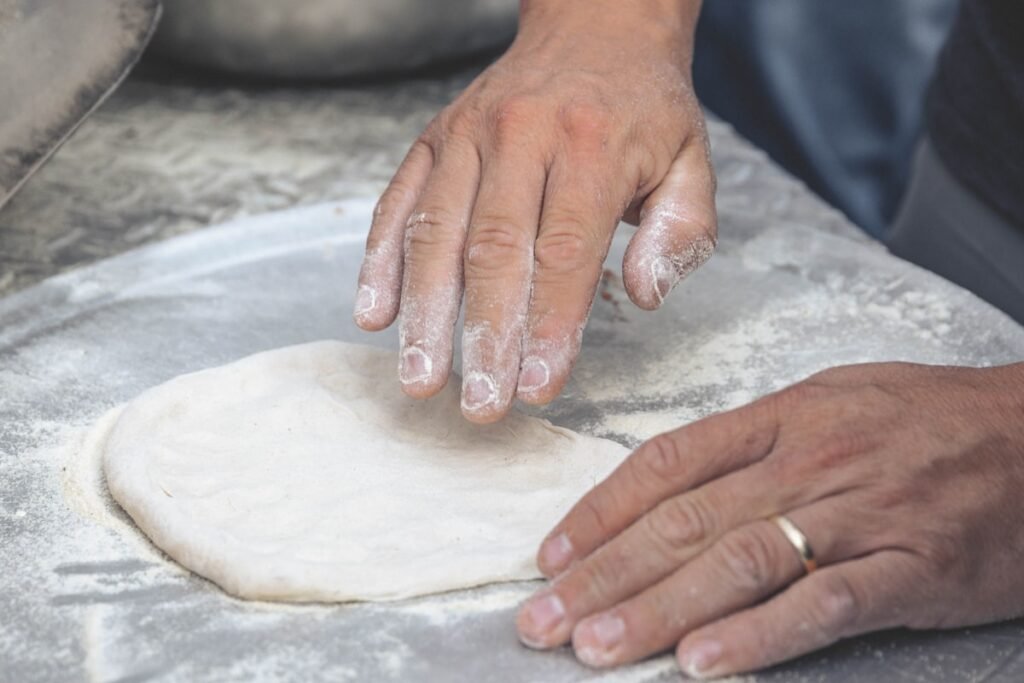
Strong bread flour (12 to 13% protein) produces a chewy, robust dough that is good for pizza but can be harder to stretch. It tends to spring back more and takes longer rest times to become extensible. It also produces a slightly more rustic, chewier crust.
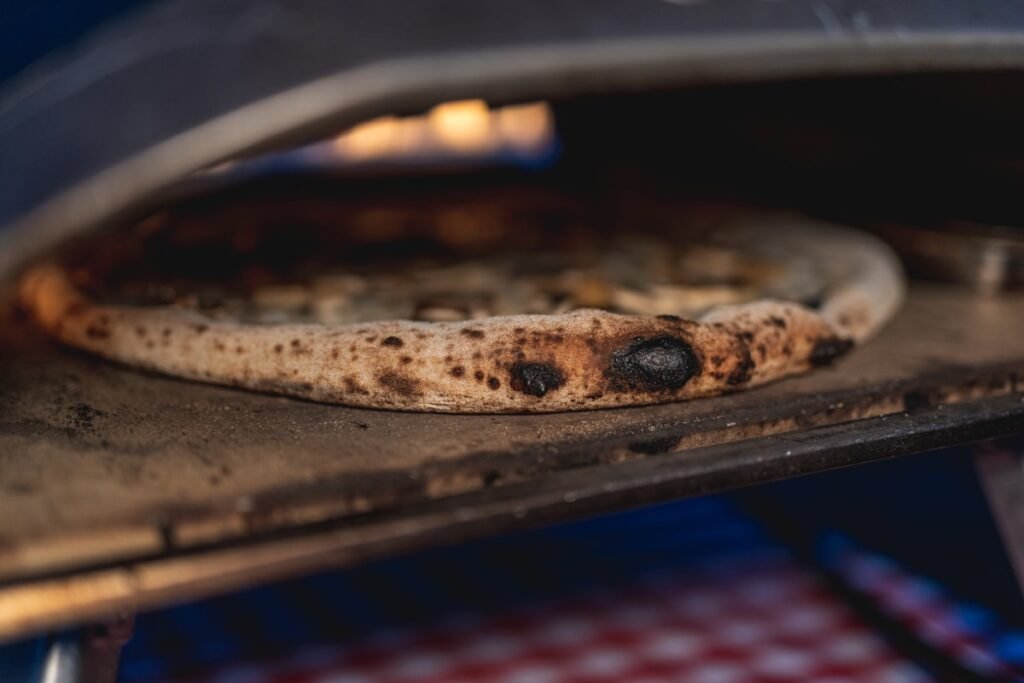
00 pizza flour (typically 11 to 12.5% protein, finely milled) produces a dough that is easier to stretch, with a slightly lighter texture and a more delicate crust. In a high-heat oven (400C or above), the fine milling means the crust chars beautifully at the edges while remaining soft and almost creamy in the center. This is the Neapolitan ideal.
In practice, both flours make excellent pizza. If you are baking in a domestic oven at 220 to 240C, the difference is less pronounced and strong bread flour is a perfectly good choice. If you are baking at 400C or above in a pizza oven, 00 flour gives noticeably better results.
Which 00 flour to buy
The most well-known and widely used 00 pizza flour brands are Caputo (specifically Caputo Pizzeria or Caputo Nuvola) and Molino Grassi. Caputo is the flour used by most Neapolitan pizzerias and is available in the US from specialist food retailers, Amazon, and some supermarkets. It comes in a distinctive blue bag (Pizzeria) for high-heat baking and a red bag (Chef’s Flour) for slightly lower temperature baking.
Waitrose and some other supermarkets stock Caputo or similar 00 pizza flours. Alternatively, Doves Farm and other US millers produce 00-style strong white flour that is a reasonable domestic alternative.
Can you substitute all-purpose flour or self-raising flour?
All-purpose flour (around 9 to 10% protein) can make pizza dough but produces a weaker gluten structure that tears more easily and does not give the same chewy result. It can work as an emergency substitute but the results are noticeably different. Self-raising flour contains baking powder, which is not appropriate for yeast-leavened pizza dough. Do not use self-raising flour for pizza.
What about whole wheat or spelt flour?
Whole Wheat flour can be used in pizza dough, usually mixed with white flour rather than used alone. A 20 to 30% whole wheat blend gives a slightly nutty flavor and more texture without making the dough difficult to handle. Pure whole wheat pizza dough tends to be dense and hard to stretch. Spelt flour is similar: it has a pleasant flavor but forms a more fragile gluten network, so blending is recommended.
Summary
00 flour refers to the finest Italian milling grade. For pizza, use a high-protein 00 flour (like Caputo Pizzeria) rather than a soft 00 flour. It produces a more extensible dough that is easier to stretch and gives a lighter, more delicate crust in a high-heat oven. Strong bread flour is a good alternative, especially for domestic oven baking. For the best Neapolitan pizza in a wood-fired or gas pizza oven, 00 flour is worth the small extra cost.
Ready to try it? Our Neapolitan pizza dough recipe uses 00 flour and a 48-hour cold ferment for the best results. And if your dough is giving you trouble, see our guide to why pizza dough does not stretch.
For a full comparison of all flour types used in pizza – including bread flour, all-purpose flour, semolina, and whole wheat – and which to use for each pizza style, see our guide: Best flour for pizza dough: 00 vs bread flour and everything else.
Recommended: Caputo 00 flour – available on Amazon US.
Gear mentioned in this article (paid links)

About Ian Armstrong
I'm Ian Armstrong, a home cook and pizza oven obsessive based in the UK. Over the past four years I've owned and cooked on a Gozney Roccbox, Ooni Karu, Ooni Koda, and Gozney Arc — putting each one through real-world use in my back garden across all seasons, not just ideal summer conditions. I test dough hydration, preheat times, fuel efficiency, and how each oven handles everything from Neapolitan pizza to sourdough bread and Sunday roasts. Everything on Wood Fired Pizza Gear comes from hands-on experience. No sponsored placements, no guesswork — just honest assessments from someone who's burned a lot of dough getting it wrong so you don't have to.