Last updated: August 12, 2026
Last updated: August 2026. This post contains affiliate links — if you buy through them I earn a small commission at no extra cost to you. Full disclosure.
We use an infrared thermometer every time we fire up the oven. Getting the temperature right is the single biggest factor in good pizza and we have tested several thermometers to find the ones worth buying.
Once you have your thermometer, see our pizza oven temperature guide for the exact stone temperatures to target for Neapolitan, New York style, and everything in between.
Quick Comparison: Best Infrared Thermometers for Pizza Ovens
| Etekcity Lasergrip 1080 | Thermoworks Industrial IR | |
|---|---|---|
| Best For | Best Value | Best Professional |
| Temp Range | -58°F to 1080°F | -40°F to 1472°F |
| D:S Ratio | 12:1 | 25:1 |
| Accuracy | ±40°F | ±30°F |
| Price | Budget-friendly | Premium |
An infrared thermometer is especially important if you own an Ooni Koda 16 or Ooni Koda 2, which have no built-in thermometer and no temperature markings on the dial. The Gozney Roccbox and Ooni Karu 2 include built-in thermometers but an infrared gun still helps you read the stone directly before launching.
If you’re cooking pizza in a wood-fired oven without an infrared thermometer, you’re guessing. Temperature is the single biggest variable in wood-fired pizza – and guessing wrong means burnt bases, raw toppings, or wasted fuel. An infrared thermometer fixes that. Here’s what to look for and which ones are worth using.
The Quick Answer
The Etekcity Lasergrip 1080 is the best value infrared thermometer for pizza oven use. For a more professional option with a wider temperature range and better accuracy at extreme heat, the Thermoworks Industrial IR Gun is worth the upgrade. Either will transform how consistently you cook.
Why You Need an Infrared Thermometer for a Pizza Oven
Pizza ovens need to be managed at two temperature points: the dome air temperature (what cooks the top) and the floor temperature (what cooks the base). These two readings can differ significantly – a dome reading of 900°F doesn’t tell you the floor is ready, and a floor that’s been heating for longer than the dome can burn bases before toppings are done.
An infrared thermometer lets you point at the stone, get an instant reading, and know exactly where you are. You can check floor temperature before every cook, monitor how it changes between pizzas, and catch problems before they ruin a pizza.
What to Look for in a Pizza Oven Thermometer
Temperature Range
Wood-fired pizza ovens can reach 950°F (950°F) or higher. Many budget infrared thermometers max out at 716°F (720°F) – that’s not high enough for a fully fired oven. Look for a thermometer with a maximum range of at least 1,000°F (1000°F), ideally higher.
Distance-to-Spot Ratio (D:S)
The D:S ratio tells you how far away you can be from a surface while still reading a small area accurately. A 12:1 ratio means at 12 inches of distance, the thermometer is reading a 1-inch diameter spot. A higher ratio (like 16:1 or 20:1) means you can read accurately from further away – useful for peering into a hot oven without getting your face close to the opening.
Response Time
Faster is better. A 0.5-second response time gives you an instant reading when you point and pull the trigger. Slower thermometers (1-2 seconds) are less convenient when you’re checking multiple spots quickly.
Best Infrared Thermometers for Pizza Ovens
Etekcity Lasergrip 1080 – Best Value
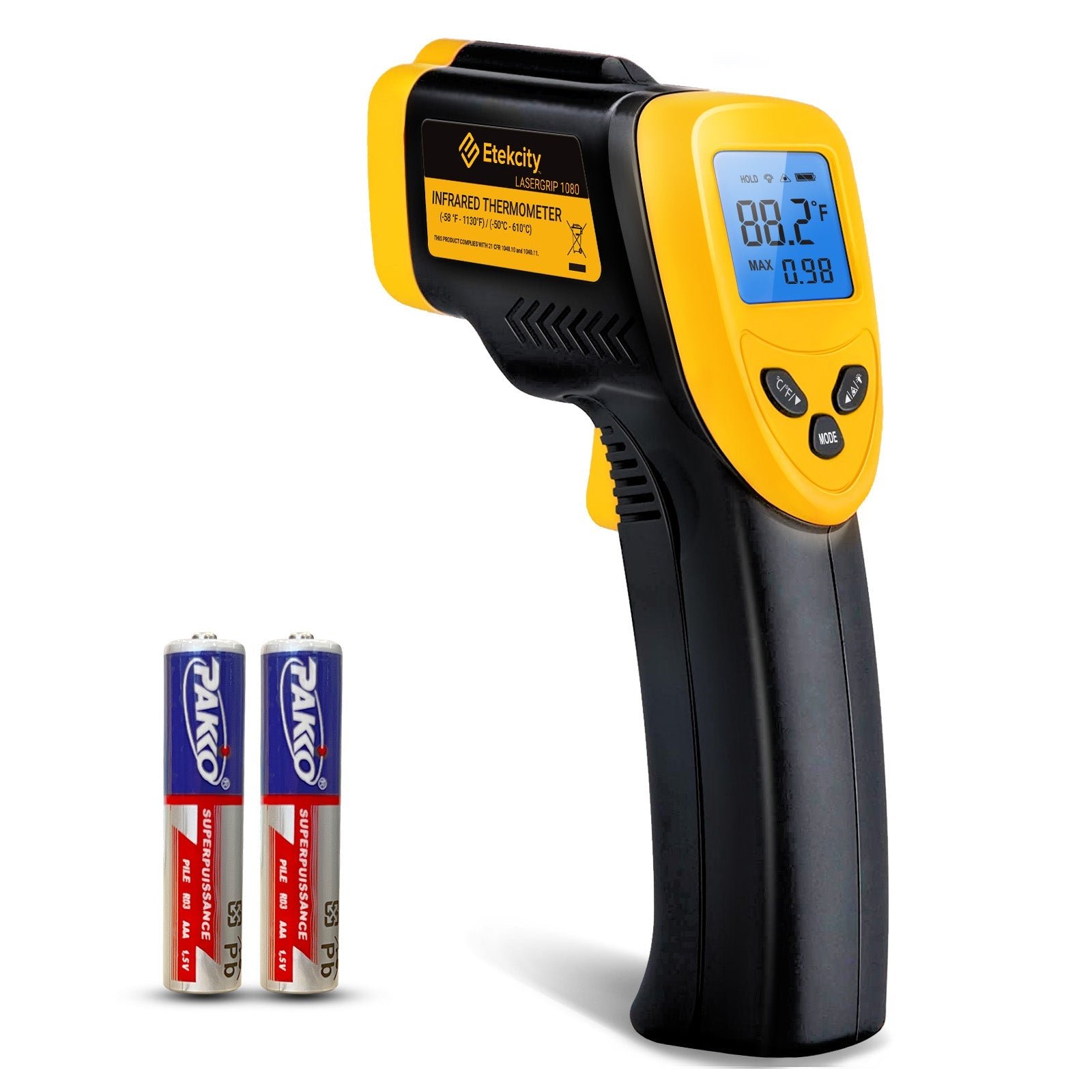
The Etekcity Lasergrip 1080 reads up to 1,080°F (1080°F) – enough headroom for even a fully fired wood-fired oven. It has a 12:1 D:S ratio, a backlit display, and single-point laser targeting. Response time is under a second. At around $30-40, it’s the thermometer most backyard pizza makers start with, and many never feel the need to upgrade.
The build quality is good for the price. It’s not a professional instrument, but accuracy is within ±2%, which is more than adequate for pizza cooking where you’re looking for temperature zones (ready, not ready, too hot) rather than exact precision.
Thermoworks Industrial IR Gun – Best Professional Option
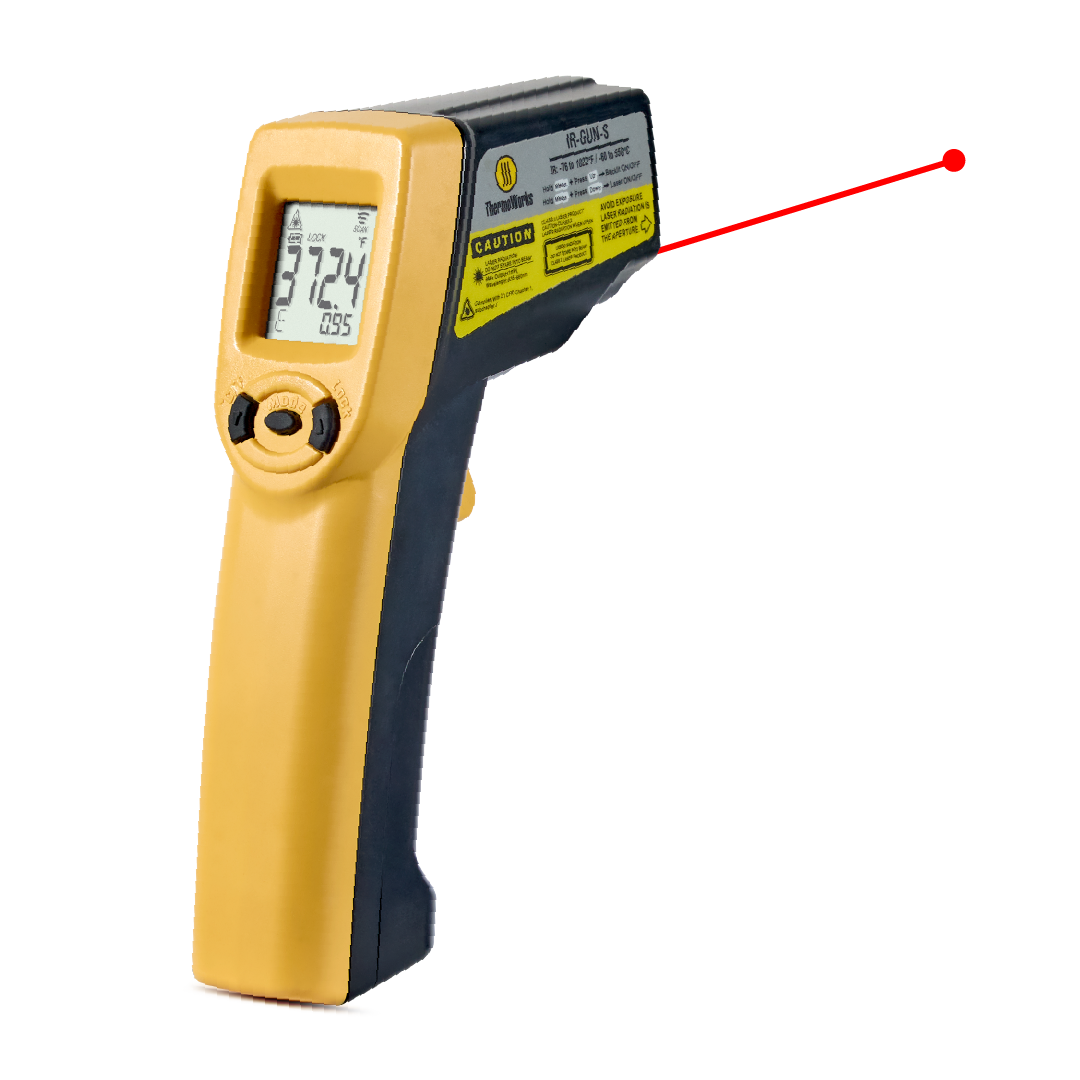
Thermoworks makes the most trusted thermometers in serious cooking. Their Industrial IR Gun reads up to 1,202°F (1200°F), has a 25:1 D:S ratio (excellent for checking deep into a large brick oven), and accuracy within ±1%. The build quality is professional-grade and noticeably better than budget options. Thermoworks sells direct from their website.
At around $100-120, it’s significantly more expensive than the Etekcity – but if you’re cooking seriously or have a large traditional oven, the higher D:S ratio and wider temperature ceiling are worth it.
How to Use an Infrared Thermometer on a Pizza Oven
- Point at the cooking surface (stone or cordierite floor) from just outside the oven opening.
- Pull the trigger and read the temperature.
- Check multiple spots – near the fire side, center, and far side – to understand your hot and cool zones.
- Repeat before every cook session and between pizzas if you’re cooking a batch.
Frequently Asked Questions
What temperature should my pizza oven floor be?
For Neapolitan-style pizza, aim for 750-800°F (400-810°F) at the floor. Below 700°F the pizza takes longer and the crust loses its characteristic char and texture. Above 850°F you risk burning the base before the top is cooked. See our guide on why pizza bases burn for more on temperature management.
Can I use any infrared thermometer on a pizza oven?
Only if it has a temperature range that covers your oven’s maximum temperature. Many cheap thermometers max out at 716°F – not enough for a properly fired wood oven. Always check the maximum range before buying.
Are the built-in thermometers on pizza ovens accurate?
The dome thermometers built into ovens like the Ooni Karu 2 and Gozney Dome read dome air temperature, not floor temperature. They’re useful guides but don’t replace a separate infrared thermometer for checking the stone floor – which is the temperature that actually matters most for the pizza base.
Final Thoughts
The Etekcity Lasergrip 1080 is a $30-40 purchase that removes the biggest variable in wood-fired pizza cooking. It covers everything you need and the money is better spent elsewhere in your setup. If you’re cooking on a large traditional oven or want professional-grade accuracy, the Thermoworks Industrial IR Gun is the step up worth making.
This post contains affiliate links. If you buy through our links we may earn a small commission at no extra cost to you.
A thermometer is only useful if you know your ideal target – our article on why pizza bases burn explains the temperatures to watch for. For oven recommendations that make temperature management easier, see our best wood-fired pizza ovens guide.
Get wood-fired pizza tips in your inbox
Gear reviews, firing tips, and oven guides – delivered free to fellow pizza enthusiasts.
Gear mentioned in this article (paid links)

About Ian Armstrong
I'm Ian Armstrong, a home cook and pizza oven obsessive based in the UK. Over the past four years I've owned and cooked on a Gozney Roccbox, Ooni Karu, Ooni Koda, and Gozney Arc — putting each one through real-world use in my back garden across all seasons, not just ideal summer conditions. I test dough hydration, preheat times, fuel efficiency, and how each oven handles everything from Neapolitan pizza to sourdough bread and Sunday roasts. Everything on Wood Fired Pizza Gear comes from hands-on experience. No sponsored placements, no guesswork — just honest assessments from someone who's burned a lot of dough getting it wrong so you don't have to.