Last updated: August 12, 2026
Last updated: August 2026. This post contains affiliate links — if you buy through them I earn a small commission at no extra cost to you. Full disclosure.
We have made this dough hundreds of times across different ovens and conditions. It is the base recipe we come back to every session, and we have tested the variables – hydration, flour type, ferment time – so you do not have to.
This pizza dough recipe is straightforward once you have got the technique down.
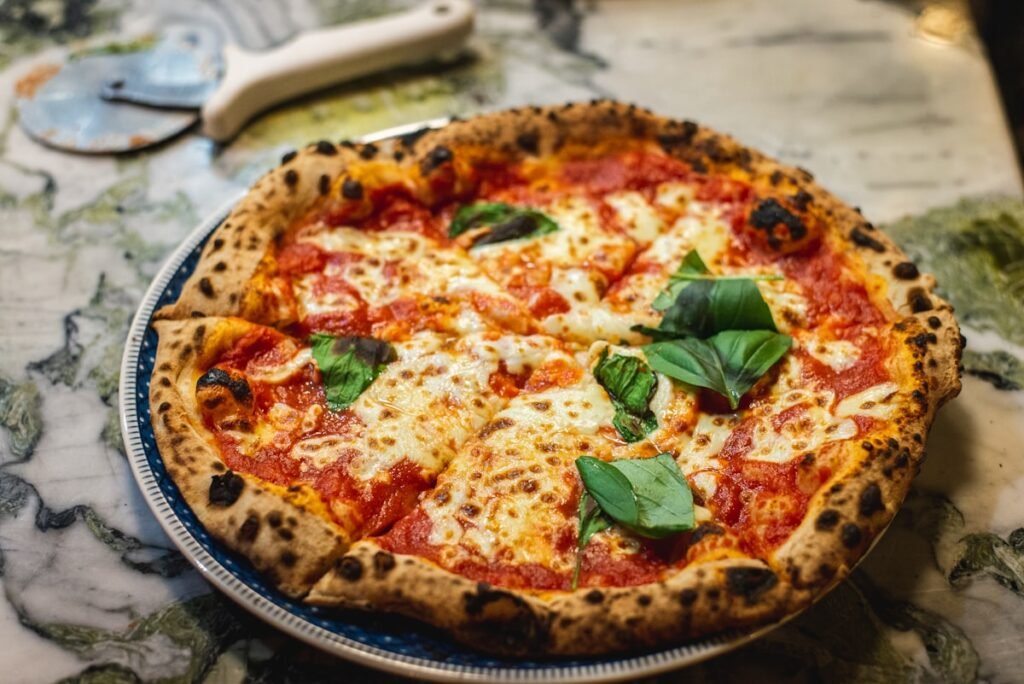
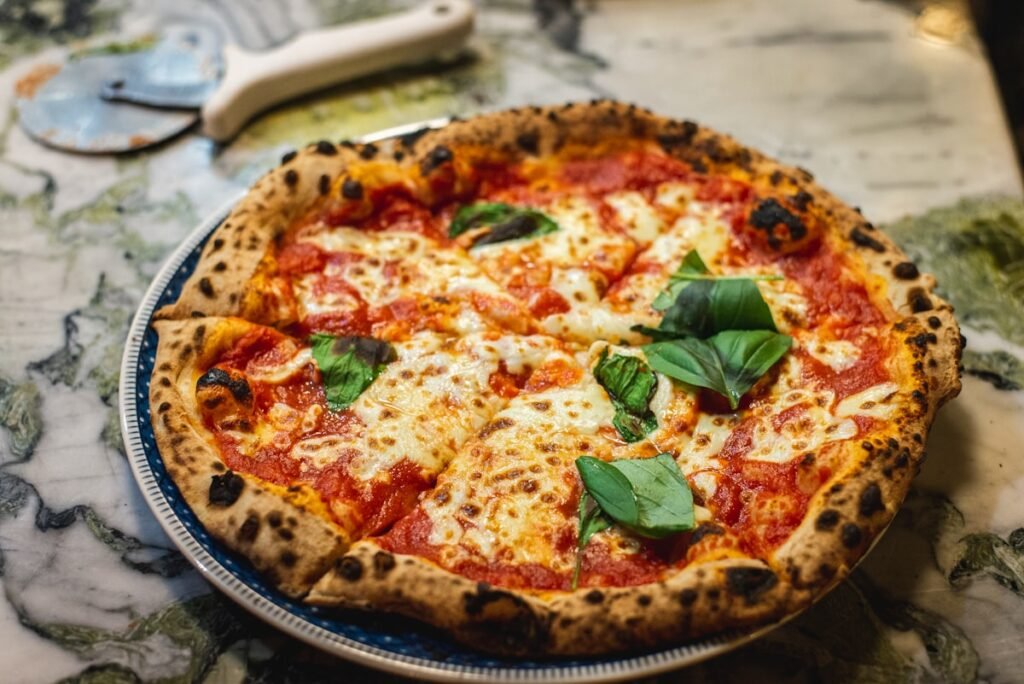
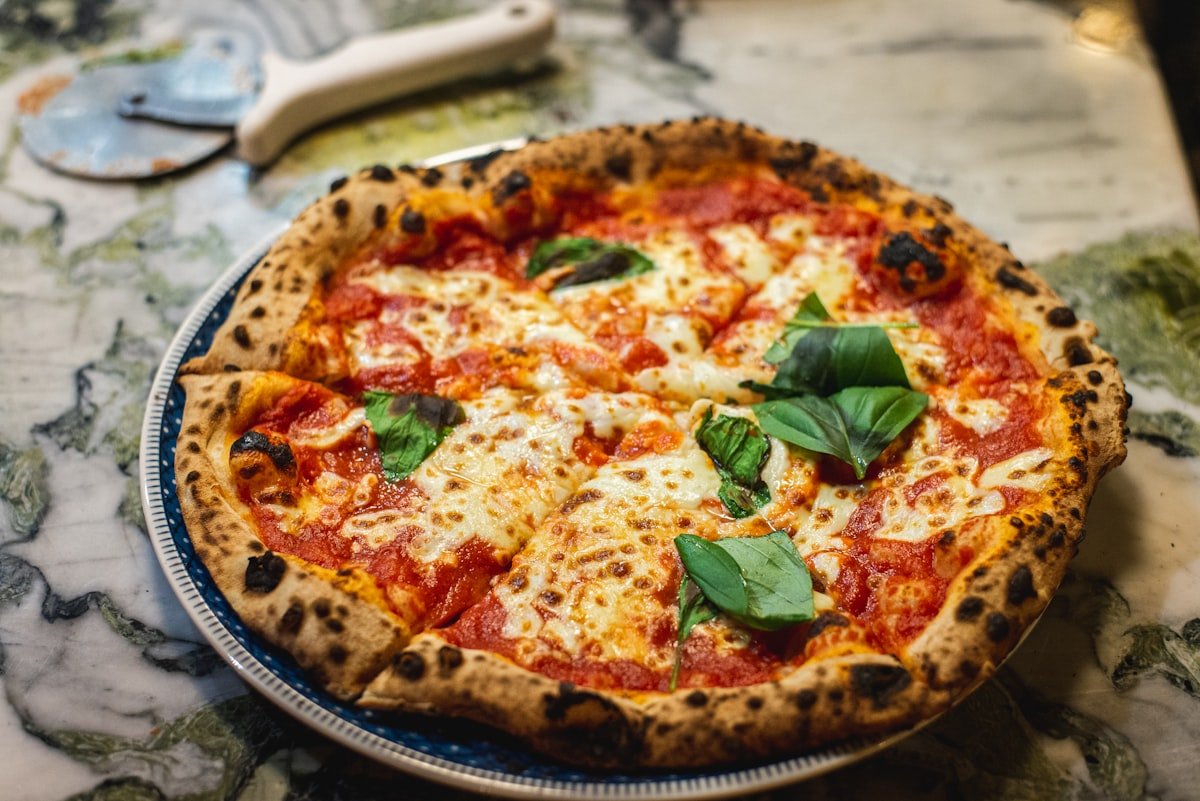
Good pizza dough is not complicated, but it does take time. The long, slow fermentation that makes Neapolitan pizza so light, charred, and chewy is not something you can rush — but it is something you can absolutely do at home with nothing more than flour, water, salt, and yeast. This is the recipe I use for every wood-fired cook.
Ingredients (makes 4 dough balls, ~280g each)
| Type 00 flour | 800g |
| Water (cold) | 520ml (65% hydration) |
| Fine sea salt | 22g |
| Dried active yeast | 2g (about half a teaspoon) |
This recipe is sized for a group cook — four 12-inch pizzas. Halve everything for a weeknight cook for two people.
On flour
Type 00 flour is the standard for Neapolitan dough. It is finely milled and has a moderate protein content (around 11-12%) that gives the dough elasticity without being tough. Most major supermarkets sell it. If you can’t find it, use strong white bread flour — the result is slightly chewier but still very good.
On yeast
2g of dried yeast sounds like almost nothing. For a cold, slow fermentation of 24 to 72 hours, that is exactly right. More yeast means faster rise, which means less flavor. The slow fermentation develops the complex, slightly tangy taste that makes good pizza dough so much better than a same-day version.
Method
Step 1: Dissolve the yeast
Pour the cold water into a large bowl. Add the yeast and stir until dissolved. Cold water slows the fermentation slightly from the start, which is what you want for a long prove.
Step 2: Add the flour and salt
Add the salt to the water and stir to dissolve. Then add the flour in three stages, mixing between each addition with your hand or a dough scraper until a rough dough forms. Don’t add the salt directly to the yeast — salt kills yeast if they sit together too long before the flour is added.
Step 3: Knead
Turn the dough out onto an unfloured surface and knead for 10 to 15 minutes until smooth and elastic. The dough should feel slightly tacky but not sticky — if it sticks badly to your hands, add a tiny amount of flour, but try to resist. Wetter dough makes better pizza.
You are looking for the “windowpane test”: stretch a small piece of dough between your fingers. If it stretches thin enough to see light through without tearing, the gluten is developed enough. If it tears straight away, keep kneading.
Step 4: First prove (bulk fermentation)
Shape the dough into a ball and place it in a lightly oiled bowl. Cover with cling film or a damp tea towel. Leave at room temperature for 2 hours, then transfer to the fridge for a minimum of 24 hours — 48 to 72 hours is even better. The longer cold prove develops flavor and makes the dough easier to stretch.
Step 5: Divide and ball
About 2 to 3 hours before you want to cook, take the dough out of the fridge. Divide it into four equal portions (around 280g each). Shape each portion into a tight ball by folding the edges underneath and rolling it on the work surface. Place the balls on a lightly floured tray or in a proofing box, cover, and leave at room temperature to come to temperature and continue proving.
Step 6: Stretch and top
When the dough has relaxed and puffed slightly, it’s ready to stretch. Dust the work surface generously with semolina or flour — semolina adds a slightly crunchier base and stops sticking better. See our guide on semolina vs flour on the peel for more on this.
Flatten the ball with your fingertips, pressing from the center outward. Leave a thick border of about 2cm around the edge — this becomes the crust (cornicione). Once flat, drape the dough over your knuckles and gently stretch it by rotating it in the air. Work gradually — if it starts to tear, set it down and let it rest for 5 minutes before trying again.
Aim for an even thickness of around 3-4mm across the base, with that thicker crust around the edge. Don’t use a rolling pin — it squashes out all the air bubbles that make the crust light.
Tips for cooking in a wood-fired oven
Get the stone temperature right
For Neapolitan-style pizza, you want the stone at 400 to 810°F. At this temperature a 12-inch pizza cooks in 60 to 90 seconds. If the stone is too cool, the base takes longer, the top overcooks, and you lose the characteristic char on the crust. Check with an infrared thermometer before launching.
Dress the pizza quickly
Once the dough is stretched on your peel, top it and launch immediately. The longer the dough sits on the peel, the more moisture it absorbs from the toppings and the higher the chance it sticks. Sauce, cheese, toppings — done in under 60 seconds, then straight into the oven. See our guide on why pizza dough sticks to the peel for how to avoid this.
Rotate every 20 to 30 seconds
The flame in a pizza oven comes from one direction. The side nearest the flame will cook faster than the far side. Use a turning peel to rotate the pizza by about 90 degrees every 20 to 30 seconds so it cooks evenly all the way round.
Use a peel with semolina, not flour alone
Semolina acts like ball bearings between the dough and the peel, making the launch much smoother. Dust your pizza peel generously before placing the stretched dough on it, and shake gently before launching to make sure nothing is sticking.
Common problems and fixes
| Problem | Cause | Fix |
|---|---|---|
| Dough tears when stretching | Not enough proving time or gluten too tight | Let dough balls rest another 30 mins |
| Base burns before top is done | Stone too hot or dough too thin | Lower flame after launch, or stretch thicker |
| Dough sticks to peel | Too much moisture on peel or dough sat too long | More semolina, top and launch faster |
| Crust doesn’t puff | Dough underproved, or stone not hot enough | Longer cold ferment, or preheat stone longer |
| Pizza is tough and chewy | Over-kneaded or not enough hydration | Less kneading, or increase water slightly next time |
How long does pizza dough last?
Dough balls will keep in the fridge for up to 3 days after balling. The flavor actually improves over the first 48-72 hours. After 3 days the yeast will have exhausted itself and the dough can become slack and difficult to stretch. You can also freeze balled dough — defrost overnight in the fridge and then bring to room temperature for 2 to 3 hours before stretching.
What oven do I need?
Any portable pizza oven that reaches 750°F or above will cook this dough perfectly. Our top picks for 2025 are the Ooni Koda 2 for value, the Gozney Arc for ease of use, and the Ooni Karu 2 if you want the wood-fired experience. See our full best wood-fired pizza ovens guide for more.
Once you have the dough sorted, pair it with our simple Neapolitan pizza sauce recipe — no cooking required, ready in two minutes.
Once your dough is proved and ready, see our step-by-step guide on how to stretch pizza dough by hand without tearing it.
Want those dark, blistered leopard spots on the crust? See our guide on how to get leopard spots on pizza — it covers exactly what causes them and the checklist to nail them every time.
Use our pizza dough calculator to scale these quantities for any number of pizzas automatically.
Recommended: Caputo 00 flour – available on Amazon US.
Gear mentioned in this article (paid links)

About Ian Armstrong
I'm Ian Armstrong, a home cook and pizza oven obsessive based in the UK. Over the past four years I've owned and cooked on a Gozney Roccbox, Ooni Karu, Ooni Koda, and Gozney Arc — putting each one through real-world use in my back garden across all seasons, not just ideal summer conditions. I test dough hydration, preheat times, fuel efficiency, and how each oven handles everything from Neapolitan pizza to sourdough bread and Sunday roasts. Everything on Wood Fired Pizza Gear comes from hands-on experience. No sponsored placements, no guesswork — just honest assessments from someone who's burned a lot of dough getting it wrong so you don't have to.