
Last updated: August 12, 2026
Last updated: August 2026. This post contains affiliate links — if you buy through them I earn a small commission at no extra cost to you. Full disclosure.
We have chased leopard spotting for years. In our experience it comes down to three things: dough fermentation, stone temperature, and not overloading toppings.
This how to get leopard spots on pizza covers exactly what you need to know, based on real use.
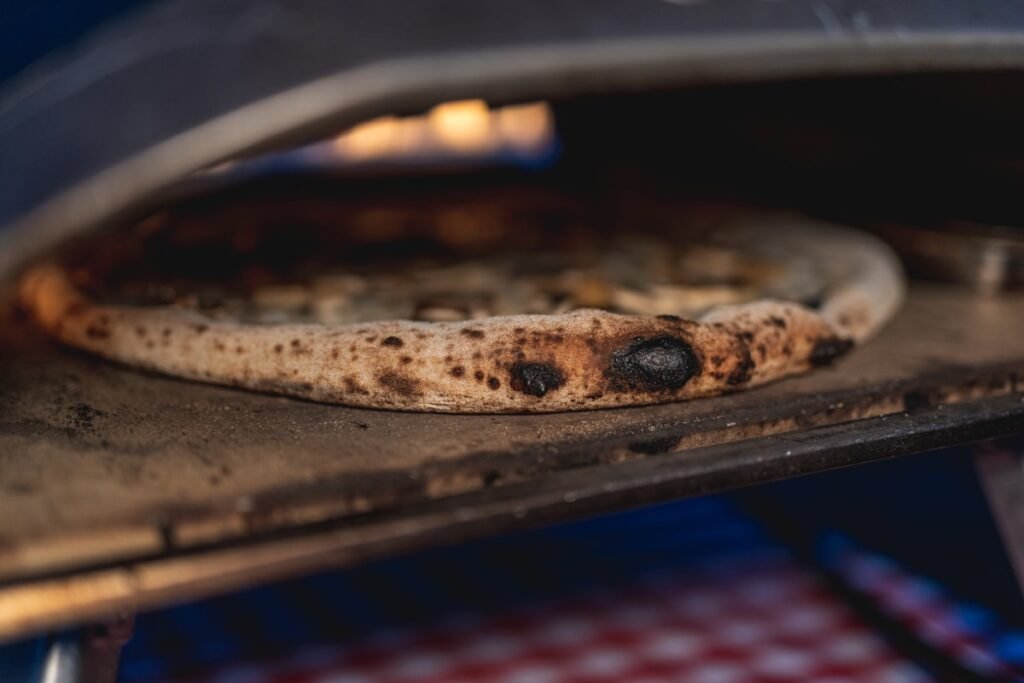
Leopard spotting — the dark, irregular patches of char on the pizza crust — is the clearest visual sign of a properly made Neapolitan pizza. Those spots mean the oven was hot enough, the dough was well-fermented, and the cook was fast. Chasing leopard spots is one of the most satisfying parts of improving your pizza game.
This guide explains exactly what causes them and what you need to do to get them consistently.

What causes leopard spots?
Leopard spots are caused by a combination of high heat, a well-fermented dough, and a fast cook. Specifically:
- Carbon dioxide bubbles in the dough expand rapidly in the intense heat, creating raised pockets in the crust. These raised pockets are closer to the flame and char faster than the surrounding dough — producing the spots.
- Maillard reaction and caramelisation — the browning reactions that create flavor and color — happen more intensely at higher temperatures. At 400 to 840°F, the crust goes from pale to charred in seconds.
- Fermentation byproducts in the dough (including sugars produced during the long cold prove) caramelise quickly at high heat, creating color variation across the crust surface.
In short: well-fermented dough plus very hot oven equals leopard spots. If you are not getting them, one or both of those factors is missing.
The five things you need for leopard spots
1. A hot enough stone
This is the single biggest factor. For leopard spotting, you need the stone at a minimum of 750°F — ideally 420 to 840°F. Below 720°F, the pizza cooks too slowly, the crust sets before it blisters, and you end up with a pale, even brown rather than those dramatic dark spots.
Always measure the stone temperature with an infrared thermometer before launching. The air inside the oven can read 930°F while the stone is still only 660°F. See our guide on how long to preheat a pizza oven for typical times by oven type.
2. Long cold fermentation
A 24 to 72-hour cold fermentation develops the sugars and carbon dioxide in the dough that cause blistering. Same-day dough can produce a decent pizza but will rarely spot well — there isn’t enough fermentation activity in the crust. Our Neapolitan dough recipe uses a minimum 24-hour cold prove, with 48 to 72 hours giving the best results.
3. High hydration dough
Wetter dough (65% hydration and above) creates larger, more pronounced bubbles during the cook. Our recipe uses 65% hydration. Going higher — up to 70% — can produce even more dramatic spotting but makes the dough harder to handle and stretch without tearing. 65% is the sweet spot for most home bakers.
4. Dough balled and proved properly
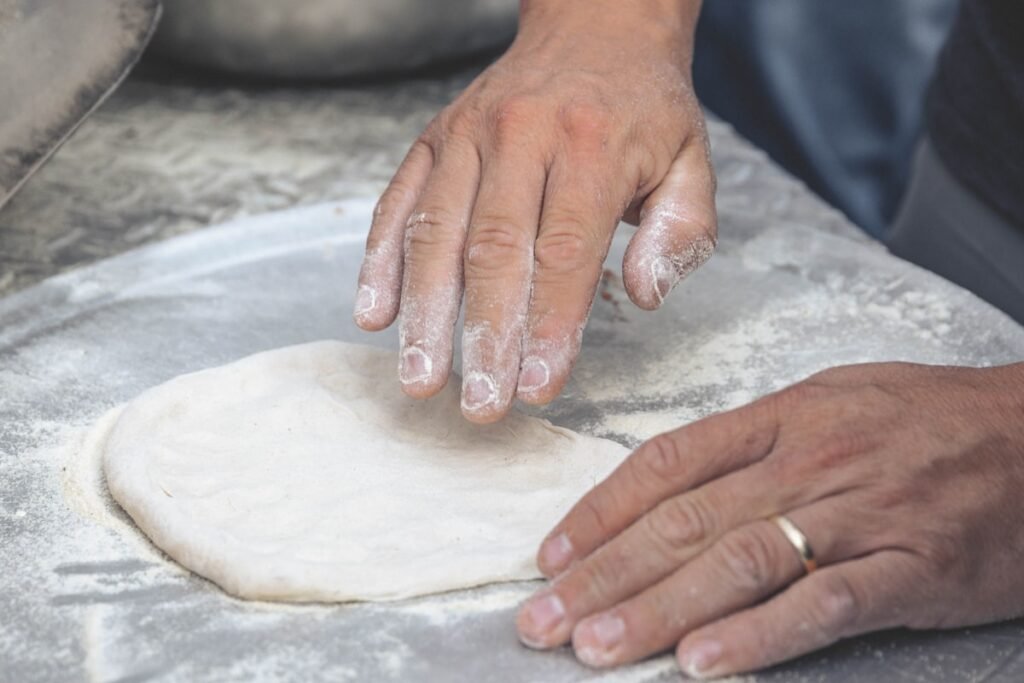
The final room-temperature prove after balling is where the dough develops the loose, open structure that blisters in the oven. Dough that goes straight from the fridge into the oven will be too tight — the bubbles won’t expand dramatically enough. Always allow 2 to 3 hours at room temperature after removing from the fridge.
5. A fast cook
At 400 to 810°F, a Neapolitan pizza should cook in 60 to 90 seconds. A slow cook at lower temperature allows the surface to dry out and set before the heat is intense enough to blister. Fast, fierce heat is what creates the contrast between the dark charred spots and the pale surrounding crust.
Troubleshooting
| Problem | Most likely cause | Fix |
|---|---|---|
| Crust is pale and even, no spots | Stone too cool, or dough underfermented | Longer preheat, longer ferment |
| Crust is uniformly dark, no contrast | Stone too hot or cook too long | Lower flame slightly, launch sooner |
| Spots only on one side | Not rotating enough | Rotate every 20-30 seconds |
| Base is pale but crust is spotted | Stone cooler than flame — underpreheated | Preheat stone longer before launching |
| Spots but dense, flat crust | Dough degassed by rolling pin or over-handling | Hand-stretch only, handle gently |
Does the oven type matter?
Any oven that reaches 750°F or above can produce leopard spots. You do not need a wood fire — gas ovens produce the same results if the stone is at the right temperature. The Ooni Koda 2, Gozney Arc, and Ooni Karu 2 all hit this temperature easily and will all produce well-spotted crusts with the right dough.
What matters is stone temperature, dough quality, and cook speed — not the fuel source. If you are not getting spots on a gas oven, the stone is almost certainly not hot enough yet.
The checklist
- Dough cold-fermented for at least 24 hours (48-72 hours is better)
- Dough balled and rested at room temperature for 2-3 hours before stretching
- Stone at 750°F minimum — check with an infrared thermometer
- Active flame during the cook — add a small piece of wood just before launching (wood ovens) or turn flame to high
- Rotate pizza every 20-30 seconds
- Total cook time 60-90 seconds maximum
Get all six of those right and you will get leopard spots every time. For the dough itself, use our Neapolitan pizza dough recipe. For stretching without degassing the bubbles, see our guide on how to stretch pizza dough by hand.
Recommended: 00 flour – available on Amazon US.
Gear mentioned in this article (paid links)

About Ian Armstrong
I'm Ian Armstrong, a home cook and pizza oven obsessive based in the UK. Over the past four years I've owned and cooked on a Gozney Roccbox, Ooni Karu, Ooni Koda, and Gozney Arc — putting each one through real-world use in my back garden across all seasons, not just ideal summer conditions. I test dough hydration, preheat times, fuel efficiency, and how each oven handles everything from Neapolitan pizza to sourdough bread and Sunday roasts. Everything on Wood Fired Pizza Gear comes from hands-on experience. No sponsored placements, no guesswork — just honest assessments from someone who's burned a lot of dough getting it wrong so you don't have to.