Last updated: August 17, 2026
Last updated: August 2026. This post contains affiliate links — if you buy through them I earn a small commission at no extra cost to you. Full disclosure.
If you are weighing up the Ooni Koda 2 vs Koda 16 (or Koda 16 vs Koda 2 — same question, different order), here is the short answer: if you are cooking for two to four people and want something you can easily move around, the Koda 2 is the better buy. If you regularly cook for a crowd or want the flexibility to cook larger food, the Koda 16 earns its higher price.
But the longer answer is more interesting, because the gap between these two ovens is not just about pizza size. After cooking on both, there are real differences in how they feel to use and who each one suits.
What Is the Ooni Koda 2?
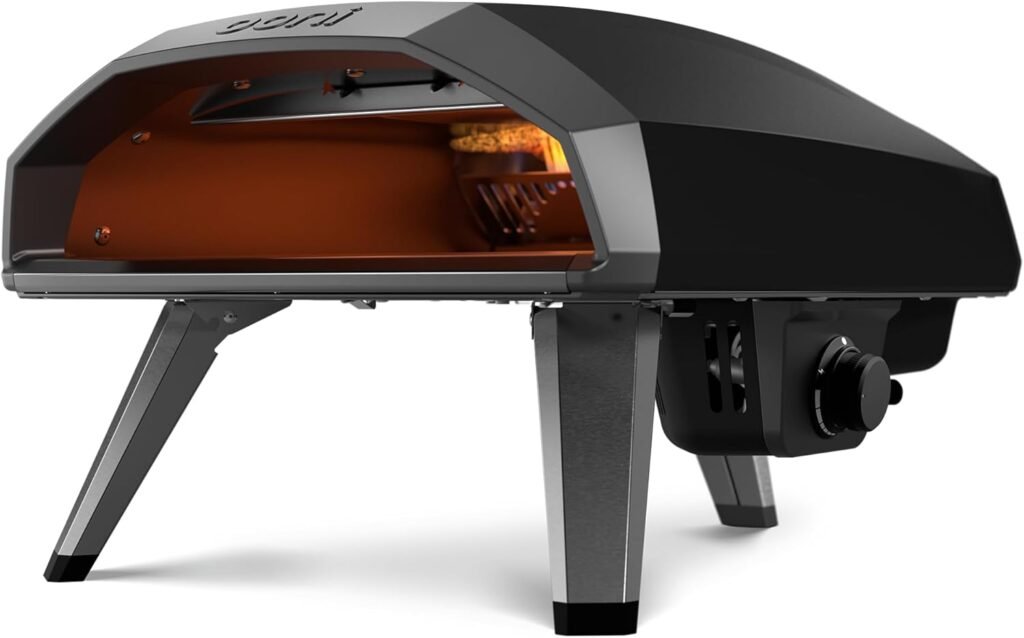
The Koda 2 is Ooni’s updated mid-range gas oven, released in 2025 to replace the original Koda 12. The headline change from its predecessor is the cooking surface: the Koda 2 takes up to a 14-inch pizza, a meaningful step up from the 12-inch limit of the original. It runs on LPG and reaches 500C in around 20 minutes.
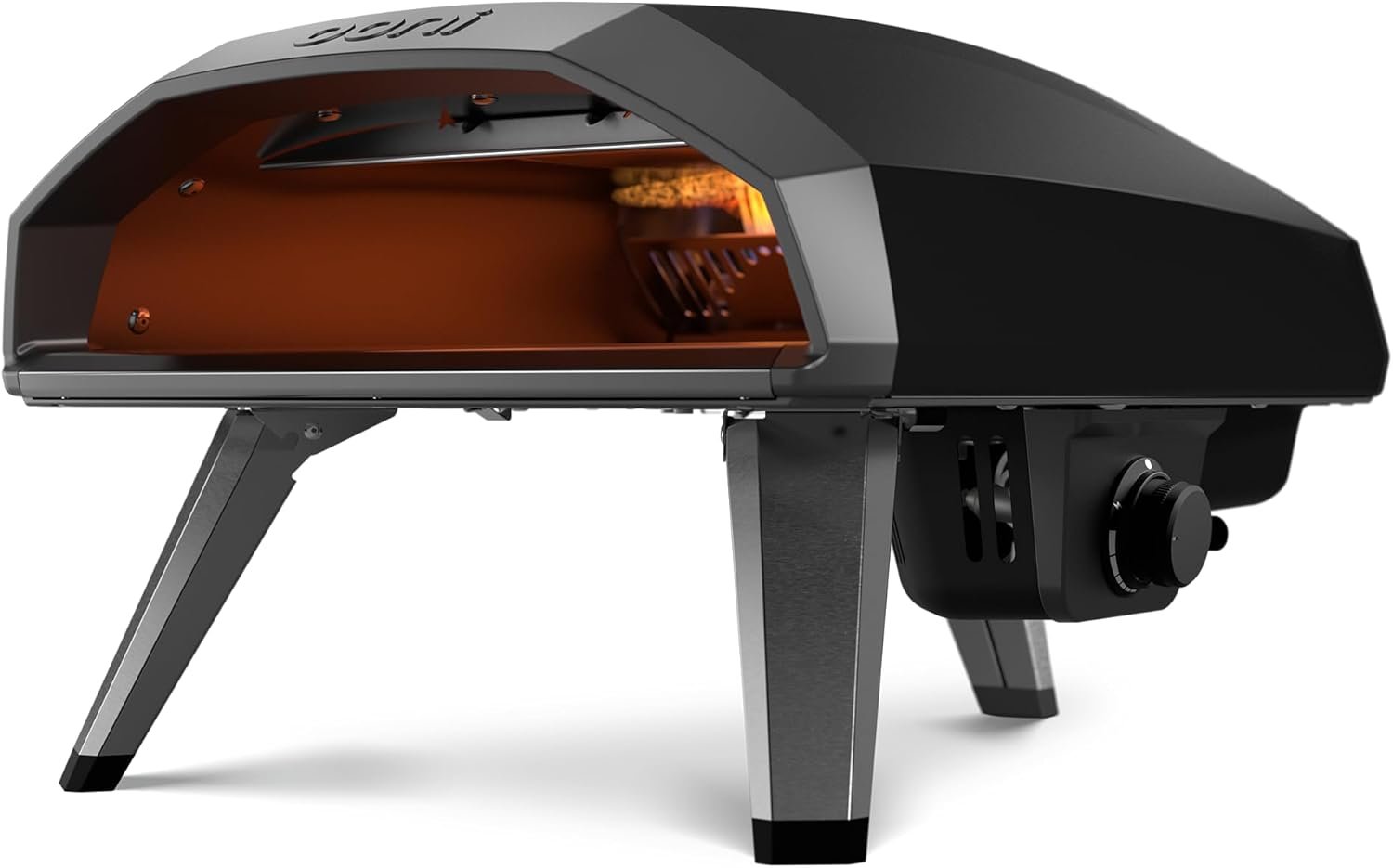
The L-shaped burner at the back does a solid job of distributing heat across the stone, and the included gas regulator and hose mean you are ready to cook straight out of the box. The Foundry Black finish is a step up from the brushed steel look of older Ooni models – it looks good on a backyard table.
At $399, it sits in a competitive spot – less than the Koda 16, and considerably less than the Gozney Arc.
Price: $399 | Check price on Amazon
What Is the Ooni Koda 16?
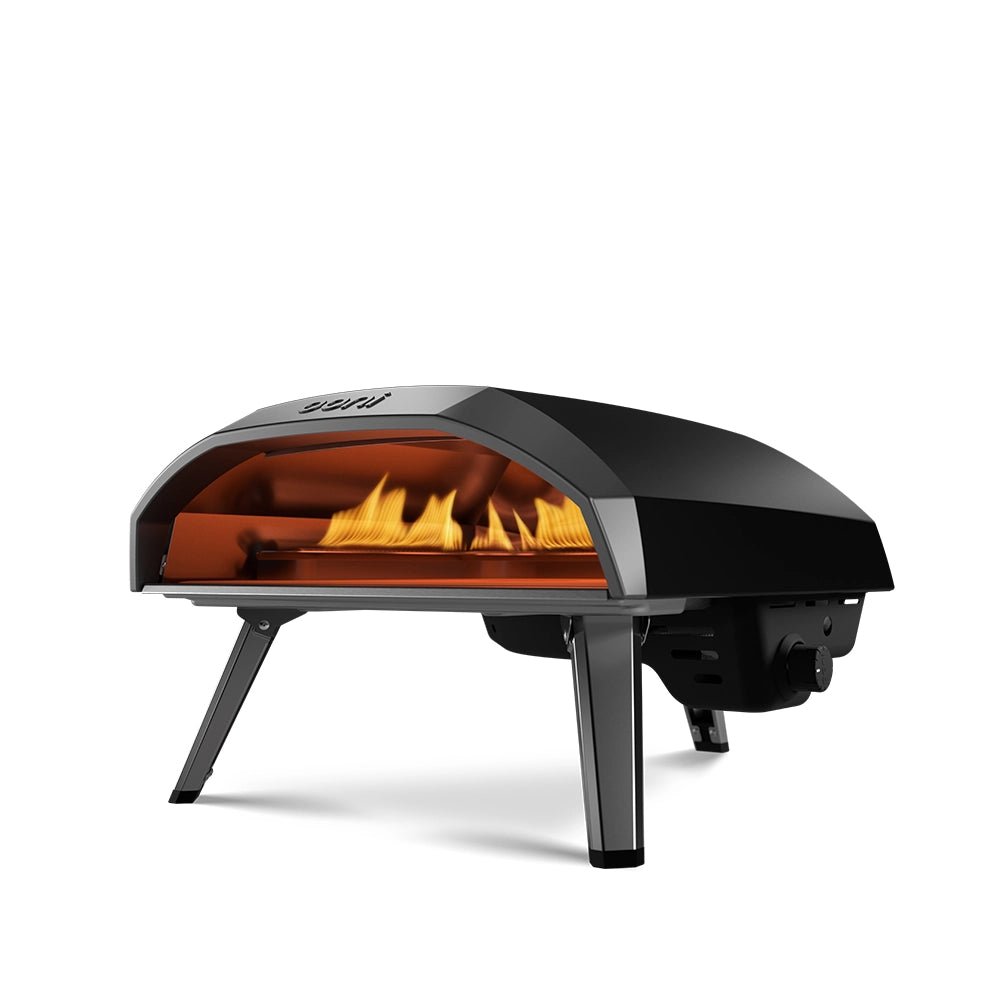
The Koda 16 has been Ooni’s flagship gas oven since 2020 and remains one of the most popular pizza ovens on the market. The 40cm stone means you can comfortably cook 16-inch pizzas, and the extra space gives you room to cook a small chicken, a cast iron pan of vegetables, or fish in foil alongside a pizza session.
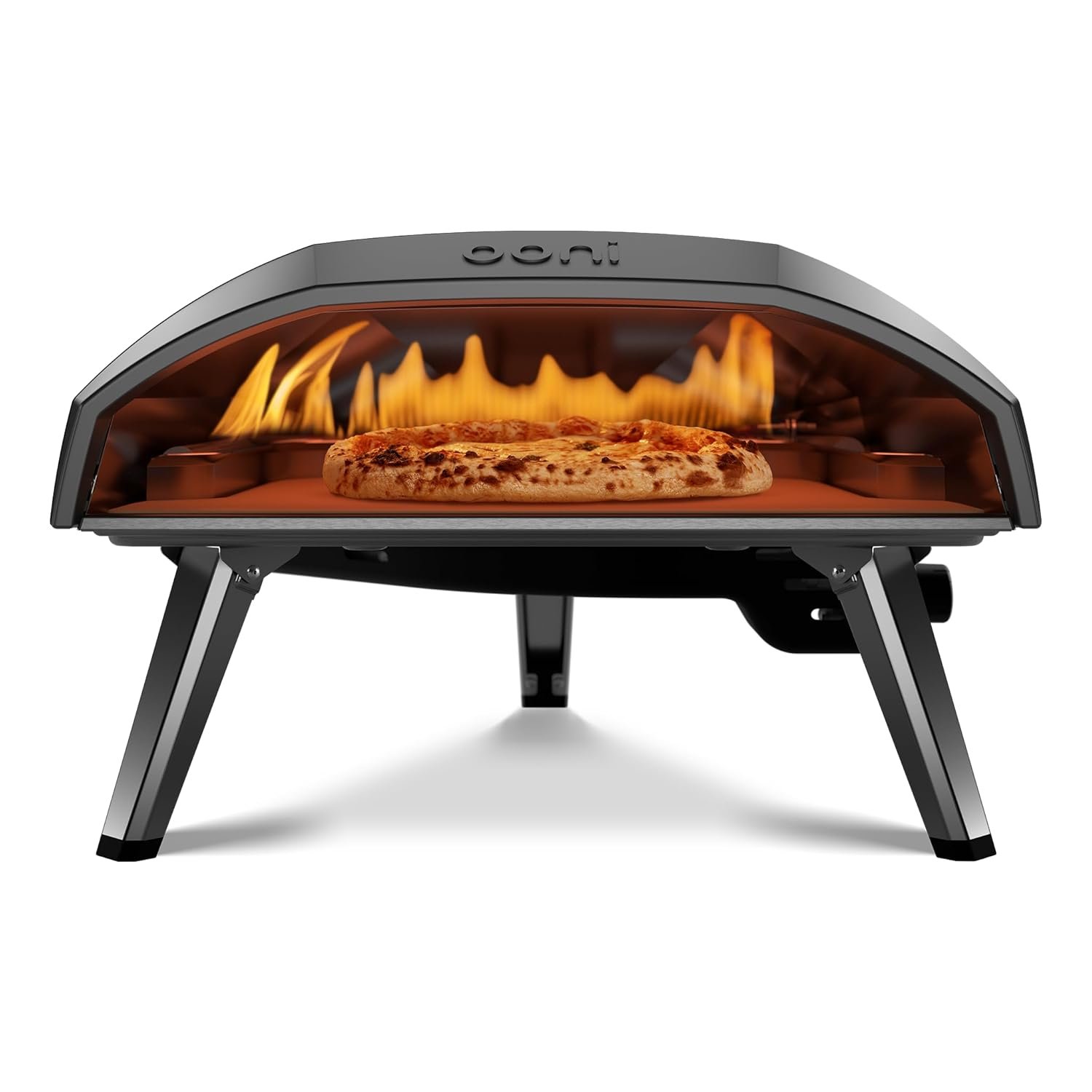
It is heavier than the Koda 2 – around 18.5kg versus 11.5kg – and significantly larger. Once it is set up on a table it is a genuinely impressive piece of kit. The large viewing window at the front lets you watch the pizza without lifting the door, and the angled flame creates an even bake across the large stone.
At $499, you are paying $100 more than the Koda 2 for more cooking space and Ooni’s most proven gas oven.
Price: $499 | Check price on Amazon
Koda 2 vs Koda 16: Side by Side
| Ooni Koda 2 | Ooni Koda 16 | |
|---|---|---|
| Max pizza size | 14 inches | 16 inches |
| Stone size | 35cm x 35cm | 40cm x 40cm |
| Footprint | 62 × 39 cm | 75 × 45 cm |
| Max temperature | 500°C (932°F) | 500°C (932°F) |
| Preheat time | ~20 minutes | ~20–25 minutes |
| Weight | 11.5 kg (25.4 lbs) | 18.5 kg (40.8 lbs) |
| Fuel type | LPG gas | LPG gas |
| Natural gas option | No | Yes (conversion kit) |
| Warranty | 3 years | 3 years |
| Price | $399 | $499 |
Pizza Size: Does the Extra 2 Inches Matter?
In practice, 14 inches is large enough for most home cooks. A 12-inch Neapolitan is already a generous pizza for one person – the Koda 2 gives you room to stretch to 14 inches if you want a bigger base or a slightly thicker crust with more margin to work with.
The Koda 16’s 16-inch capacity matters most when you are cooking for multiple people and want to make genuinely large pizzas. The extra stone space also gives you more room to manoeuvre when turning – on the Koda 2, a 14-inch pizza fills the stone, which makes turning feel tighter with a long-handled peel.
If you are mostly making 10-12 inch Neapolitan-style pizzas, the size difference between the two ovens is minimal in real use.
Heat and Performance
Both ovens reach 500C. In use, I measured the Koda 2 stone at 430-450C after 25 minutes on full. The Koda 16 takes slightly longer to bring the larger stone fully up to temperature but hits similar peak readings once it is there.
Cook times are comparable: a Neapolitan-style pizza in 60-90 seconds on either oven at full heat. For longer bakes at lower temperatures – a New York style at 300-350C, for example – both handle it well.
There is no meaningful performance difference between the two. The gap is entirely about size and portability. If you want to dig into stone temperature management, the best infrared thermometers for pizza ovens guide covers what to use and when to launch.
Portability
This is where the Koda 2 pulls ahead clearly. At 11.5kg it is genuinely portable in the way the Koda 16 is not. It folds flat, fits in a car boot without rearranging everything, and can be taken camping or to a friend’s garden without it feeling like a logistics exercise.
The Koda 16 at 18.5kg is a garden oven. You can move it, but most people put it somewhere and leave it there for the season. If portability matters to you at all, the Koda 2 is the clear choice.
Cooking Beyond Pizza
One area the Koda 16 wins clearly is versatility. The larger stone and cooking chamber give you room for things that simply do not fit in the Koda 2 – a full spatchcock chicken, a large cast iron skillet, a bigger fish in foil. If you plan to use your pizza oven for general high-heat cooking beyond pizza, the Koda 16’s extra space justifies itself.
The Koda 2 handles a 10-inch cast iron pan and smaller cuts of meat without issue. It is capable beyond pizza, but the Koda 16’s larger opening and deeper chamber open up more options. For ideas on what else to cook, see our guide to what you can cook in a pizza oven.
Which Should You Buy?
Buy the Koda 2 if you are cooking for two to four people, want something you can take places, or are happy making pizzas up to 14 inches. It is the better all-rounder for most home users and saves you $100. For most people reading this, the Koda 2 is the right call.
Buy the Koda 16 if you regularly cook for five or more people, want to make large 16-inch pizzas, or plan to use the oven seriously for cooking beyond pizza. The extra cooking space justifies the higher price if you will genuinely use it.
Both are excellent ovens. The Koda 2 has closed the gap with the Koda 16 significantly since the original Koda 12. The main reason to step up to the 16 is if you know you need the extra size. For a broader look at all the options, see our guide to the best pizza ovens for backyard use or our full Ooni Koda 16 review.
Frequently Asked Questions
Is the Ooni Koda 2 the same as the Koda 12?
No. The Koda 2 is the successor to the Koda 12, released in 2025. It has a larger cooking surface (14 inches vs 12 inches), a redesigned burner, and a new Foundry Black finish. If you are choosing between a used Koda 12 and a new Koda 2, the Koda 2 is the better oven at a similar price point.
Can I use natural gas with the Koda 2 or Koda 16?
Both ovens run on LPG out of the box. Ooni sells a natural gas conversion kit for the Koda 16. The Koda 2 does not currently have a natural gas option – if running on mains gas matters to you, the Koda 16 is the only choice of the two.
Is the Ooni Koda 16 worth the extra $100?
For regular use and larger groups, yes. For occasional use by one or two people, the Koda 2 at $399 gives you nearly the same result for less money. The Koda 16 earns its price if you will genuinely use the extra space – either for larger pizzas or for cooking other food at high heat.
Which is better for beginners?
The Koda 2. It is lighter, easier to manage, and the smaller cooking chamber is more forgiving when you are still getting used to how fast a pizza oven moves. The Koda 16’s larger stone means more surface to manage and a bigger oven to heat up. Start with the Koda 2 and upgrade later if you find you genuinely need the size.
Does the Ooni Koda 16 need more gas than the Koda 2?
Yes, noticeably. The Koda 16 has a larger burner and heats a bigger stone, so it gets through propane faster. In practice you’ll go through roughly 20-30% more gas per session. For occasional backyard use it is not a major cost, but if you are cooking frequently the Koda 2’s efficiency is a genuine advantage.
Can the Ooni Koda 2 cook a 16-inch pizza?
No. The Koda 2 has a 14-inch cooking surface, so the maximum pizza size is 14 inches. A 16-inch pizza requires the Koda 16. For most home cooks, 14 inches is plenty — it feeds two to three people comfortably. If you regularly cook for four or more and want to do it in one go rather than sequentially, the Koda 16 makes sense.
What size pizza peel do I need for the Koda 2?
A 12-inch peel is the most practical choice for the Koda 2. The oven opening accommodates up to 14 inches, but launching a large pizza in a tight space takes practice. Most cooks find a 12-inch peel gives enough room to manoeuvre comfortably. For the Koda 16, a 14-inch peel works well — you have enough room to go up to 16 inches if you want to push the oven to its limit.
How long does it take to preheat?
Both ovens reach cooking temperature in around 20 minutes. The Koda 16 has a larger stone and chamber to heat, so it can take a few minutes longer to get the stone truly up to temperature — especially in cooler weather. Giving the Koda 16 an extra 5 minutes before your first cook is good practice. The Koda 2 is slightly quicker and holds temperature well given its smaller chamber.
Gear mentioned in this article
If you’re also weighing up the previous generation, see our Ooni Koda 12 vs Koda 2 comparison — useful if you’re considering a used Koda 12 as a budget entry point alongside the Koda 2 and Koda 16.
Ooni Koda 2 (paid links) – Amazon
Ooni Koda 16 (paid links) – Amazon
If you’re also considering the Gozney Roccbox, see our Ooni Koda 2 vs Gozney Roccbox comparison.
If you’re interested in the Koda 16 but also want the option of wood-fired cooking, see our Ooni Koda 16 vs Karu 16 comparison.

About Ian Armstrong
I'm Ian Armstrong, a home cook and pizza oven obsessive based in the UK. Over the past four years I've owned and cooked on a Gozney Roccbox, Ooni Karu, Ooni Koda, and Gozney Arc — putting each one through real-world use in my back garden across all seasons, not just ideal summer conditions. I test dough hydration, preheat times, fuel efficiency, and how each oven handles everything from Neapolitan pizza to sourdough bread and Sunday roasts. Everything on Wood Fired Pizza Gear comes from hands-on experience. No sponsored placements, no guesswork — just honest assessments from someone who's burned a lot of dough getting it wrong so you don't have to.