Last updated: August 27, 2026
Last updated: August 2026. This post contains affiliate links — if you buy through them I earn a small commission at no extra cost to you. Full disclosure.
If you are comparing the Ooni Koda 16 vs Karu 16, here is the short answer: buy the Koda 16 unless cooking with wood is specifically what you want. It is $300 cheaper, easier to use, and produces identical pizza results when running on gas. The Karu 16 earns its premium price if you want to cook with wood or charcoal — but that is the only reason to spend the extra.
I have used both ovens. The Koda 16 gets used more often because it is frictionless — turn the gas on, wait 20 minutes, cook. The Karu 16 on wood is a better experience when you have the time for it, but the $300 gap is hard to justify unless fuel flexibility genuinely matters to you.
Ooni Koda 16 vs Karu 16: Side by Side
| Ooni Koda 16 | Ooni Karu 16 | |
|---|---|---|
| Max pizza size | 16 inches | 16 inches |
| Stone size | 40 × 40 cm | 40 × 40 cm |
| Max temperature | 500°C (932°F) | 500°C (932°F) |
| Preheat time | ~20–25 minutes | ~15 min (gas) / longer on wood |
| Fuel type | Gas only | Wood, charcoal, gas (attachment) |
| Weight | 18.5 kg (40.8 lbs) | 28 kg (61.7 lbs) |
| Natural gas option | Yes (conversion kit) | Yes (gas burner attachment, ~$99 extra) |
| Warranty | 3 years | 3 years |
| Price | $499 | $799 |
What Is the Ooni Koda 16?
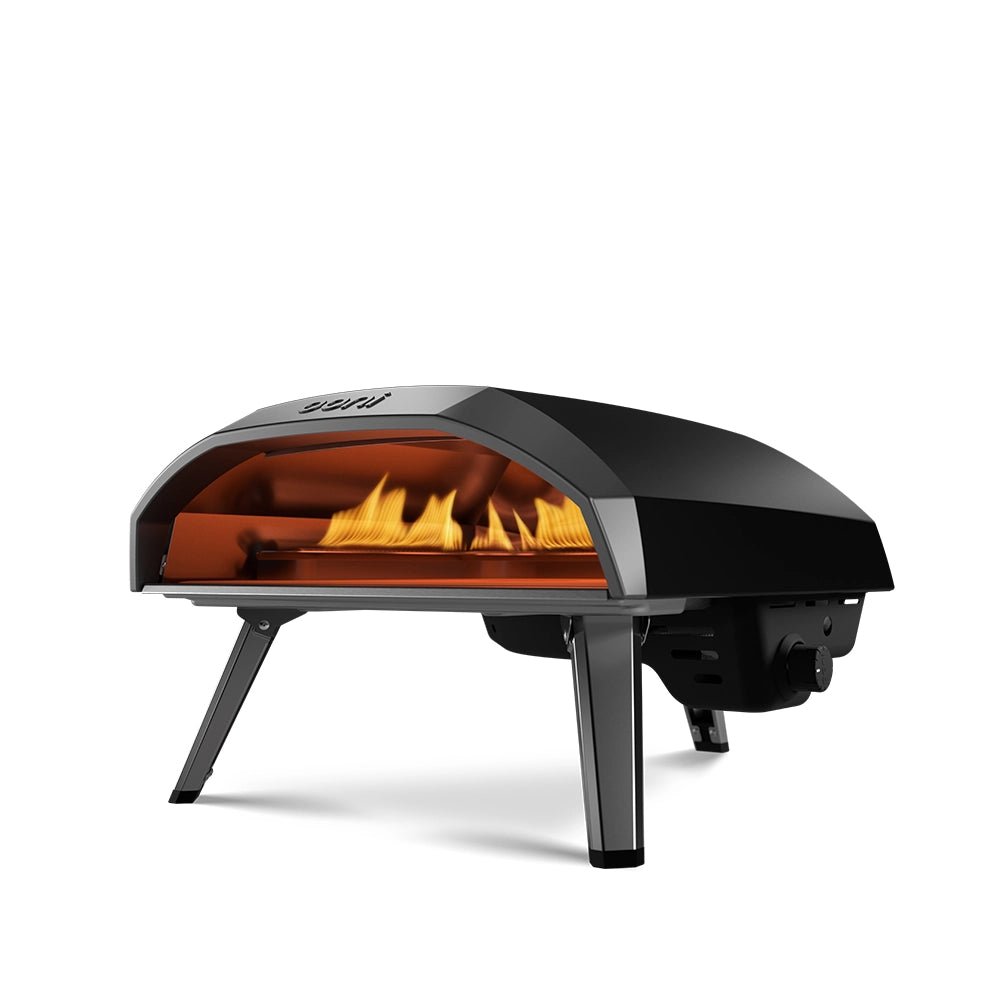
The Koda 16 is Ooni’s flagship gas oven. It runs on LPG out of the box, with a natural gas conversion kit available separately. The L-shaped burner wraps around the back of the oven and produces even, consistent heat across the entire stone — which is what makes it so easy to use. There is no fire management, no wood sourcing, no ash to clean up. You turn it on and cook.
At $499, it is the most popular large-format pizza oven on the market for good reason. The 16-inch stone gives you room to cook genuinely large pizzas, and the oven handles much more than pizza — steaks, vegetables, fish, bread. For most people it is the right choice.
What Is the Ooni Karu 16?
The Karu 16 is Ooni’s multi-fuel flagship. In its standard configuration it burns wood or charcoal. An optional gas burner attachment (~$99) lets it run on LPG instead — which means you are paying around $898 total to match what the Koda 16 does for $499.
What you get for the extra money is fuel flexibility and the experience of cooking on wood. The Karu 16 is heavier, more complex, and more expensive — but on wood it produces a different kind of cook. The smoke adds character and the process feels more involved. If that appeals to you, the premium is justified. If you just want great pizza quickly, it is not.
Fuel Type: Where the Decision Gets Made
Gas and wood produce different cooking experiences, not just different flavors. Gas is consistent and controllable. You dial in a temperature and it holds. Every pizza comes out the same. There is nothing to manage mid-cook beyond rotating the pizza. For weeknight cooking, hosting a group, or anyone new to pizza ovens, gas is the better fuel.
Wood requires attention. You need to feed the fire, manage airflow, read the flame, and adjust your cook accordingly. Stone temperature fluctuates more between pizzas. It takes practice to get consistent results — but when you do, the pizzas have a quality that gas cannot fully replicate. The char from live flame is something you notice.
If you are buying the Karu 16 and plan to run it on gas most of the time, that is a $300 mistake. The Karu 16 only makes sense if you actively want to cook with wood at least some of the time.
Performance and Pizza Quality
On gas, both ovens reach 500°C and produce identical pizza. The Koda 16’s L-shaped burner creates even heat distribution without hot spots, and the cordierite stone retains heat well between cooks. The Karu 16 on gas performs similarly, though the gas burner attachment is not quite as refined as the Koda’s dedicated burner system.
On wood, the Karu 16 reaches temperature faster — around 15 minutes versus 20–25 for the Koda 16 on gas. The Karu 16’s larger chimney and airflow design are built specifically to handle solid fuel efficiently. For Neapolitan pizza — 60 to 90 seconds at high heat — both ovens deliver. The choice comes down to the experience of cooking, not the quality of the output. For tips on hitting the right temperatures, see our pizza oven temperature guide.
Portability and Weight
The Koda 16 weighs 18.5 kg. The Karu 16 weighs 28 kg. That is a meaningful difference. The Karu 16 is not portable in any practical sense — it is a permanent fixture once placed. The Koda 16 can be moved by one person without too much effort, though neither oven is something you would casually take camping.
The Karu 16 is also taller when set up — the chimney adds significant height. If you have a low overhead or limited patio space, factor this in. The Koda 16 sits lower and has a slightly smaller footprint.
Price and Value
The Koda 16 is $499. The Karu 16 is $799. Add the gas burner attachment and you are at $898. For the same money as a fully equipped Karu 16, you could buy a Koda 16, a quality pizza peel, a baking steel, and still have change left over.
The Karu 16 is not a better pizza oven in absolute terms — it is a more versatile one. Versatility is only worth paying for if you will actually use it. Be honest with yourself about how often you would cook on wood versus gas before committing to the premium.
Which Should You Buy?
Buy the Koda 16 if you want the best gas pizza oven at the 16-inch size. It is easier to use, easier to clean, easier to store, and $300 cheaper. For most home cooks — even serious ones — it is the right call. If you are also deciding whether you need 16 inches at all, see our Ooni Koda 2 vs Koda 16 comparison.
Buy the Karu 16 if wood-fired cooking specifically appeals to you and you are willing to invest time learning to manage a wood fire. It is the right oven for the enthusiast who wants the full experience — the prep, the process, the flavour. If you are buying it primarily to run on gas, buy the Koda 16 instead and save $300.
One practical option: start with the Koda 16, cook on it for a season, and decide then whether you want the wood-fire experience. Most people settle on gas for convenience. Some go the other way. Starting with the cheaper oven keeps the decision reversible.
Ooni Koda 16 (paid link) — Amazon
Ooni Karu 16 (paid link) — Amazon
Frequently Asked Questions
Is the Ooni Karu 16 worth the extra $300?
Only if you plan to cook with wood or charcoal. On gas, the Karu 16 and Koda 16 produce identical results. The $300 premium buys fuel flexibility, not better pizza. If gas convenience is what you want, buy the Koda 16.
Can the Ooni Karu 16 run on gas?
Yes, but you need the Ooni Gas Burner attachment, sold separately for around $99. That brings the total to around $898 — nearly $400 more than the Koda 16. If gas is your primary fuel, the Koda 16 is the better buy.
Which oven is easier for beginners?
The Koda 16 by a clear margin. Gas requires no fire management — you turn a dial and wait. The Karu 16 on wood has a real learning curve: feeding the fire, managing airflow, reading the flame. For beginners, the Koda 16 is the better starting point.
Does wood-fired pizza taste different from gas?
Yes, though the difference is subtler than most people expect. Gas pizza cooked at 500°C is excellent — you get a blistered crust and proper leopard spotting. Wood adds a light smokiness and a slightly different char from live flame. Most guests cannot tell the difference in a blind test, but experienced pizza cooks notice it.
How long does the Karu 16 take to preheat?
On the gas burner attachment, around 15–20 minutes. On wood, it depends on the fuel and conditions — typically 15–20 minutes to reach temperature, but the stone takes longer to fully saturate with heat. Allow at least 20 minutes before your first cook regardless of fuel.
Can I cook more than pizza in both ovens?
Yes. Both have identical 40 × 40 cm stones and reach the same maximum temperature, so the range of what you can cook is the same — steaks, fish, vegetables, flatbreads, and more. See our guide to what you can cook in a pizza oven for ideas.
Related reading
If you are also weighing up Ooni’s smaller models, see our Koda 2 vs Koda 16 comparison — the Koda 2 saves another $100 and handles 14-inch pizzas. For the full picture of how the Koda 16 compares to Gozney’s equivalent, see our best gas pizza oven guide. If you’re torn between Karu models, our Karu 2 vs Karu 12 comparison covers the key differences between the current and previous generation.

About Ian Armstrong
I'm Ian Armstrong, a home cook and pizza oven obsessive based in the UK. Over the past four years I've owned and cooked on a Gozney Roccbox, Ooni Karu, Ooni Koda, and Gozney Arc — putting each one through real-world use in my back garden across all seasons, not just ideal summer conditions. I test dough hydration, preheat times, fuel efficiency, and how each oven handles everything from Neapolitan pizza to sourdough bread and Sunday roasts. Everything on Wood Fired Pizza Gear comes from hands-on experience. No sponsored placements, no guesswork — just honest assessments from someone who's burned a lot of dough getting it wrong so you don't have to.