Last updated: August 12, 2026
Last updated: August 2026. This post contains affiliate links — if you buy through them I earn a small commission at no extra cost to you. Full disclosure.
We make dough by hand regularly when the mixer is in use. In our experience hand-kneaded dough is every bit as good, it just takes a little longer.
This how to make pizza dough without a mixer covers exactly what you need to know, based on real use.
Making pizza dough without a stand mixer is completely achievable and many pizza makers prefer it. Hand-kneading gives you a better feel for the dough and can produce excellent results. Here’s everything you need to know.
The Recipe
Ingredients (makes 4 pizza bases)
- 500g 00 flour (or strong bread flour)
- 325ml warm water
- 7g fast-action dried yeast (1 sachet)
- 10g fine salt
- 1 tsp sugar
- 2 tbsp olive oil
Step-by-Step Method
Step 1: Activate the Yeast
Add the yeast and sugar to the warm water (around 35-100°F – it should feel comfortably warm on your wrist, not hot). Stir briefly and leave for 5-10 minutes until frothy. If it doesn’t froth, the yeast is dead and you need a fresh sachet.
Step 2: Combine the Dry Ingredients
Put the flour in a large bowl and add the salt. Mix briefly to distribute the salt through the flour. Make a well in the center.
Step 3: Bring the Dough Together
Pour the yeast mixture and olive oil into the well in the flour. Using a fork or your fingers, gradually draw the flour in from the sides until a rough dough forms. Once it’s too stiff to mix with a fork, use your hands to bring it fully together into a ball.
Step 4: Knead by Hand
Turn the dough out onto a lightly floured surface. This is where the work happens. Knead the dough for 10 minutes using the push-fold-turn method:
- Push the heel of your hand into the dough, pushing away from you
- Fold the dough back over itself
- Turn it 90 degrees
- Repeat
After 10 minutes the dough should be smooth, elastic and spring back when you poke it. If it’s sticky, add flour a tablespoon at a time. If it’s too dry and cracking, wet your hands slightly.
Step 5: First Rise
Shape the dough into a ball, place in a lightly oiled bowl, cover with cling film or a damp tea towel, and leave to rise at room temperature for 1-2 hours until doubled in size. For better flavor, do this rise in the fridge overnight (8-24 hours).
Step 6: Divide and Ball
Once risen, turn the dough out and divide into 4 equal pieces (around 200g each). Shape each piece into a tight ball by tucking the edges underneath and rolling it on the surface with your cupped hand. Place the balls on a lightly floured tray, cover, and leave to rest for 30-60 minutes before stretching.
Tips for Great Hand-Kneaded Dough
Use 00 Flour If You Can
00 flour is finely milled and lower in protein than strong bread flour, producing a softer, more extensible dough that’s easier to stretch. It’s the traditional choice for Neapolitan pizza. Strong bread flour works too but produces a slightly chewier result. Read our guide on what 00 flour is and why it matters.
Don’t Rush the Knead
Ten minutes of proper kneading is non-negotiable. Gluten development is what gives pizza dough its stretch and structure. Under-kneaded dough will tear when you try to stretch it and produce a dense, bread-like base.
The Windowpane Test
To check if the dough is properly kneaded, take a small piece and gently stretch it between your fingers. If it stretches thin enough to see light through without tearing, the gluten is developed enough. If it tears immediately, keep kneading.
Cold Rise = Better Flavor
A slow cold fermentation in the fridge for 24-72 hours develops significantly more complex flavor than a quick room-temperature rise. If you can plan ahead, make your dough the night before for noticeably better results.
Rest Before Stretching
Always let your dough balls rest at room temperature for at least 30 minutes before stretching. Cold dough is tight and will spring back when you try to stretch it. Warm dough relaxes and stretches easily. If your dough keeps snapping back, give it another 10-15 minutes rest.
Troubleshooting
Dough is too sticky
Add flour a tablespoon at a time, kneading it in. Resist the urge to add too much – slightly sticky dough is better than dry dough.
Dough won’t stop shrinking back when stretched
It needs more rest. Cover and leave for another 20-30 minutes. The gluten is too tight and needs time to relax. Read our full guide on why pizza dough won’t stretch for more help.
Dough didn’t rise
Either the yeast was dead (check the date) or the water was too hot (above 110°F kills yeast). Start again with fresh yeast and cooler water.
How to Stretch the Dough
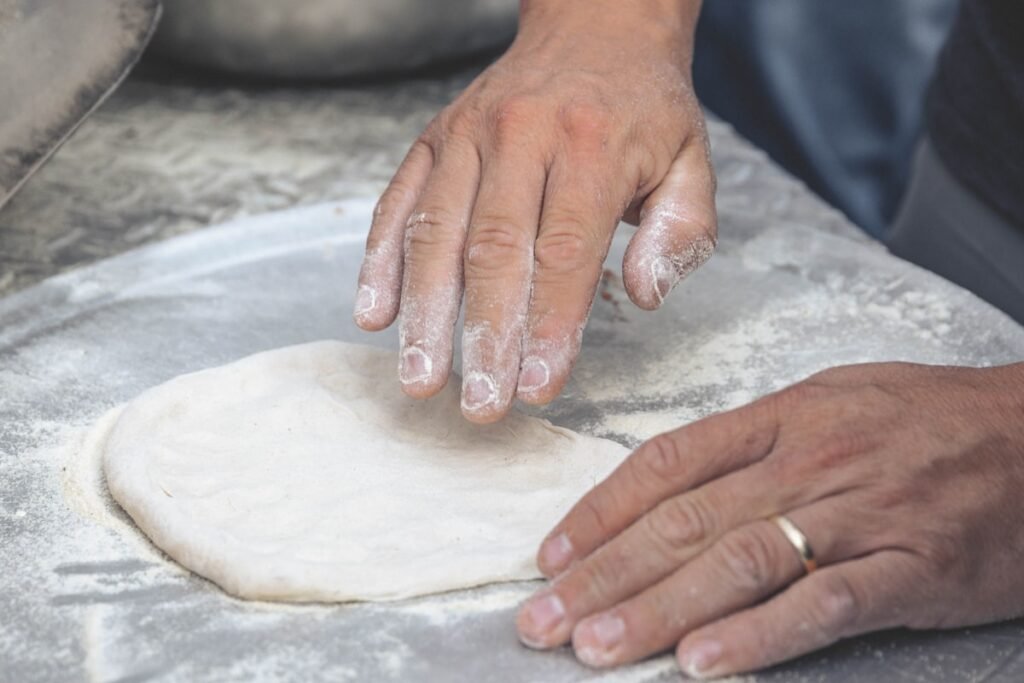
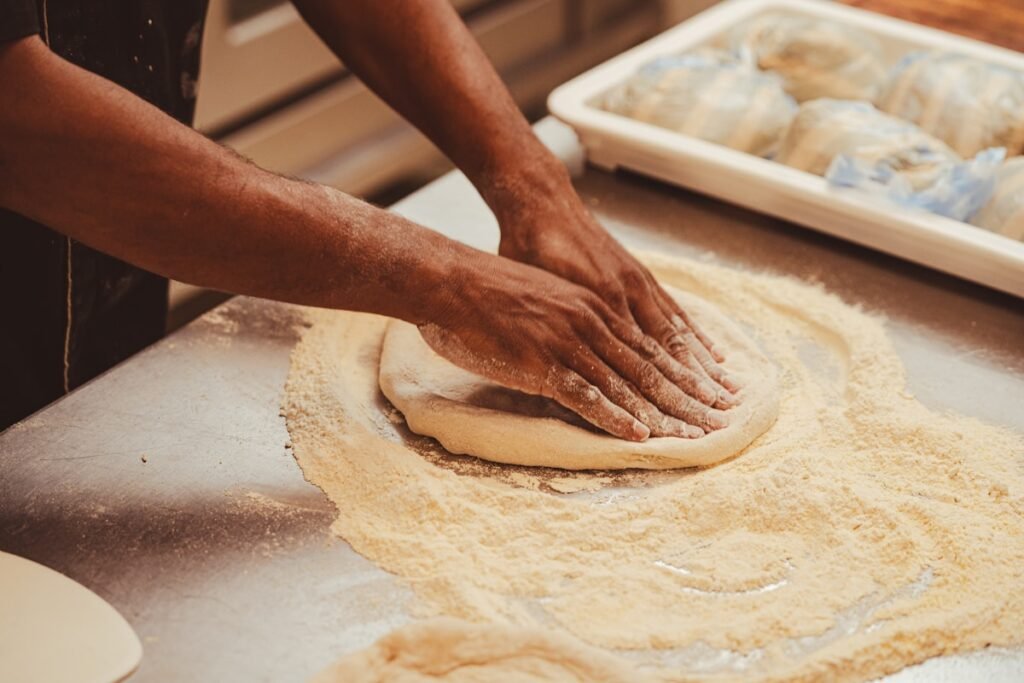
Once rested, flour your work surface and flatten a dough ball with your fingertips, pushing from the center outwards. Leave a thicker edge for the crust. Then drape the dough over your knuckles and gently stretch it by moving your hands apart. Rotate as you go. For full technique, read our guide on how to stretch pizza dough.
The whole process – mixing, kneading and shaping – takes around 20 minutes of active work, plus rising time. It’s well worth the effort. Hand-made pizza dough has a quality that even the best shop-bought versions can’t match.
For exact quantities for any number of pizzas, use our pizza dough calculator.
Gear mentioned in this article (paid links)

About Ian Armstrong
I'm Ian Armstrong, a home cook and pizza oven obsessive based in the UK. Over the past four years I've owned and cooked on a Gozney Roccbox, Ooni Karu, Ooni Koda, and Gozney Arc — putting each one through real-world use in my back garden across all seasons, not just ideal summer conditions. I test dough hydration, preheat times, fuel efficiency, and how each oven handles everything from Neapolitan pizza to sourdough bread and Sunday roasts. Everything on Wood Fired Pizza Gear comes from hands-on experience. No sponsored placements, no guesswork — just honest assessments from someone who's burned a lot of dough getting it wrong so you don't have to.